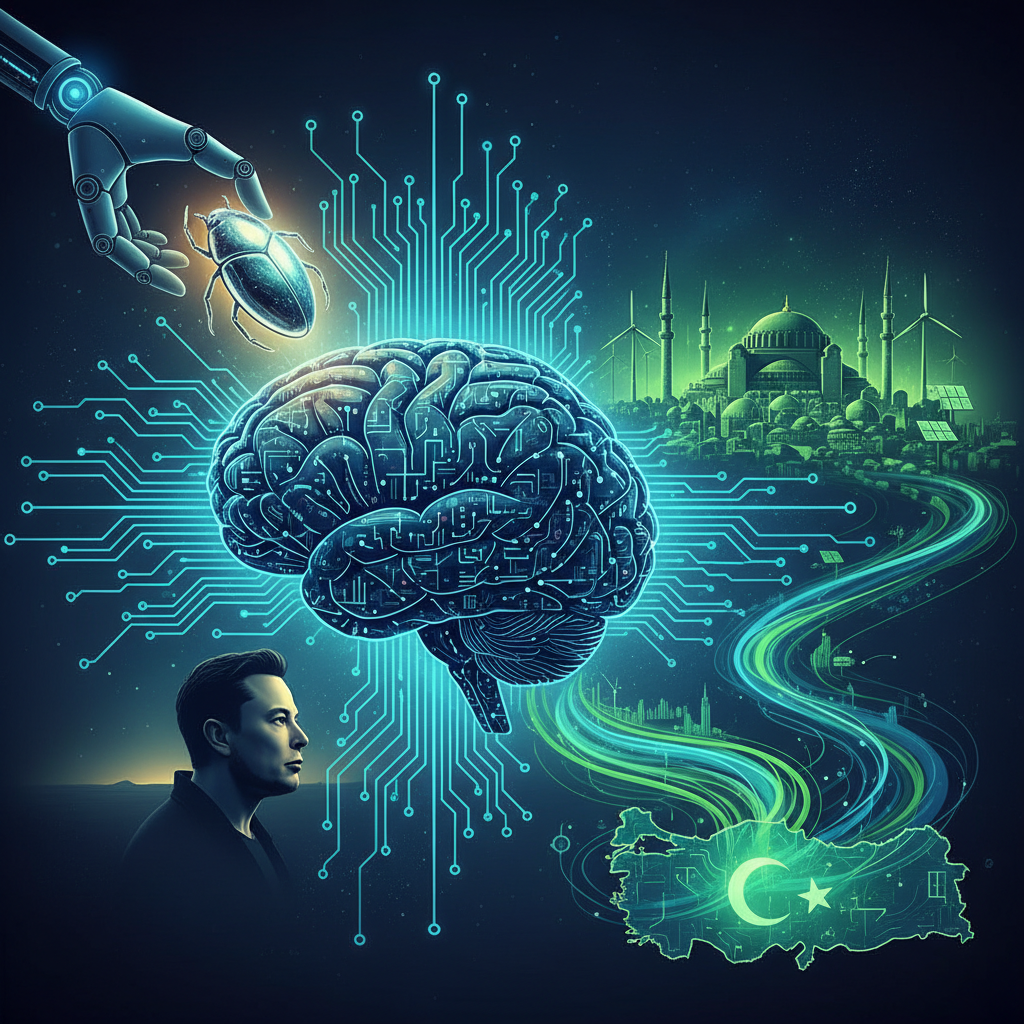
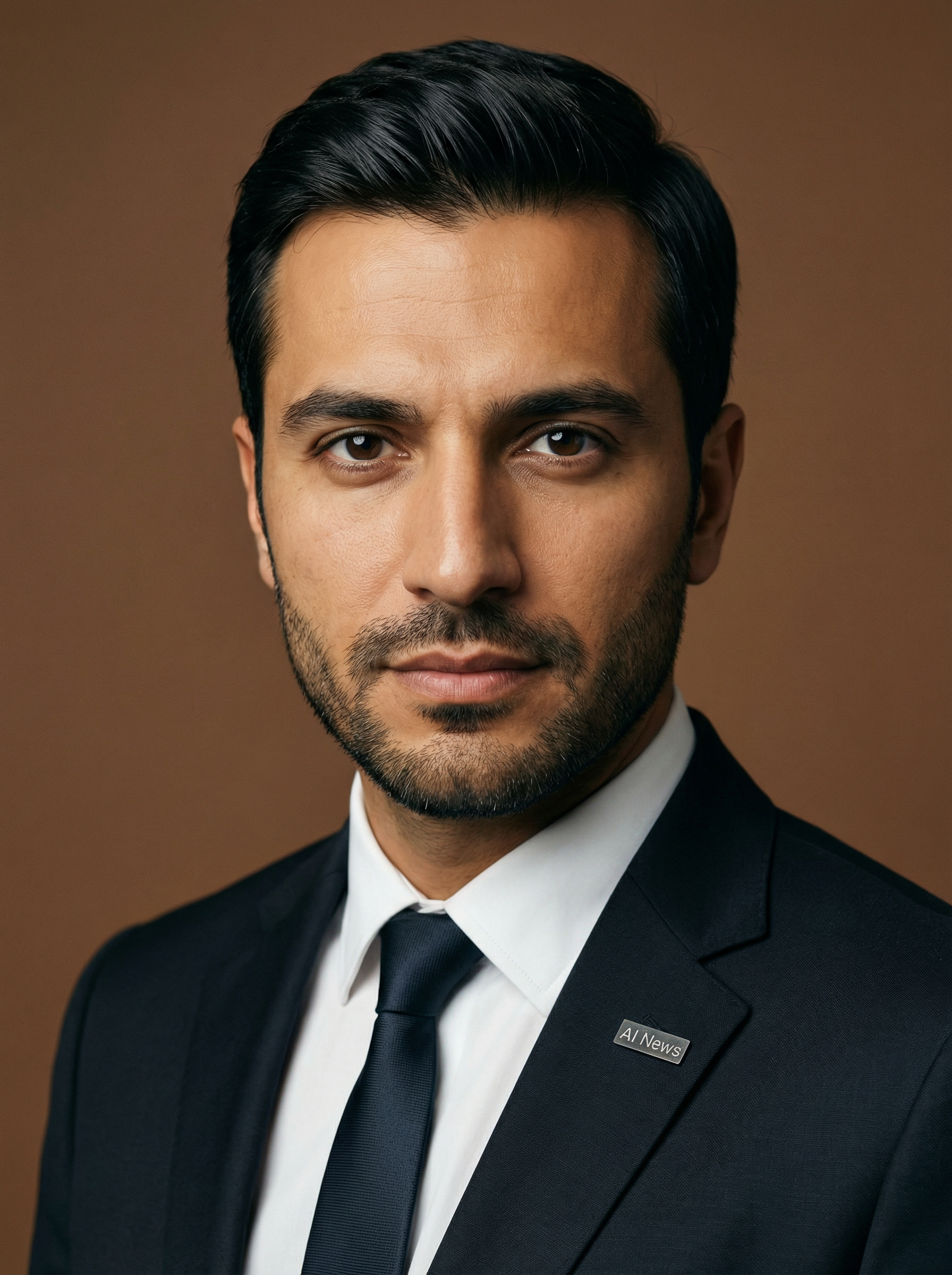
Let us be frank, the world is often too busy chasing the next quarterly earnings report to truly grasp the seismic shifts happening beneath our feet. But here at DataGlobal Hub, we think in decades, not quarters. And when I look at the advancements in brain-computer interfaces, particularly those championed by figures like Elon Musk with Neuralink, I see not just a medical breakthrough, but a profound redefinition of human existence, one that Turkey must not only embrace but actively lead.
For too long, the narrative around AI and human augmentation has been dominated by a handful of Western tech giants, their visions often shaped by a singular cultural lens. But the future of humanity is a global conversation, and nowhere is that conversation more urgent and multifaceted than at the crossroads where East meets West, where ancient wisdom meets cutting-edge innovation. Turkey is building the future at the crossroads, and BCIs are a prime example of where our unique perspective can shine.
The headlines, of course, are captivating. We hear of Neuralink’s progress in allowing paralyzed individuals to control computers with their thoughts, of restoring movement, and the tantalizing prospect of giving speech back to those who have lost their voices. These are miracles in the making, undeniably. Imagine a world where a person who has been silent for decades can communicate their thoughts directly, without the laborious process of typing or assistive devices. Or a person bound to a wheelchair, now navigating a digital world with the sheer force of their will. This is not science fiction, my friends, this is April 2026, and these capabilities are on our doorstep.
But to focus solely on the therapeutic applications, as revolutionary as they are, is to miss the larger, more profound implications. This technology, powered by increasingly sophisticated AI algorithms that can decipher neural signals with astonishing accuracy, is not merely about restoring what was lost. It is about augmenting what exists, and perhaps, creating something entirely new. It is about the next stage of human evolution, a symbiotic relationship between carbon and silicon.
Consider the sheer processing power needed to interpret the billions of neural connections in the human brain, to translate intent into action, or sensation into digital data. This is where AI becomes not just an assistant, but an inseparable partner. Large language models, advanced image recognition, and predictive analytics are all converging to make BCIs not just functional, but intuitive and seamless. The algorithms are learning our thoughts, our desires, our very essence, at an unprecedented pace. According to a recent report in MIT Technology Review, investments in BCI startups surged by 45% last year, reaching nearly $1.8 billion, with a significant portion directed towards AI integration and data processing capabilities.
Now, I hear the skeptics already. They whisper of dystopian futures, of privacy invasions, of humanity losing its essence. They conjure images of a world where our thoughts are no longer our own, where corporations or governments can access our deepest desires. And yes, these are valid concerns, ones that demand rigorous ethical frameworks and robust regulatory oversight. We must not, and cannot, ignore them. The Ottoman approach to AI empire-building, if you will, must be one built on strong foundations of ethical governance and societal benefit, not just technological prowess.
But let us not allow fear to paralyze progress. Every significant technological leap in history, from the printing press to the internet, has brought with it anxieties and moral dilemmas. The solution is not to halt innovation but to guide it, to shape it with wisdom and foresight. And this is precisely where Turkey, with its rich history of bridging cultures and philosophies, can play a pivotal role. Our cultural emphasis on community, family, and spiritual well-being offers a unique lens through which to view human augmentation, prioritizing collective good alongside individual empowerment.
Dr. Ayşe Demir, a leading neuroscientist at Istanbul Technical University, articulated this beautifully in a recent conference. "We are not just building devices, we are building a future for humanity," she stated. "Our responsibility extends beyond the lab. We must ensure these technologies enhance human dignity, not diminish it. Turkey's multidisciplinary approach, combining neuroscience, ethics, and Islamic philosophy, can offer a crucial counter-narrative to purely utilitarian Western perspectives." Her team is already collaborating with NVIDIA on optimizing AI models for real-time neural signal processing, a testament to our nation's growing expertise in this critical domain.
Furthermore, the economic implications are staggering. The global market for BCIs is projected to reach over $7 billion by 2030, a significant portion of which will be driven by AI advancements. Turkey, with its burgeoning tech sector and a young, dynamic population, is perfectly positioned to capture a slice of this pie. Our defense industry, already a global leader in drone technology and autonomous systems, possesses the engineering talent and manufacturing capabilities to transition into sophisticated medical and augmentation devices. We have the infrastructure, the talent, and crucially, the ambition.
Consider the work being done at Bilkent University's National Nanotechnology Research Center, where researchers are developing biocompatible materials for next-generation neural implants. This foundational work is critical, and it is happening right here, in Turkey. We are not just consumers of technology; we are creators, innovators, and thought leaders. TechCrunch recently highlighted a Turkish startup, 'BeyinLink,' which secured a Series A funding round of $35 million for its non-invasive BCI technology aimed at enhancing cognitive function, showcasing the entrepreneurial spirit alive in our ecosystem.
Of course, there are hurdles. Regulatory frameworks need to evolve rapidly. Public education is paramount to demystify the technology and address legitimate concerns. We need massive investment in research and development, fostering a collaborative environment between academia, industry, and government. But these are challenges, not insurmountable obstacles. We have faced and overcome far greater challenges throughout our history.
This is not a time for small thinking. This is a moment for bold vision. The integration of AI and BCIs promises to unlock human potential in ways we can only begin to imagine. It offers hope to millions suffering from debilitating conditions. It offers a path to enhanced cognitive abilities, to new forms of communication, and perhaps, to a deeper understanding of consciousness itself. Istanbul's tech ambitions are massive and realistic, and they include being at the forefront of this profound transformation.
Let us not merely observe this future unfolding from the sidelines. Let us actively shape it. Let us ensure that as we restore sight, speech, and movement, we also preserve humanity, dignity, and the rich tapestry of human experience. The world needs a balanced, ethical, and globally inclusive approach to this technology, and I believe Turkey is uniquely positioned to provide it. The future of the mind is being written, and we must ensure our pen is in hand.