The digital landscape of April 2026 continues its relentless evolution, but some questions persist with an almost stubborn resilience. Among them, the one concerning Microsoft's approximately 13 billion dollar investment in OpenAI remains prominent. Has this monumental financial commitment truly delivered on its promise, particularly when viewed through the lens of European, and specifically Nordic, technological integration and societal benefit? From our perspective in Finland, where pragmatism often trumps hype, the answer is nuanced, a mosaic of impressive technological strides alongside lingering questions about equitable access and real-world impact.
When Satya Nadella announced the expanded partnership with OpenAI, the vision was clear: to integrate advanced AI capabilities into virtually every aspect of Microsoft's product ecosystem, from Azure cloud services to Office applications and search. The initial rollout of products like Microsoft Copilot across various platforms has certainly demonstrated the technical feasibility of this ambition. Enterprises globally are adopting these tools, reporting efficiency gains and new avenues for innovation. A recent report from a major consulting firm, for instance, indicated that 68 percent of surveyed large European corporations using Copilot for Microsoft 365 reported a measurable increase in employee productivity, averaging 15 percent for routine tasks. This is not insignificant.
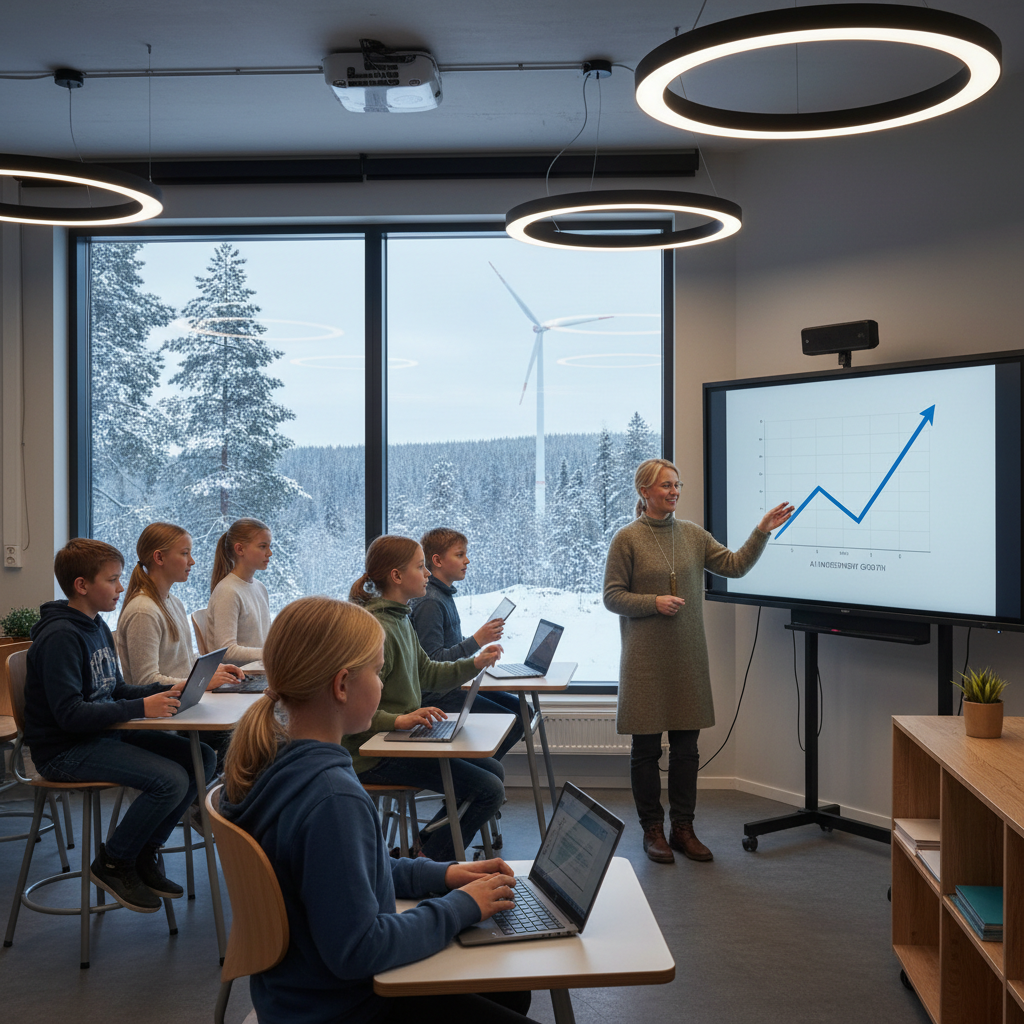
However, the true measure of success extends beyond corporate efficiency. In Finland, our focus often gravitates towards societal benefit and robust, ethical implementation, particularly within critical sectors such as education. Our education system, consistently ranked among the world's best, approaches new technologies with a cautious optimism. The question is not merely 'can AI do this,' but 'should AI do this, and how can it do it well for everyone?'
"The initial excitement around generative AI was palpable, even here," notes Dr. Elina Virtanen, Head of Educational Technology at the University of Helsinki. "But the practical application in our classrooms and lecture halls requires more than just a powerful model. It demands pedagogical integration, teacher training, and robust ethical frameworks. We have seen some promising pilots with AI tools assisting in personalized learning paths, but the widespread, transformative impact that a 13 billion dollar investment might suggest is still largely aspirational, not fully realized." Her assessment reflects a common sentiment: impressive technology, yet a gap in widespread, democratized utility.
Indeed, the cost of accessing these cutting-edge models remains a significant barrier for many institutions and smaller businesses. While Microsoft has made efforts to scale access through Azure AI services, the premium pricing for advanced OpenAI models means that the benefits are not evenly distributed. This creates a digital divide, where well-resourced entities can leverage the latest AI, while others lag. This contrasts sharply with the Finnish ethos of equal opportunity and access, a principle deeply embedded in our approach to technology and public services.
The gaming industry, a sector where Finland has made an outsized global impact with companies like Supercell and Rovio, offers another perspective. Here, AI's integration is often more direct and immediately visible, enhancing game design, player experience, and content generation. "We are certainly leveraging advanced AI for procedural content generation and sophisticated NPC behavior," states Mikael Lehtinen, Lead AI Developer at a prominent Helsinki-based game studio. "The underlying models from OpenAI and others provide powerful foundations. However, much of the real innovation comes from our own specialized fine-tuning and proprietary layers. The investment's impact is more about providing a strong baseline rather than a turnkey solution for our specific needs." This highlights that even for advanced tech companies, the core intellectual property and specialized application remain crucial, not just off-the-shelf models.
Finland's approach is quietly revolutionary in its insistence on practical, ethical deployment. Our history with Nokia taught us something important about reinvention and the perils of resting on past successes. It taught us that technological leadership is fleeting without continuous adaptation and a focus on real user needs. The current AI landscape, with its rapid advancements and equally rapid shifts, echoes some of those lessons. The 'sauna principle of AI development,' slow heat, lasting results, seems particularly apt here. We prefer thorough testing and thoughtful implementation over rushed deployment.
Consider the environmental implications, an increasingly critical factor. Training and running large language models like those from OpenAI require immense computational power, translating into substantial energy consumption. While Microsoft has committed to carbon neutrality, the sheer scale of global AI deployment raises legitimate concerns about its environmental footprint. Data centers are energy hogs, and as AI becomes more ubiquitous, this challenge will only intensify. This is a topic of considerable discussion within Nordic tech circles, where sustainability is not an afterthought but a core design principle.
From a governmental perspective, the digital services provided by the Finnish state are often cited as exemplary. The integration of AI into public services, while ongoing, is approached with a strong emphasis on data privacy, transparency, and citizen trust. "We are exploring how AI can streamline administrative processes and improve citizen interactions, but always with a human-in-the-loop approach," explains Anna-Liisa Ranta, Director of Digital Services at the Finnish Ministry of Finance. "The ethical guidelines and regulatory frameworks, both at the national and EU level, are paramount. An investment of 13 billion dollars must ultimately serve the public good, not just corporate interests, and that requires careful consideration of governance and accountability." Her statement underscores the broader European emphasis on regulation, as seen in the ongoing discussions around the EU AI Act.
While Microsoft's investment has undoubtedly accelerated AI development and integration within its own ecosystem, the broader societal payoff, particularly in regions like Europe with different priorities and regulatory landscapes, is still being assessed. The technological capabilities are undeniable, but the journey from impressive demonstration to truly transformative, equitably distributed benefit is long and complex. The Finnish experience suggests that while the raw power of OpenAI's models is a valuable asset, the real return on investment will ultimately be measured not just in market capitalization or productivity metrics, but in how effectively these tools empower individuals and institutions across diverse contexts, without exacerbating existing inequalities or compromising ethical standards. The challenge remains to translate that colossal investment into widespread, sustainable value for all, a task that requires more than just capital, it demands thoughtful, grounded application. For more analysis on AI's global impact, see Reuters Technology or MIT Technology Review. The path forward requires continuous scrutiny and adaptation, a lesson well-learned from our own technological history.