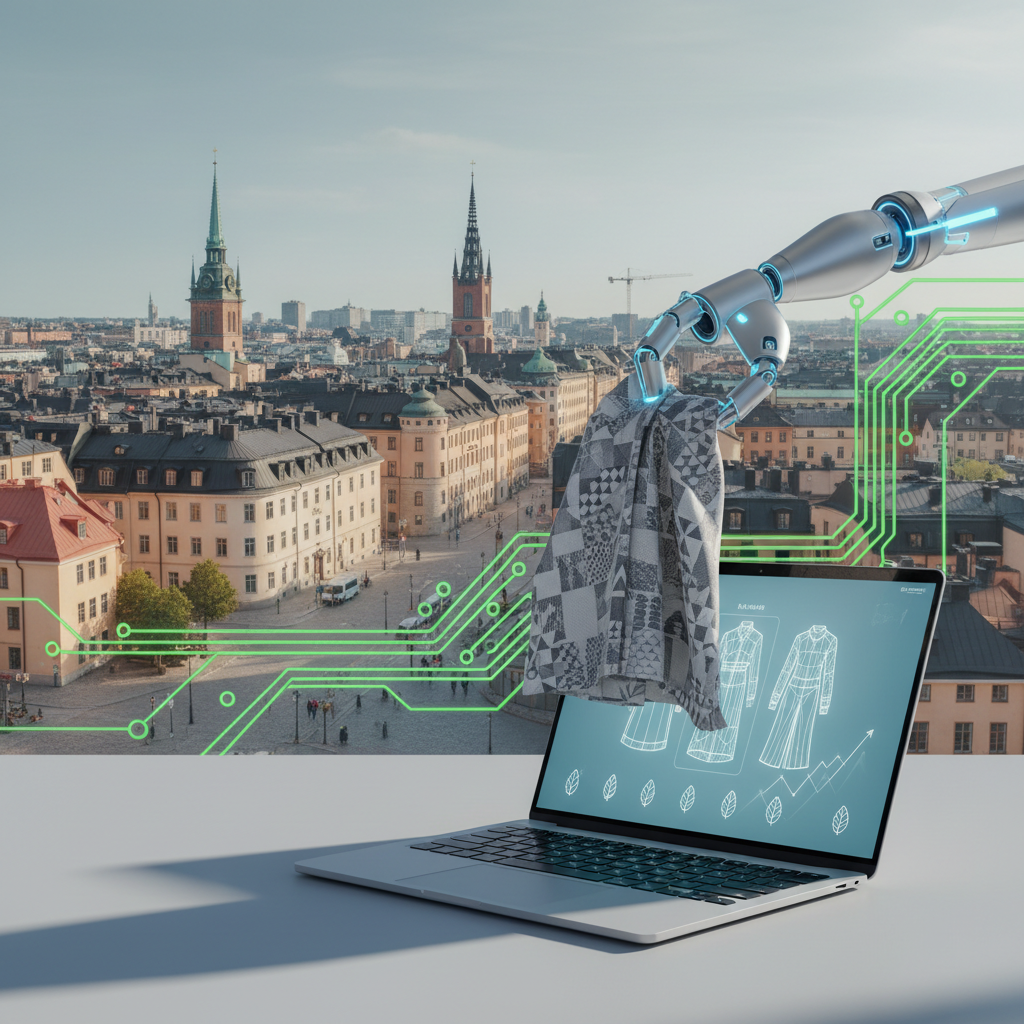

Ah, Portugal. A land of sun, sea, and increasingly, algorithms. One might think our biggest export is still cork or perhaps Cristiano Ronaldo, but if you listen closely to the hum of servers across the Tagus, you will hear the unmistakable whisper of Microsoft Azure. It is everywhere, like a good bacalhau dish, omnipresent and deeply ingrained in the fabric of our digital lives, especially in the enterprise sector.
For years, we have watched the tech giants duke it out for cloud supremacy. Amazon Web Services, Google Cloud, and then, with a quiet, almost understated confidence, Microsoft Azure. But in the realm of enterprise AI, particularly here in Europe, Azure has not just entered the ring, it has practically bought the whole stadium and started selling the tickets. And Portugal, bless its innovative heart, is very much in the audience, often on stage, embracing what Redmond has to offer.
Take, for instance, the recent surge in Portuguese companies adopting Azure AI services. From logistics firms optimizing routes with machine learning to financial institutions leveraging natural language processing for customer service, the narrative is clear: Microsoft is making it incredibly easy for businesses to dip their toes, and then their entire operations, into the AI waters. It is a compelling proposition, especially for companies that might not have the in-house expertise or the colossal budgets to build everything from scratch. Azure offers pre-built AI models, cognitive services, and a robust infrastructure that makes deploying AI feel almost like ordering a coffee. A very expensive, very powerful coffee, mind you.
I spoke with Dr. Ana Marques, a leading expert in digital transformation at the University of Porto. She has seen this trend firsthand. "Portuguese businesses are pragmatic," she told me, her voice resonating with an academic gravitas. "They see the immediate benefits of integrating AI to streamline operations, reduce costs, and enhance customer experience. Microsoft's Azure, with its comprehensive suite of services and strong enterprise support, provides a relatively low barrier to entry. It is a strategic choice for many, especially SMEs who cannot afford to experiment with unproven solutions." Dr. Marques highlighted that the perceived reliability and security of a global player like Microsoft also play a significant role in decision making, particularly in sectors dealing with sensitive data.
Indeed, the numbers speak volumes. While precise figures for Portugal are often kept under wraps, global reports indicate Azure's enterprise AI market share is steadily climbing. A recent analysis by Reuters suggested that Microsoft's cloud services, heavily bolstered by AI offerings like Azure OpenAI Service, are seeing double-digit growth year over year. This is not just about computing power, it is about the entire ecosystem: Azure Active Directory for identity management, Power BI for data visualization, and now Copilot for everything from coding to content creation. It is an integrated machine, designed to be sticky.
But here is where my Portuguese skepticism, honed over years of watching trends come and go like summer tourists, kicks in. Is this dominance a genuine partnership for innovation, or are we, the smaller nations, simply becoming digital tenants in Microsoft's grand AI estate? The convenience is undeniable, the immediate benefits tangible. Yet, what happens when the entire infrastructure of your national economy, from healthcare to banking, runs on a single vendor's cloud? It is like putting all your best sardines in one basket, a risky business if that basket belongs to someone else.
My colleague, João Silva, a tech entrepreneur who recently sold his AI startup to a German firm, voiced similar concerns during a long lunch near the Praça do Comércio. "Look, Azure is fantastic for speed and scale," he admitted, swirling his bica. "But the long-term implications for local innovation, for fostering truly independent tech ecosystems, are complex. We risk becoming consumers of AI, rather than creators of our own, distinct solutions. The sardine can of European tech is actually a treasure chest, but we need to ensure we are not just handing over the key." He emphasized the need for European companies to invest in their own foundational models and infrastructure, even while leveraging existing cloud platforms.
This is not to say that Microsoft is some villainous overlord. On the contrary, they have been rather clever. Their partnership with OpenAI, integrating cutting-edge models like GPT-4 directly into Azure, was a masterstroke. This move has given enterprises access to state-of-the-art generative AI capabilities without the headache of managing complex deployments. For a Portuguese bank wanting to automate customer queries or a manufacturing plant looking to predict equipment failures, this is gold. It is a plug-and-play future, and who does not love convenience?
However, the question of data sovereignty and vendor lock-in looms large. While Microsoft assures customers about data residency and compliance with GDPR, the sheer scale of their platform means that a significant portion of Europe's digital future is being built on their foundation. This is a topic that resonates deeply in Brussels, and increasingly, in Lisbon. The European Union's push for digital autonomy, for fostering its own cloud infrastructure and AI capabilities, is a direct response to this growing reliance on non-European tech giants. It is a slow, arduous process, like waiting for a good port wine to mature, but it is happening.
MIT Technology Review has extensively covered the geopolitical implications of cloud dominance, noting that national security and economic independence are increasingly intertwined with who controls the underlying digital infrastructure. For a country like Portugal, which has made significant strides in building a vibrant tech scene, this is a delicate balance. We want the innovation, the efficiency, the competitive edge that Azure AI offers. But we also want to ensure that our digital destiny remains firmly in our own hands.
Lisbon's tech scene is like a good port wine, complex and improving with age. It is a place where startups are born, ideas flourish, and innovation is celebrated. But even in this dynamic environment, the gravitational pull of global giants like Microsoft is immense. The challenge for Portugal, and indeed for Europe, is to leverage these powerful tools without becoming entirely dependent on them. It means investing in local talent, fostering open-source alternatives, and demanding transparency and interoperability from the dominant players. It is about finding our own voice in the global AI chorus, rather than simply singing along to someone else's tune. Otherwise, we might find ourselves in a beautiful digital landscape, but one where the map was drawn by someone else, and the roads all lead to Redmond. We need to ensure that Portugal punches above its weight, not just in football, but in the digital arena too.
The future of enterprise AI in Portugal, and across Europe, will likely be a hybrid one. A mix of global platforms providing the backbone, and local innovators building specialized solutions on top. The key will be striking that balance, ensuring that convenience does not morph into dependency, and that our digital sovereignty remains as fiercely guarded as our coastline. The conversation is far from over, and like any good fado, it will be filled with both longing and hope.