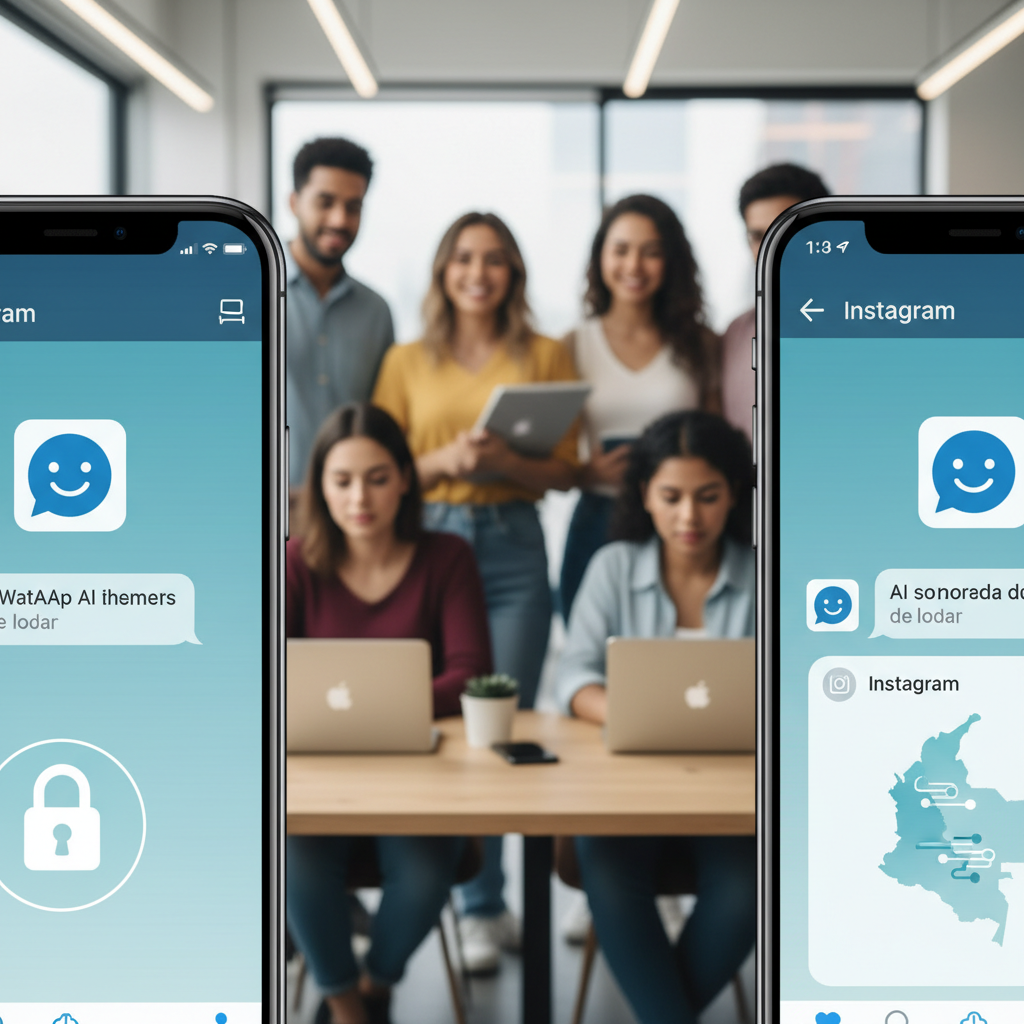

The digital landscape is shifting beneath our very fingers, often without us even realizing the magnitude of the change. Just recently, Mark Zuckerberg's Meta has pushed its ambitious AI agenda directly into the heart of our most intimate digital spaces: WhatsApp and Instagram. Now, AI chatbots are not just an optional add-on, they are woven into the fabric of how billions communicate every single day. This isn't just a new feature; it's a fundamental re-engineering of our digital lives, and honestly, it makes me pause and wonder, are we truly ready for this, especially here in Colombia?
Why Most People Are Ignoring It: The Attention Gap
It's easy to dismiss these AI integrations as just another tech update, a shiny new toy from Silicon Valley. We are constantly bombarded with new apps, new filters, new ways to interact. The news cycle moves at a dizzying pace, and the sheer volume of AI developments can be overwhelming. Many see these Meta AI chatbots as a simple evolution of the virtual assistants we already use, like Siri or Alexa, just now inside our messaging apps. They might use it to quickly summarize a long chat, generate a silly image, or get a quick answer to a question. The deeper implications, the subtle shifts in data collection, the potential for algorithmic bias, and the erosion of digital boundaries often go unnoticed. We are too busy living our lives, navigating our daily challenges, to scrutinize every line of code or every privacy policy update. This collective oversight, this attention gap, is precisely why we need to talk about it now.
How It Affects YOU: Personal Impact on Readers
Imagine you are a small business owner in Medellín, using WhatsApp Business to connect with your customers. Now, an AI chatbot is integrated, offering to draft replies, analyze customer sentiment, or even generate marketing copy. Sounds efficient, right? But what data is it collecting from your customer interactions? Who owns that data? What if the AI, trained on predominantly Western datasets, misunderstands the nuances of Colombian Spanish, our local slang, or our cultural context? What if it inadvertently creates a barrier instead of building a bridge?
Or consider a young person in Bogotá, using Instagram to share their life and connect with friends. The AI can now generate images from text prompts, help write captions, or even suggest replies. This might seem harmless, even fun. But it also means that a powerful AI is constantly analyzing your conversations, your preferences, and your creative output. It's learning about you, shaping your digital experience, and potentially influencing your thoughts and expressions. This isn't just about convenience; it's about the subtle, pervasive influence of algorithms on our personal identity and communication styles. For a nation like Colombia, still healing from decades of conflict, where trust is a precious commodity, the implications of such pervasive AI are profound.
The Bigger Picture: Societal, Economic, or Political Implications
The integration of AI into platforms used by billions, particularly in emerging markets like Latin America, has massive societal, economic, and political ramifications. Economically, it could create new efficiencies for businesses, but it also risks widening the digital divide if access and training are not equitable. Small businesses that cannot adapt or afford to leverage these tools might fall behind. Socially, it could reshape how we form opinions, consume information, and interact with each other. The potential for misinformation, algorithmic echo chambers, and even targeted manipulation becomes exponentially higher when AI is so deeply embedded in our primary communication channels.
Politically, the implications are even more concerning. Imagine an AI that can influence public discourse, amplify certain narratives, or suppress others, all within the private conversations of citizens. Data privacy becomes paramount. Who has access to the vast amounts of conversational data being processed by these AIs? How is it secured? What are the safeguards against misuse by governments or malicious actors? Reuters has reported extensively on the global push for AI regulation, but these Meta integrations move faster than policy can keep up. This is about more than technology because it's about justice, about ensuring that these powerful tools serve humanity, not just corporate interests or political agendas.
What Experts Are Saying