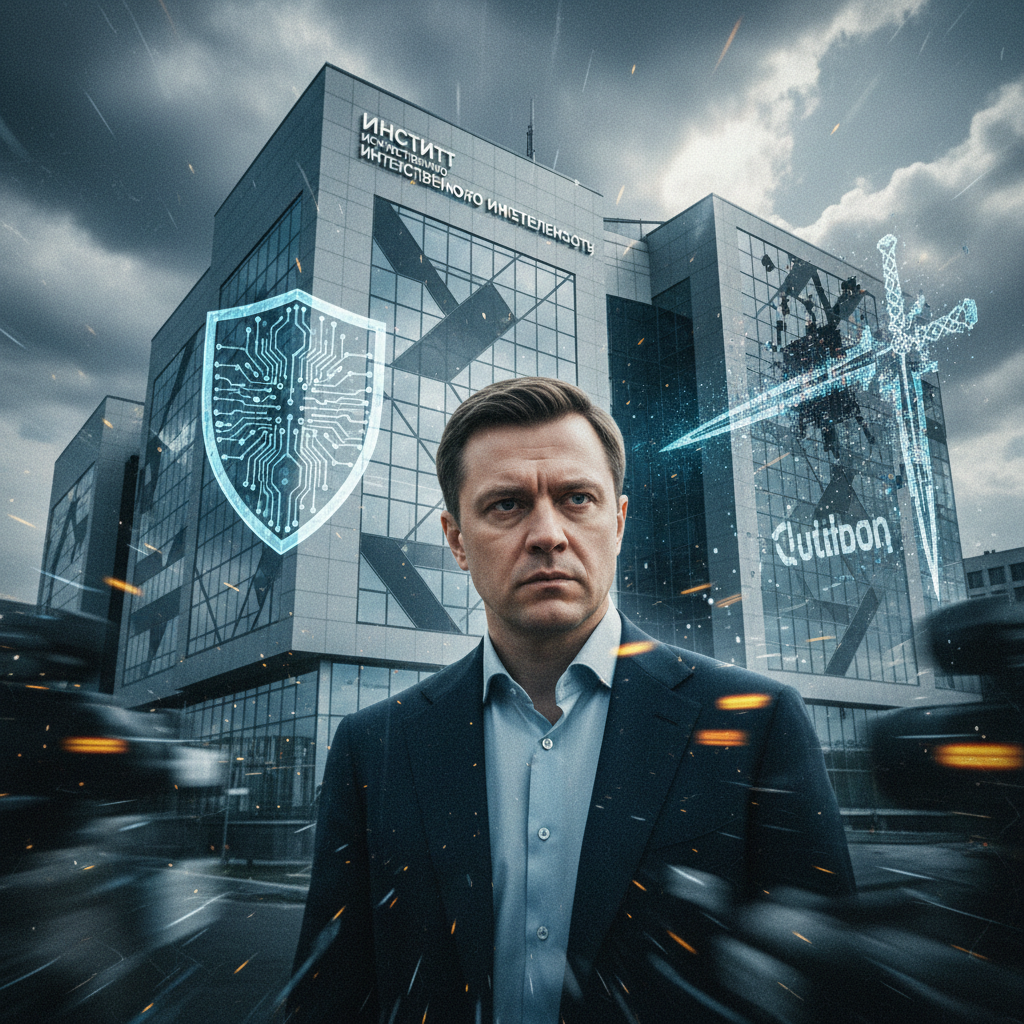

The Kremlin, with characteristic swiftness, has unveiled a new national Artificial Intelligence Safety Institute, a move that reverberated through Russia's tech landscape this week. Ostensibly designed to rigorously test and certify advanced AI systems before their deployment across critical sectors, the decree, signed by President Vladimir Putin, presents a facade of proactive governance. However, my sources in the tech sector confirm a more complex reality, one where Moscow's AI ambitions tell a bigger story, intertwining national security, economic protectionism, and the relentless pursuit of digital sovereignty.
The official narrative, disseminated through state media, paints a picture of a responsible nation safeguarding its citizens from the potential perils of increasingly powerful AI. The institute, provisionally named the 'National Center for AI Assurance' or Ntsai, is slated to begin operations by late 2026, with an initial budget rumored to exceed 12 billion rubles, approximately 130 million US dollars at current exchange rates. Its mandate includes evaluating AI models for bias, robustness, security vulnerabilities, and adherence to ethical guidelines. "We cannot afford to be complacent," stated Deputy Prime Minister Dmitry Volkov, the architect of the initiative, in a press briefing yesterday. "The rapid evolution of AI demands a centralized, authoritative body to ensure these powerful technologies serve our nation's interests safely and predictably. We must protect our infrastructure and our people from unforeseen algorithmic risks."
Yet, beneath this veneer of public safety lies a strategic imperative that is unmistakably Russian. The Kremlin's digital strategy reveals a consistent drive to reduce reliance on foreign technology, a goal intensified by the enduring sanctions regime. This new institute, while mirroring similar initiatives in the West, such as the UK's AI Safety Institute or the US AI Safety Institute, carries a distinct geopolitical flavor. It is not merely about safety, but about control.
"This is a classic move to create a technical barrier to entry," explained Dr. Anna Petrova, a cybersecurity expert formerly with Kaspersky Lab, now an independent consultant based in Geneva. "By establishing its own certification standards, the Russian government can effectively dictate which AI models are permissible within its borders. This will undoubtedly favor domestic developers, primarily Yandex and Sberbank, over international players like OpenAI, Google, or Microsoft, whose models might struggle to meet bespoke, and potentially opaque, Russian requirements." Dr. Petrova's analysis, shared with me via a secure channel, highlights the economic implications for foreign tech companies.
The immediate reaction from Russia's domestic tech giants has been predictably positive. Yandex, often dubbed 'Russia's Google,' issued a statement welcoming the initiative, emphasizing its long-standing commitment to responsible AI development. "This institute will provide a crucial framework for advancing trust and innovation within Russia's AI ecosystem," said Elena Sokolova, Yandex's Head of AI Research, in a carefully worded public release. "We look forward to collaborating closely to ensure that cutting-edge Russian AI technologies continue to lead the way." While such statements are standard, the underlying sentiment among Yandex insiders is one of quiet satisfaction. The Ntsai could solidify their market dominance, effectively insulating them from direct competition with global models that might otherwise offer superior performance or features.
However, the implications for the broader tech community, particularly smaller startups and academic researchers, are less clear. The certification process, if burdensome or costly, could stifle innovation. "Compliance with a new, complex regulatory body could be prohibitive for smaller players," noted Ivan Kuznetsov, CEO of a promising Moscow-based AI startup focused on natural language processing. "While we understand the need for safety, we hope the process will be transparent and accessible, not an insurmountable hurdle designed only for the largest corporations." His concerns are valid, reflecting a common anxiety among entrepreneurs navigating Russia's often unpredictable regulatory landscape.
Indeed, the devil, as always, will be in the details of implementation. The NTSAI's governing board, its technical specifications for evaluation, and the criteria for certification remain largely undefined. This ambiguity allows for significant flexibility, a trait often exploited in Russian bureaucratic structures to serve specific political or economic ends. Will the standards be genuinely universal, or will they be tailored to the strengths of Russian AI models while exposing perceived weaknesses in foreign ones? This is the critical question that remains unanswered.
For international tech companies, the Ntsai presents yet another layer of complexity in an already challenging market. Companies like Google, with its Gemini models, or OpenAI, with its GPT series, face the prospect of either investing substantial resources to meet Russian certification standards or effectively being locked out of a significant, albeit politically fraught, market. This could further accelerate the 'splinternet' phenomenon, where different regions operate under distinct technological and regulatory frameworks.
What happens next is a delicate dance between national ambition and practical realities. The Ntsai will need to recruit top AI talent, a challenge in itself given the ongoing brain drain from Russia. It will also need to develop robust testing methodologies that are credible both domestically and, ideally, internationally. The danger, of course, is that it becomes a rubber-stamping agency, prioritizing political expediency over genuine safety. My investigation will continue to track the appointments to the NTSAI's leadership and the specifics of its operational mandate, as these will reveal the true intent behind this significant development.
Readers should care about this development because it is not merely a technical footnote. It is a powerful example of how governments are increasingly using the banner of AI safety to exert control over technology and shape national digital ecosystems. For those outside Russia, it signals a further fragmentation of the global digital commons. For those within, it represents a pivotal moment for Russia's AI future, determining whether it fosters genuine innovation or entrenches a protected, state-sanctioned technological order. The implications extend far beyond algorithms, touching upon economic competitiveness, data sovereignty, and the very nature of technological progress in a divided world. More details on global AI safety initiatives can be found on MIT Technology Review and Reuters. This move by the Kremlin is a stark reminder that in the realm of advanced technology, control often masquerades as caution.