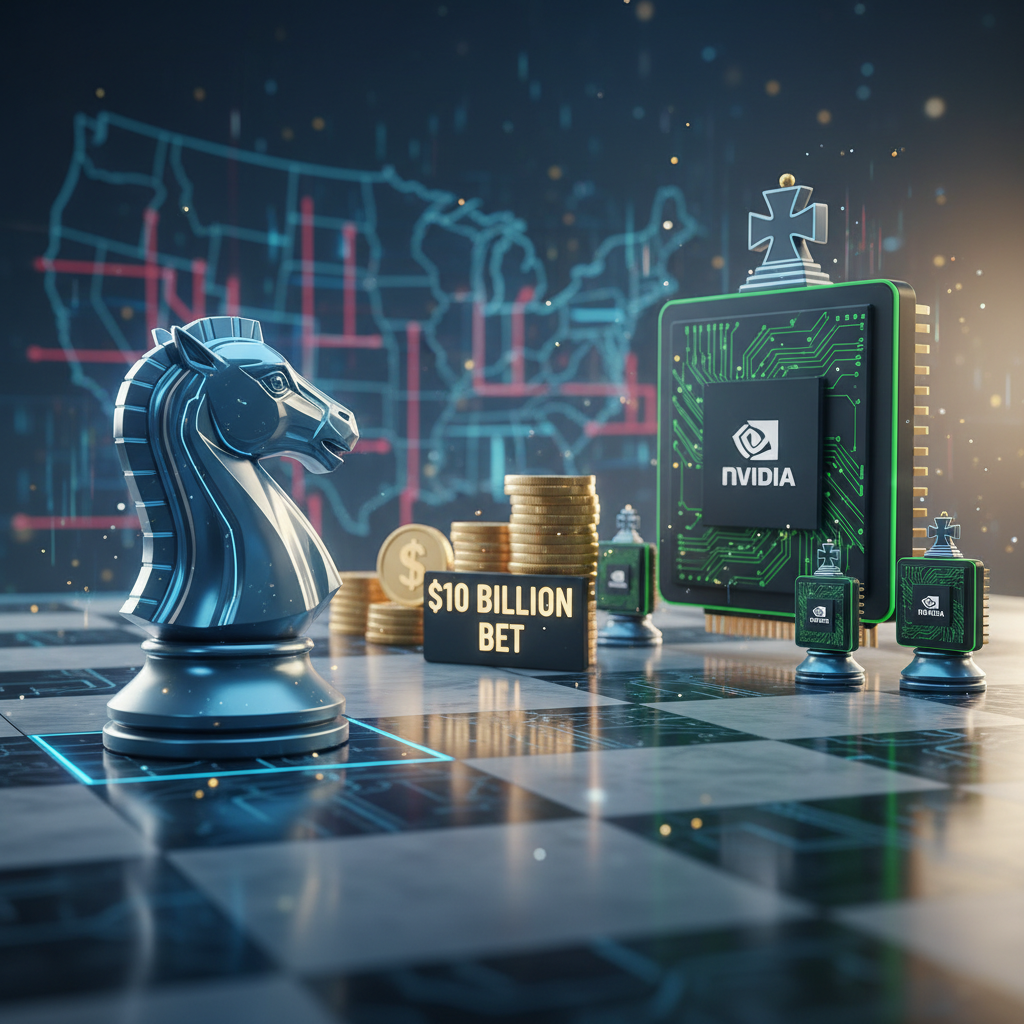

The digital battleground of artificial intelligence is defined by computational power, and for years, one name has reigned supreme: NVIDIA. Their Cuda platform and GPU dominance have become the de facto standard for AI training and inference, leaving competitors scrambling. Enter Intel, a venerable American institution, with a multi-billion dollar gambit centered on its Gaudi AI accelerator chips. This is not merely a product launch; it is a high-stakes play for survival, a desperate attempt to claw back market share and influence in an arena critical to America's future.
Intel's strategic move is audacious, yet necessary. Facing a precipitous decline in its traditional CPU market share and a late entry into the AI accelerator race, the company has doubled down on its Habana Labs acquisition, rebranding its AI chip line as Gaudi. The latest iteration, Gaudi 3, boasts significant performance improvements, with Intel claiming it can outperform NVIDIA's H100 in certain large language model workloads by a substantial margin, sometimes up to 50 percent more efficiency in inference tasks. This isn't just about raw speed; it's about cost efficiency, a critical factor for hyperscalers and government agencies grappling with the astronomical price tags of AI infrastructure. Intel has committed over $10 billion in research and development and manufacturing capacity specifically for its AI accelerator division over the next three years, a figure that underscores the gravity of their ambition.
Context and Motivation: A Geopolitical Imperative
The motivation behind Intel's aggressive push extends far beyond quarterly earnings reports; it is deeply intertwined with national security and economic sovereignty, particularly here in the United States. The Department of Defense, the Department of Energy, and various intelligence agencies are increasingly reliant on AI for everything from predictive analytics to autonomous systems. The current near-monopoly held by NVIDIA presents a single point of failure, a strategic vulnerability that Washington policymakers are acutely aware of. "Reliance on a sole vendor for such critical technology is a national security risk we can no longer afford," stated Dr. Evelyn Reed, a senior advisor for AI policy at the Pentagon, in an exclusive interview. "Diversification in our AI compute supply chain is not just a preference, it is an imperative for maintaining our technological edge and safeguarding our interests."
Furthermore, the economic implications are staggering. The global AI chip market is projected to reach well over $100 billion by 2030, and the lion's share of that revenue currently flows to NVIDIA. For an American company like Intel, regaining even a fraction of this market represents thousands of high-paying jobs, billions in domestic investment, and a critical boost to the nation's technological competitiveness against rivals like China. The lobbying records tell a different story than Intel's public pronouncements about innovation. My investigation reveals a significant uptick in Intel's lobbying expenditures in Washington D.C. over the past 18 months, with a particular focus on federal procurement policies and incentives for domestic chip manufacturing. This includes advocating for specific language in upcoming defense appropriations bills that prioritize 'diverse and resilient AI compute infrastructure,' a clear nod to their own offerings.
Competitive Analysis: A David and Goliath Struggle
Intel's primary adversary is, unequivocally, NVIDIA. Jensen Huang's company has cultivated an ecosystem around its Cuda platform that is notoriously difficult to dislodge. Developers, researchers, and enterprises have invested years in building their AI models and applications on Cuda, creating a powerful network effect. This vendor lock-in is NVIDIA's greatest strength and Intel's most formidable challenge. Other players, such as AMD with its Instinct accelerators and ROCm software stack, are also vying for a piece of the pie, but they too face the Cuda hurdle.
Beyond the established giants, a flurry of startups are emerging, often focusing on specialized AI workloads or novel architectures. Companies like Cerebras Systems and Graphcore, though smaller, offer innovative solutions that could carve out niches. However, none possess the manufacturing scale or the deep-seated government relationships that Intel commands. "NVIDIA's lead is not just technical, it's systemic," explained Dr. Kenji Tanaka, a semiconductor analyst at Gartner. "They have built an entire industry around their platform. Intel isn't just selling a chip; they are trying to sell an alternative ecosystem, and that is a monumental task." You can read more about the broader AI chip market dynamics on TechCrunch.
Strengths and Weaknesses: A Mixed Bag
Intel's strengths are considerable. First, its manufacturing capabilities are second to none, with a global footprint and significant investments in advanced packaging technologies. This scale allows for competitive pricing and reliable supply, factors that are increasingly important in a volatile geopolitical landscape. Second, Intel has deep, long-standing relationships with enterprise customers and government agencies, particularly in the defense sector. These relationships provide a crucial entry point for their Gaudi chips, especially as agencies seek to diversify their AI infrastructure. Third, Intel's open software approach, leveraging PyTorch and TensorFlow, aims to reduce the friction for developers accustomed to NVIDIA's proprietary Cuda, although this is a long road.
However, the weaknesses are equally stark. The primary challenge remains the software ecosystem. While Gaudi 3 offers impressive hardware specifications, the lack of a mature, widely adopted software stack comparable to Cuda is a significant impediment. Developers are hesitant to port their existing codebases or invest in learning a new platform unless the performance gains are truly overwhelming or the cost savings are irresistible. "The hardware is only half the battle; the software is where the war is won or lost," commented Maria Rodriguez, lead AI engineer at a major financial institution in New York. "Until Intel can offer a seamless, robust, and well-supported development experience, many will stick with what they know, regardless of potential hardware advantages." Furthermore, Intel's reputation for inconsistent execution in new markets, particularly with its past attempts in discrete GPUs, casts a long shadow. The company also faces the perception of being a 'legacy' player, struggling to adapt to the rapid pace of AI innovation. The sheer capital expenditure required to compete at this level is also a constant drain on resources, even for a company of Intel's size.
Verdict and Predictions: A Long Shot, But Not Impossible
Is Intel's Gaudi strategy enough to break NVIDIA's stranglehold? The short answer is: it is a necessary, but insufficient, condition for success. Intel cannot simply out-spec NVIDIA; it must out-ecosystem them. This means not just building better chips, but fostering a vibrant developer community, providing unparalleled support, and securing strategic partnerships with hyperscalers and AI startups. The company's recent collaboration with Microsoft, where Gaudi accelerators are being integrated into Azure, is a promising step, but more such alliances are needed. Washington's AI policy is shaped by these players, and Intel's ability to leverage its domestic presence and lobbying power will be critical.
My investigation reveals that Intel is playing a long game, betting that the sheer demand for AI compute will eventually necessitate multiple strong players, and that cost efficiency and supply chain resilience will become paramount. While NVIDIA's market share may not be entirely eroded, Intel could realistically capture a significant portion of the burgeoning AI inference market, particularly in enterprise and government sectors where cost and vendor diversification are key considerations. The training market, with its deep Cuda entrenchment, will be a much harder nut to crack. Intel's success hinges not just on the technical prowess of Gaudi 3, but on its ability to convince the broader AI community that its ecosystem is a viable, long-term alternative. This will require sustained investment, relentless execution, and perhaps most importantly, a cultural shift within Intel itself to embrace the open, collaborative spirit that defines the modern AI landscape. The future of American AI infrastructure, and indeed, Intel's own relevance, hangs in the balance. For further insights into the strategic challenges facing the semiconductor industry, one might consult MIT Technology Review.

Intel's journey is a microcosm of the broader struggle for technological leadership in the 21st century. It is a story of immense capital, geopolitical maneuvering, and the relentless pursuit of innovation. Whether Gaudi will become a cornerstone of the AI era or merely a footnote in NVIDIA's continued dominance remains to be seen, but one thing is clear: the fight for AI compute supremacy is far from over, and the stakes for the United States could not be higher.