
The wind howls outside my office in Reykjavik, a constant reminder of nature's raw power. It is a good backdrop for thinking about raw computing power, and the companies that wield it. For months now, the AI world has been buzzing about the closed gardens of OpenAI and Google, their proprietary models like GPT and Gemini locked away, accessible only through APIs and carefully curated interfaces. Then there is Meta, with its Llama series, throwing the doors wide open. In Iceland, we think differently about this, and the data suggests our pragmatism might be onto something.
It is not just about idealism, you see. It is about utility, sustainability, and sovereignty. When OpenAI or Google releases a new model, it is a black box. You can use it, you can marvel at its capabilities, but you cannot truly understand it, modify it, or host it on your own infrastructure without significant constraints. This creates a dependency that, for a small nation like ours, feels a bit like putting all your fish in one trawler. What if that trawler decides to change its route, or charge exorbitant fees, or simply sinks? This is why the open-source movement, championed by Meta with Llama, is gaining serious traction, especially in places where self-reliance is a way of life.
Consider the numbers. According to a recent report by Reuters, open-source AI models, led by Meta's Llama, now account for over 60% of all AI model downloads on platforms like Hugging Face. That is a significant shift from just 18 months ago, when proprietary models dominated the conversation. This surge is not accidental. Developers, researchers, and even smaller businesses are finding that the flexibility and cost-effectiveness of open models are simply too good to ignore. You can fine-tune Llama for specific tasks without paying per token, run it on your own hardware, and crucially, audit its behavior. For critical applications, where transparency and control are paramount, this is a game-changer.
“The ability to inspect and modify the underlying code of a large language model is not just a technical advantage, it’s a philosophical one,” explains Dr. Elín Jónsdóttir, head of AI research at the University of Iceland. “For us, it means we can adapt these powerful tools to our unique linguistic and cultural needs, ensuring that AI development here is truly for Icelanders, by Icelanders. We are not just consumers, we are active participants.” Her team recently used a fine-tuned Llama 3 model to develop a robust Icelandic language translation system, something they say would have been prohibitively expensive and difficult with a closed model.
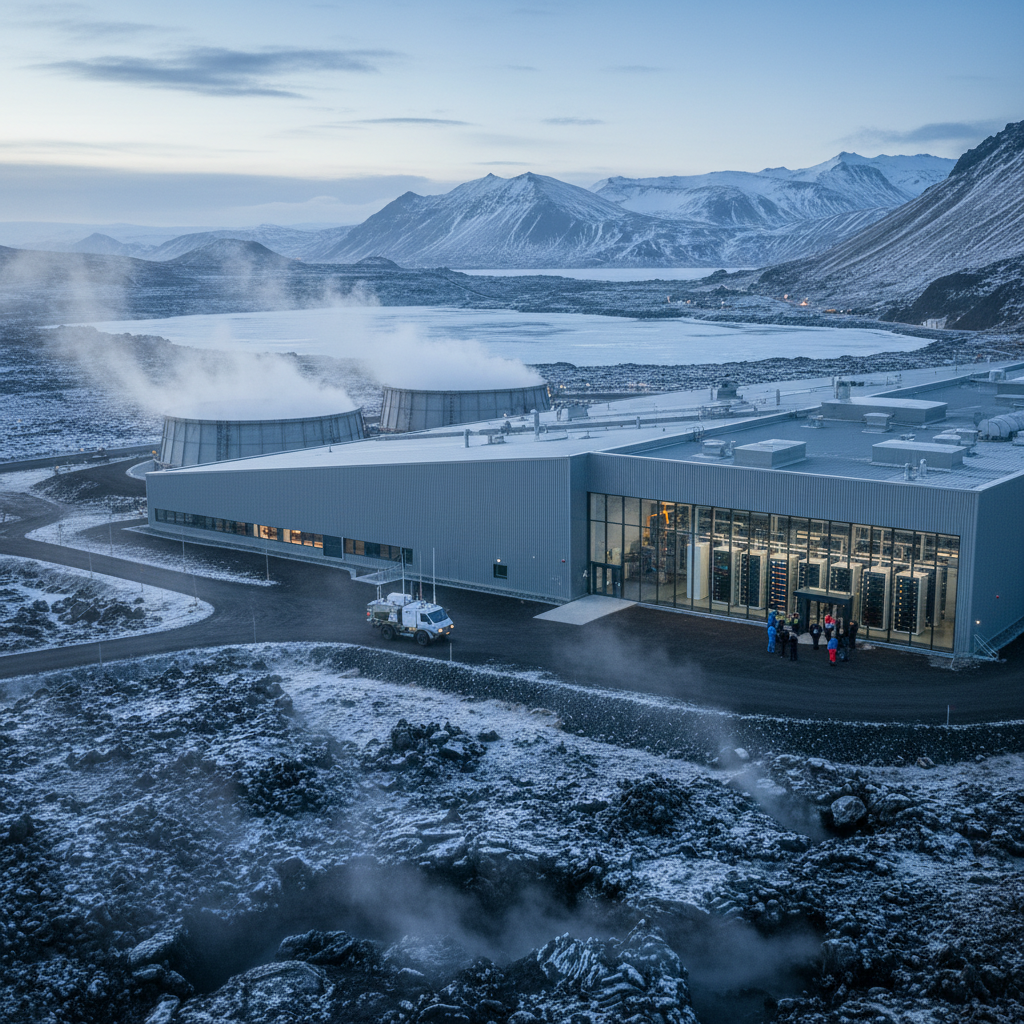
This brings me to the geothermal approach to computing. Our data centers, powered almost entirely by renewable geothermal and hydroelectric energy, are some of the greenest in the world. Running proprietary models often means relying on distant, energy-intensive cloud infrastructure. With open-source models, we can deploy them locally, leveraging our abundant clean energy. This significantly reduces the carbon footprint of AI operations, a point of pride and a strategic advantage for us. We are not just talking about saving kronur, we are talking about saving the planet, one inference at a time.
Mark Zuckerberg, Meta's CEO, has been vocal about his company's commitment to open source. While some critics suggest it is a strategic move to gain market share against Google and OpenAI, the practical benefits for the wider AI ecosystem are undeniable. “Meta’s approach has democratized access to cutting-edge AI in a way that no other major player has,” stated Guðmundur Ólafsson, CEO of IceAI, a Reykjavik-based startup specializing in AI solutions for sustainable fisheries. “It has allowed startups like ours to innovate without being held hostage by exorbitant API costs or opaque terms of service. We can build, test, and deploy faster, and that translates directly into better products for our customers.”
The data supports this. A recent study by the Icelandic Ministry of Innovation found that startups leveraging open-source AI models reported a 35% lower average development cost compared to those relying solely on proprietary APIs. Furthermore, the time to market for new AI-powered products was reduced by an average of 20%. Small nations have big advantages in AI when they embrace flexibility and self-sufficiency.
Of course, it is not all sunshine and rainbows in the open-source world. There are legitimate concerns about safety, security, and the potential for misuse. When anyone can access and modify a powerful AI model, the risks are amplified. However, proponents argue that transparency itself can be a form of security. With more eyes on the code, vulnerabilities are often identified and patched more quickly. The community-driven nature of open source fosters a collective responsibility that is often absent in closed systems.
“The debate between open and closed AI models is really a debate about the future of innovation and control,” says Anna Björnsdóttir, a senior policy advisor at the Icelandic Directorate of Technology. “Do we want a future where AI is controlled by a few powerful corporations, or one where its development is a collaborative effort, benefiting everyone? For us, the answer is clear. We need to be able to build on these foundations, not just rent them.”
Looking ahead, the momentum behind open-source AI shows no signs of slowing. Companies like Mistral AI in Europe are also making significant strides, further diversifying the landscape. While OpenAI and Google continue to push the boundaries of what proprietary models can do, Meta's Llama has carved out a vital niche, especially for those who value control, cost-efficiency, and the ability to adapt technology to their specific needs. It is a lesson in practical wisdom, one that we here in Iceland understand quite well. The future of AI, it seems, might just be built on shared foundations, not walled gardens, and that is a future I can certainly get behind. For more on the latest AI developments, you can always check out TechCrunch's AI section. We are keeping a close eye on all of it, from our perch here on the edge of the world. Perhaps even more importantly, the open approach allows for greater scrutiny and adaptation for smaller languages, like Icelandic. This is crucial for preserving our linguistic heritage in the age of AI, a topic I have explored before in our analysis of language models [blocked] and their impact on diverse tongues.