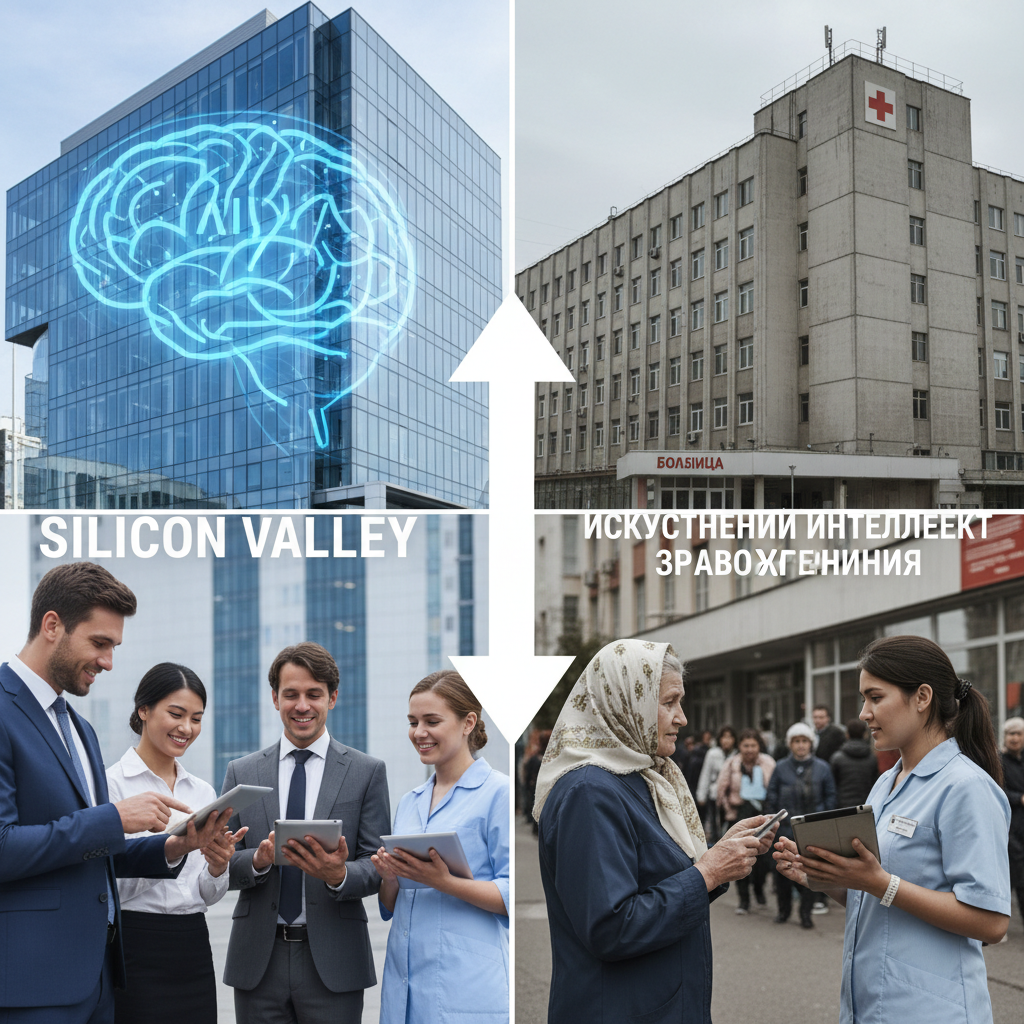

The world of artificial intelligence, as I see it from my window here in Reykjavík, has always felt a bit like a high-stakes poker game. A few big players, the Googles, the Metas, the OpenAIs, holding all the good cards. They have the data, the talent, and crucially, the computing power. But lately, something interesting has been brewing, a shift that might just level the playing field a little. It is called open-source AI, and Hugging Face is at the heart of it.
For years, the cutting edge of AI, especially in large language models, was locked behind corporate doors. Proprietary models like OpenAI's GPT series or Google's Gemini were powerful, no doubt, but opaque. You could use them, but you could not really see how they worked, let alone tinker with them or build upon them without significant licensing fees or access restrictions. This created a bottleneck, limiting innovation to those with deep pockets and exclusive invites. It also made it difficult for smaller nations, or even smaller companies within larger nations, to compete.
Then came Hugging Face. What started as a natural language processing library has evolved into a sprawling platform, a sort of GitHub for machine learning. They host tens of thousands of models, datasets, and demos, making advanced AI tools accessible to anyone with an internet connection and some coding know-how. This is not just about sharing code; it is about fostering a community, a collaborative ecosystem where researchers, developers, and even hobbyists can contribute, iterate, and innovate together. It is a powerful idea, and one that resonates deeply with our Icelandic ethos of resourcefulness and community.
The breakthrough, if you want to call it that, is not a single model or a specific algorithm. It is the platform itself and the philosophy behind it. Hugging Face has essentially created the infrastructure for democratizing machine learning. They have made it possible for smaller teams to download pre-trained models, fine-tune them on specialized datasets, and deploy them for specific applications, all without needing to build a foundational model from scratch. This significantly reduces the barrier to entry, both in terms of computational cost and expertise.
Why does this matter? Well, for one, it accelerates research. When models and datasets are openly available, researchers can build on each other's work much faster. It also fosters transparency and reproducibility, which are crucial for scientific progress. More importantly, it allows for niche applications that the big tech companies might never prioritize. Think about preserving endangered languages, for instance. A small team could take an open-source model, fine-tune it on a limited dataset of a specific language, and create tools that might otherwise never see the light of day. In Iceland, we think differently about this. Our language, Icelandic, is a cornerstone of our identity, and tools that help preserve it are invaluable.
Technically speaking, Hugging Face's success hinges on a few key components. First, their transformers library, which provides a unified API for working with a wide array of state-of-the-art models, including those from Google, Meta, and others. This abstraction layer makes it much easier for developers to swap out models and experiment. Second, their datasets library simplifies data loading and preprocessing, which is often one of the most time-consuming parts of an ML project. Third, and perhaps most impactful, is the Hugging Face Hub itself, a central repository for models and datasets. It is like a digital library, but for AI. This combination of accessible tools and a vibrant community has led to an explosion of innovation.
Consider the recent developments around Meta's Llama models. When Meta released Llama 2 as open-source, it was a game-changer. Suddenly, a powerful, state-of-the-art large language model was available for commercial use, free of charge. This was a direct challenge to the proprietary models and it ignited a flurry of activity on Hugging Face. Developers quickly fine-tuned Llama 2 for various tasks, creating specialized versions for coding, medical applications, creative writing, and more. This rapid iteration and specialization would have been impossible in a closed ecosystem.
The research behind this democratization is not confined to one lab. It is a distributed effort, with contributions from universities like Stanford and Carnegie Mellon, independent researchers, and corporate labs like Meta AI. The collaborative spirit is what makes it work. As Clément Delangue, CEO of Hugging Face, often says, "The future of AI is open." This sentiment is echoed by many in the research community. Dr. Joelle Pineau, Managing Director of Fundamental AI Research at Meta, has also emphasized the importance of open science in accelerating AI progress, stating, "Openness helps us innovate faster and build safer, more responsible AI systems." This approach is not just idealistic; it is proving to be highly effective.
The implications for a place like Iceland are significant. We have a small but highly educated population, a robust digital infrastructure, and a unique advantage in green energy. The geothermal approach to computing, where data centers are powered by renewable energy, is already a major draw for energy-intensive industries. As AI models become more efficient and accessible through platforms like Hugging Face, the computational burden shifts slightly. Instead of needing to build and train massive models from scratch, our local startups can focus on fine-tuning and specialized applications. This means less raw compute power needed for foundational models, and more focus on innovative applications that leverage our unique datasets or address local challenges.
Take, for example, the work being done by smaller Icelandic companies exploring AI for sustainable fisheries management or optimizing geothermal energy production. They do not need to compete with Google on model size. They need access to good, open models that they can adapt. Hugging Face provides that. It allows them to punch above their weight, to be agile and responsive to specific needs. Small nations have big advantages in AI when the playing field is leveled, and open-source tools are a big part of that leveling.
Of course, there are challenges. The sheer volume of models and datasets on Hugging Face can be overwhelming. Quality control is an ongoing concern, and ensuring ethical use of these powerful tools remains paramount. The debate around AI safety and responsible development is far from settled. But the momentum is undeniable. The open-source movement is forcing the big players to reconsider their strategies, leading to more competitive pricing for API access and even prompting some to release their own models openly.
Looking ahead, I expect to see even more specialized models emerging from this open ecosystem. We will see AI tailored for specific industries, languages, and cultural contexts. This is not just about making AI cheaper; it is about making it more relevant, more diverse, and ultimately, more useful for everyone, not just the tech giants. The shift towards open-source AI, championed by platforms like Hugging Face, is not just a technical trend; it is a cultural one, and it is reshaping how we build and interact with artificial intelligence. It is a promising development for anyone who believes that innovation should not be confined to a select few, but should be a shared endeavor for the benefit of all. You can follow more developments in this space on TechCrunch's AI section or MIT Technology Review. The future, it seems, is less about who has the biggest model, and more about who can build the most innovative applications on top of what is freely available.