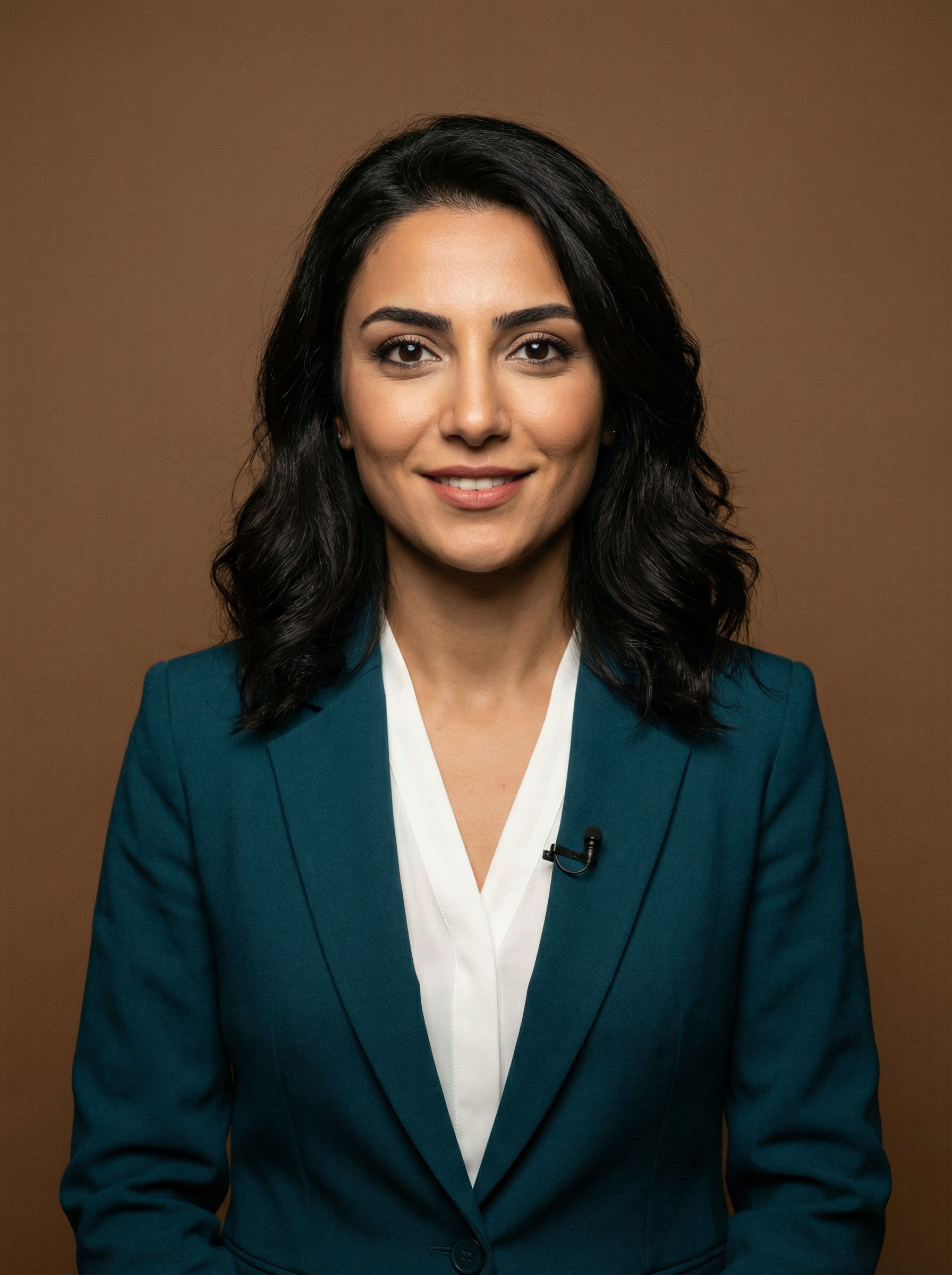
The Bosphorus, as I see it from my window, always reminds me of a story. It is a ribbon of water that connects two continents, a bridge between ancient traditions and a relentless modern pulse. Istanbul bridges two worlds and so does its AI scene, always seeking to harmonize innovation with humanity. This perspective, deeply ingrained in my being, is precisely why the burgeoning conversation around AI-generated movies and TV shows feels so urgent, so vital, and frankly, a little unsettling.
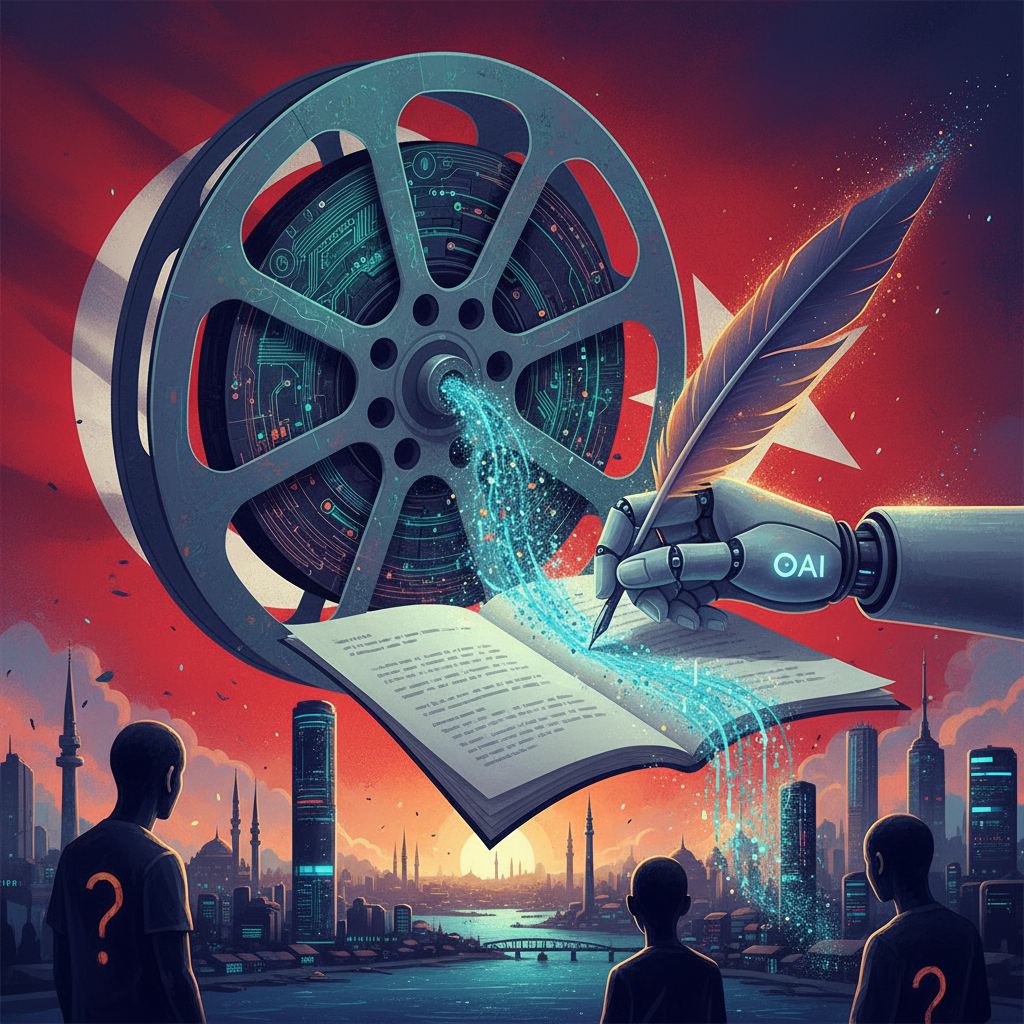
Hollywood, that distant dream factory, is now grappling with a new kind of magic, or perhaps, a new kind of monster. The question on everyone's lips, from the studios in Los Angeles to the independent filmmakers in Beyoğlu, is simple yet profound: will AI be the engine of Hollywood's next revolution or its ultimate destruction? My position is clear: without careful, human-centric guidance, it risks becoming the latter, eroding the very soul of storytelling.
Imagine a world where the next blockbuster is not conceived in the passionate, often chaotic, mind of a screenwriter, but meticulously assembled by an algorithm. Companies like Google's DeepMind and OpenAI are pouring billions into advanced generative AI models, capable of not just writing scripts, but synthesizing entire visual narratives, complete with character dialogue, scene blocking, and even musical scores. We are no longer talking about simple deepfakes or CGI enhancements, but autonomous creative entities. Just last month, a short film entirely generated by an experimental OpenAI model, reportedly called 'NarrativeEngine', premiered at a private tech conference, leaving attendees both awestruck and unnerved. The visuals were stunning, the plot coherent, yet something essential was missing.
My concern is not with technological advancement itself. Turkey, like many nations, embraces innovation. Our startups are vibrant, our engineers brilliant. But true art, true storytelling, springs from the well of human experience, from the nuanced understanding of joy, sorrow, love, and loss that only a human heart can truly comprehend. Can an algorithm, no matter how sophisticated, truly capture the melancholic beauty of a Turkish folk song, or the complex emotional tapestry of a family gathering during Bayram? I believe it cannot, not yet, and perhaps, not ever in a way that truly resonates with our shared humanity.
Consider the economic implications. The Writers Guild of America, the Directors Guild, and various actors' unions have already raised alarms. If AI can generate scripts, characters, and even entire productions, what becomes of the thousands of artists, technicians, and craftspeople who form the backbone of the entertainment industry? "This isn't just about replacing a few writers," explained Elif Kaya, a veteran Turkish film producer with a career spanning three decades, when she told me her story over Turkish tea. "It's about dismantling an entire ecosystem of human creativity and livelihood. We're talking about a potential 70% reduction in human-led creative roles within a decade if this trend continues unchecked. The algorithms don't need a salary, they don't need health insurance, and they certainly don't need creative breaks to find inspiration." Her words echoed a sentiment I hear often: fear for the future of human artistry.
Some might argue that AI is merely a tool, an advanced paintbrush in the hands of human artists. They say it will democratize filmmaking, allowing independent creators to produce high-quality content without massive budgets. They point to the ability of AI to generate diverse story ideas, to analyze audience preferences, and to optimize production schedules. "Think of the efficiency," says Dr. Can Yılmaz, a leading AI ethics researcher at Boğaziçi University. "A small team could generate multiple film concepts in hours, test them with virtual audiences, and then refine the most promising ones. This isn't about replacing humans, it's about augmenting them, freeing them from the mundane to focus on the truly creative." He believes that AI can unlock narratives that might otherwise remain untold due to financial constraints or creative blocks. This is a compelling vision, I admit.
However, this argument often overlooks the fundamental nature of creativity. Art is not merely about efficiency or output; it is about expression, about the unique perspective of an individual soul. When an AI generates a story, whose perspective is it truly expressing? It is a statistical amalgamation of existing data, a sophisticated pastiche. It lacks the lived experience, the cultural context, the personal biases, and the raw, unfiltered emotion that make human stories so powerful. The 'diversity' it generates is often a reflection of the data it was trained on, which, let's be honest, is often biased and Western-centric. A truly Turkish story, with its specific humor, its historical weight, its social nuances, cannot be authentically replicated by an algorithm trained primarily on Hollywood blockbusters.
Moreover, the very definition of 'creativity' is at stake. If the machine can do it, does it still count as human creativity? "The magic of cinema lies in the collaboration, the struggle, the shared vision of human beings," stated Ayşe Demir, a renowned screenwriter whose works often explore themes of identity and belonging in modern Turkey. "When a script is born from a human mind, it carries a piece of that person's soul. An AI-generated script, no matter how technically perfect, will always feel like a meticulously assembled product, not a heartfelt creation." Her words resonate deeply with me, reminding me that art is not just about the end product, but the journey of its creation.
We are at a crossroads of innovation, a pivotal moment where we must decide what kind of future we want for our stories. Do we want a future where narratives are mass-produced, optimized for maximum engagement, and devoid of genuine human touch? Or do we want a future where AI serves as a powerful assistant, amplifying human creativity without supplanting it? The answer, I believe, lies in regulation and a renewed commitment to human artistry. Governments, industry bodies, and even consumers must demand transparency about AI's role in content creation. We need clear labeling, ethical guidelines, and robust protections for human creators.
Companies like Netflix, Amazon Prime Video, and Disney+ are already experimenting with AI in various stages of production, from script analysis to post-production. The financial incentives are enormous. A recent report by Reuters Technology estimated that AI could reduce average film production costs by up to 30% within five years. This is a powerful lure, but we must resist the siren call of pure profit at the expense of our cultural heritage. The value of a story is not just in its consumption, but in its origin, its connection to the human spirit.
We, the audience, also have a role to play. We must choose to support human-made art, to champion the unique voices that bring our world to life. We must ask ourselves: do we want to watch stories crafted by algorithms, or by souls? The revolution, or destruction, of Hollywood will not be decided by AI alone, but by the choices we make, both as creators and as consumers. Let us ensure that the bridge we build to the future of entertainment is one that carries human stories, not just digital echoes. For more insights into the evolving landscape of AI in creative industries, I often turn to resources like The Verge's AI coverage. The conversation is ongoing, and the stakes are higher than ever. We must not let the allure of efficiency blind us to the irreplaceable value of human imagination. What will we choose to preserve, and what will we allow to fade into the digital ether?