Let me tell you something, from the sweltering streets of Caracas, when I hear the tech titans in Silicon Valley crowing about their AI-powered climate models, my first instinct is not to cheer. It is to ask: for whom, exactly, is this a triumph? They talk about predicting extreme weather with unprecedented accuracy, about Google DeepMind's GraphCast or NVIDIA's Earth-2 platform, and I think, chamo, that’s great for places with working infrastructure. For us, it feels like a high-definition forecast of a disaster we are still powerless to prevent. This is an unpopular opinion from Caracas, I know, but someone has to say it.
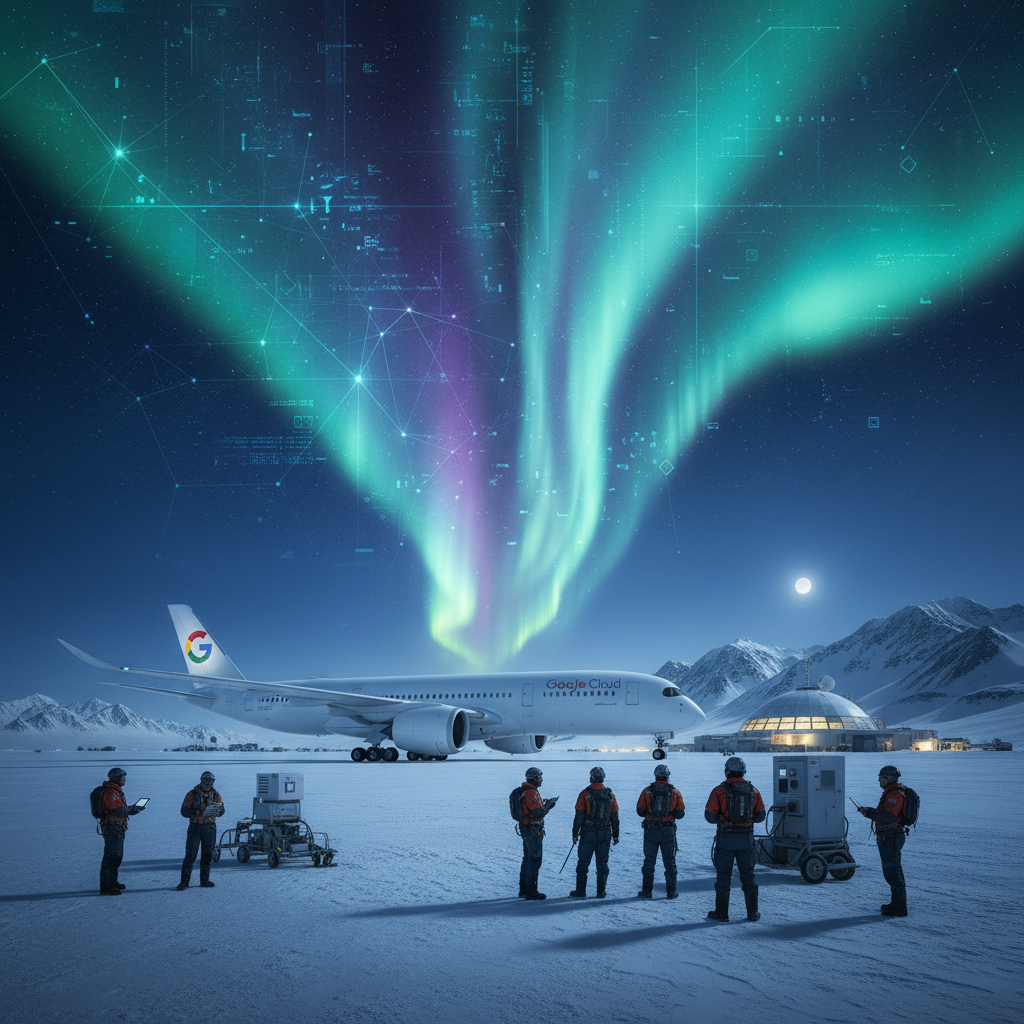
The narrative is always the same: AI, the savior. AI, the oracle. They say these models, trained on petabytes of historical weather data and atmospheric physics, can now predict global weather patterns faster and more accurately than traditional supercomputer simulations. DeepMind's GraphCast, for instance, reportedly outperforms conventional systems on 90 percent of metrics, predicting conditions up to 10 days out with remarkable precision. NVIDIA's Earth-2, running on their powerful H100 GPUs, aims to create a digital twin of Earth to simulate climate change at unprecedented resolution. This sounds like science fiction, and in many ways, it is a marvel of human ingenuity, no doubt. But what good is knowing a hurricane is coming if your early warning system is broken, your evacuation routes are impassable, and your emergency services are stretched thinner than a arepa on a bad day?
I’ve lived through enough floods and landslides here to know that prediction is only half the battle. The other, far more brutal half, is resilience. It is about having the resources, the infrastructure, and the social safety nets to withstand the storm, to rebuild, and to protect your most vulnerable. When I see the headlines about these AI breakthroughs, I cannot help but feel a growing chasm between the promise of technology and the reality on the ground for much of the world. The crisis created something unexpected for us here, yes, a certain kind of gritty innovation, but it did not create endless resources.
Consider the sheer computational power required for these models. Google and NVIDIA are pouring billions into this. Jensen Huang, NVIDIA’s CEO, often speaks about Earth-2 as a mission to save the planet, a grand endeavor requiring the most advanced AI and accelerated computing. “We are building a digital twin of Earth,” he declared at a recent conference, “to predict climate change and weather patterns with unprecedented accuracy.” This is a noble goal, I will grant him that. But who benefits first? The wealthy nations, with their robust data centers, their stable grids, their well-funded meteorological agencies. They get the precise warnings, the sophisticated mitigation strategies. For us, it is often a matter of hoping the power stays on long enough to even receive the basic warning, let alone interpret the nuanced outputs of a cutting-edge AI model.
My concern is not with the technology itself, but with the distribution of its benefits and the priorities it implicitly sets. Are we investing enough in the foundational infrastructure that allows these predictions to translate into protection for everyone, not just those in the global north? Dr. Elizabeth Barnes, an atmospheric scientist at Colorado State University, highlighted this disconnect when discussing AI in weather forecasting. She noted, “AI models are incredibly powerful for prediction, but their real-world impact depends entirely on how well we integrate them into decision-making processes and whether communities have the capacity to respond.” Her point is critical: without the capacity to respond, even perfect prediction is just a sophisticated way of watching disaster unfold. You can read more about these developments on platforms like MIT Technology Review.
Some will argue that these models are a global public good, that better predictions anywhere benefit everyone. They will say that improved global forecasts can inform humanitarian aid, optimize agricultural planning, and help developing nations prepare. And yes, in theory, that is true. A more accurate global model can certainly provide earlier warnings for regions prone to extreme weather. But the gap between receiving a warning and being able to act on it is immense. It is the difference between knowing a flood is coming and having the resources to build levees, or evacuate, or even just secure your home. For many communities here, that gap is a canyon.
Take the example of Venezuela. We face a myriad of challenges, from economic instability to infrastructure decay. When a powerful storm is predicted, the consequences are often catastrophic, regardless of how many days in advance we know about it. Roads are washed out, power grids fail, and communication systems collapse. The precision of Google DeepMind’s GraphCast, while impressive, does not magically repair a failing bridge or provide clean water to a displaced community. It does not solve the underlying vulnerabilities that turn a severe weather event into a full-blown humanitarian crisis. This is where the narrative of AI as a universal solution falls apart.
We need to shift the focus. Instead of solely celebrating predictive accuracy, we need to demand that the same ingenuity, the same investment, be directed towards building resilience in vulnerable regions. This means investing in robust, decentralized infrastructure, in local early warning systems that are accessible and actionable, and in community-led disaster preparedness. It means empowering local scientists and engineers, many of whom are part of Venezuela's tech diaspora reshaping AI globally, to adapt these technologies to their specific contexts and challenges.
I am not saying we should abandon AI climate modeling. Far from it. The science is incredible, and the potential is undeniable. But we must be honest about its limitations, especially when viewed from the perspective of those who bear the brunt of climate change with the fewest resources. We must ensure that these powerful tools do not just serve as a high-tech crystal ball for the privileged, but genuinely contribute to a safer, more equitable world for all. Otherwise, all this talk of unprecedented accuracy is just a cruel tease, a digital mirage shimmering over the very real struggles of places like Maracaibo, where the heat is already unbearable and the next storm could mean everything.
We need to ask ourselves: who is truly benefiting from this predictive power? Is it leading to equitable action, or just more data for those who already have the means to respond? The answers, I suspect, are far more complex and uncomfortable than the tech evangelists would have you believe. For more on the intersection of AI and global challenges, you can check out Reuters Technology. The future of climate resilience depends not just on what AI can predict, but on what humanity chooses to do with those predictions, and for whom. And that, mis amigos, is a question of justice, not just algorithms.