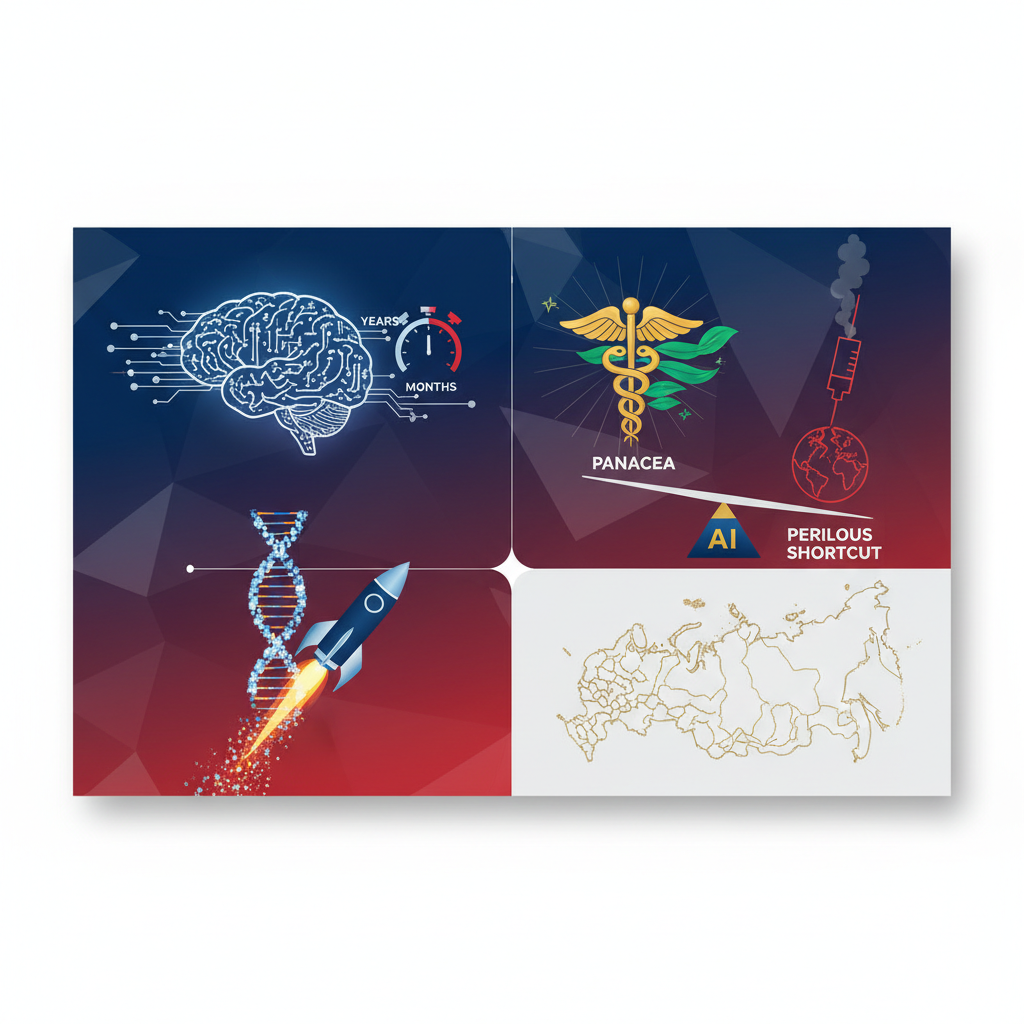

The question hangs heavy in the air, a whisper that has grown into a roar across scientific laboratories and corporate boardrooms: Can artificial intelligence truly condense the arduous, decade-long journey of drug discovery into a matter of months? This is not merely a theoretical query, it is a seismic shift now underway, challenging the very foundations of pharmaceutical research and development. From the hallowed halls of Cambridge to the burgeoning tech hubs of Moscow, the promise of AI accelerating drug pipelines is captivating, but like all rapid advancements, it demands rigorous scrutiny, particularly concerning its practical application and ethical implications.
Historically, the path from initial molecular synthesis to a market-ready drug has been fraught with immense cost, time, and failure. The traditional model, often described as a 'valley of death' for promising compounds, involves stages such as target identification, lead discovery, preclinical testing, and multiple phases of human clinical trials. Each step is a bottleneck, demanding significant capital investment and years of dedicated research. For instance, the average cost of bringing a new drug to market has been estimated by some studies to exceed $2 billion, with success rates often below 10 percent for compounds entering clinical development. This protracted process has long been the bane of pharmaceutical innovation, limiting the speed at which life-saving treatments reach patients and stifling the exploration of less common diseases.
Today, the narrative is dramatically different. Companies like Recursion Pharmaceuticals, BenevolentAI, and Insilico Medicine are leveraging sophisticated machine learning algorithms to sift through vast datasets of genomic information, protein structures, and chemical compounds. These AI systems can predict molecular interactions, identify potential drug candidates, and even design novel molecules with unprecedented speed. Insilico Medicine, a company with significant ties to both American and Chinese capital, made headlines with its AI-discovered and AI-designed drug candidate for idiopathic pulmonary fibrosis, which entered Phase 2 clinical trials in 2023. This achievement, from target identification to clinical candidate, reportedly took less than two years, a fraction of the traditional timeline.
My sources in the tech sector confirm that the enthusiasm is palpable, but so is a healthy dose of skepticism regarding the broader implications. The core of AI's power here lies in its ability to process and identify patterns in data far beyond human capacity. For example, generative AI models can design millions of novel compounds, while predictive models can assess their potential efficacy and toxicity before any physical synthesis occurs. This drastically reduces the number of compounds that need to be physically synthesized and tested, thereby compressing early-stage research. The Kremlin's digital strategy reveals a keen interest in these advancements, understanding their potential to bolster national health security and economic competitiveness, particularly in a landscape shaped by geopolitical tensions and sanctions.
However, the transition from in silico success to in vivo efficacy remains a formidable challenge. Dr. John Halamka, President of Mayo Clinic Platform, a leading figure in healthcare innovation, has publicly stated,