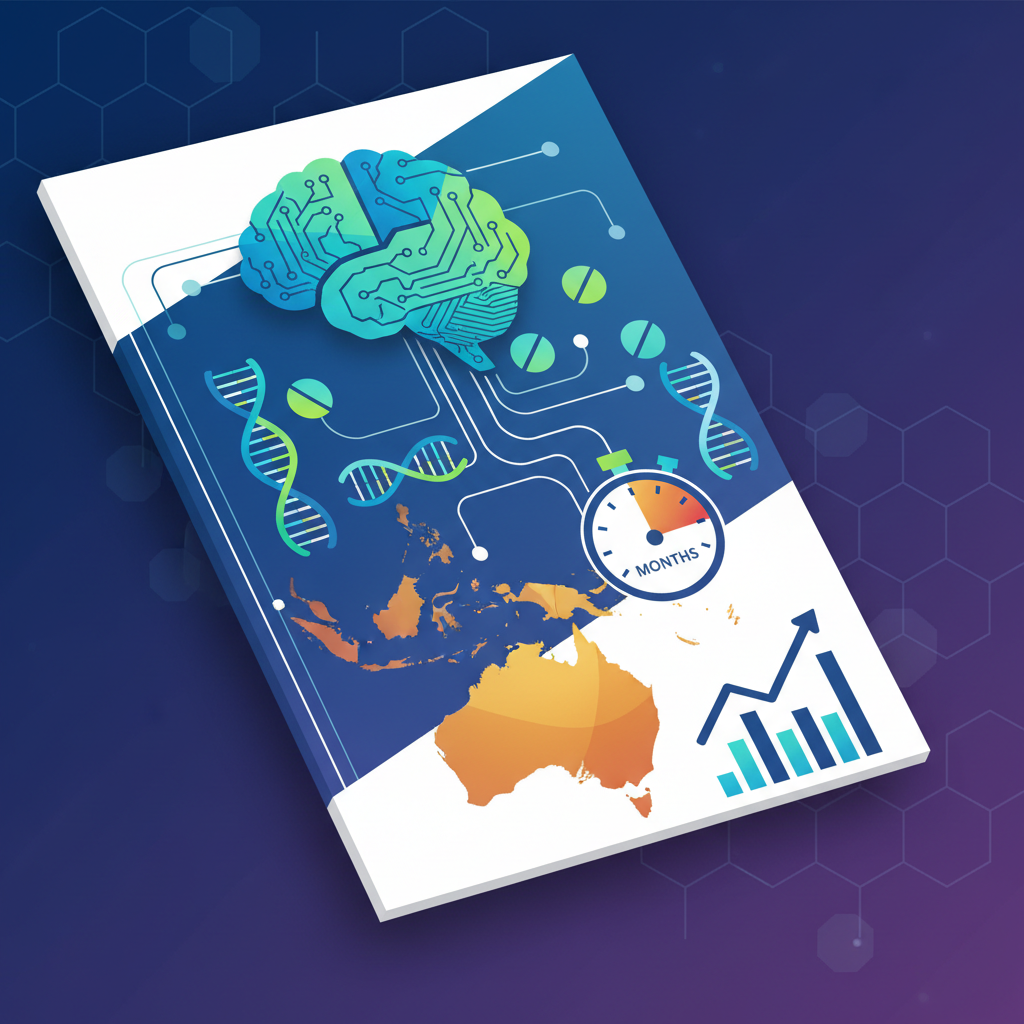
The news cycles are always buzzing with talk of artificial intelligence. Every week, it seems, there is a new breakthrough, a new company, a new promise. This time, the chatter is about AI-powered drug discovery, and how it is supposedly slashing the time it takes to bring new medicines to market, from years to mere months. It is a bold claim, one that demands a closer look, especially from our vantage point here in Fiji, where health challenges are often compounded by distance and limited resources.
For decades, pharmaceutical research and development has been a notoriously slow and expensive endeavor. Think about it: identifying a disease target, screening millions of compounds, optimizing lead candidates, conducting preclinical trials, then navigating three phases of human clinical trials, and finally, regulatory approval. This entire process can easily stretch over a decade, sometimes more, and cost billions of dollars. The average cost to develop a new drug is often cited as upwards of 2.6 billion US dollars, a figure that includes the cost of failures, according to a report from the Tufts Center for the Study of Drug Development. That is a staggering sum, and it means that only a fraction of potential treatments ever make it to patients.
This is where AI steps in, or at least, where its proponents say it steps in. The core idea is to automate and accelerate various stages of this pipeline. Machine learning algorithms can analyze vast datasets of biological information, chemical structures, and patient data to identify potential drug targets with greater precision. They can predict how compounds will interact with proteins, simulate molecular dynamics, and even design novel molecules from scratch. This is not just about speeding up existing processes, but fundamentally changing how we approach drug design. Companies like Recursion Pharmaceuticals, for instance, are using AI to map cellular biology and identify potential drug candidates at an unprecedented scale. Their approach involves generating massive datasets from biological experiments and then using machine learning to uncover new insights into disease mechanisms and therapeutic interventions. TechCrunch has covered their progress extensively.
So, is this a fad or the new normal? The data suggests a strong push towards the latter. In 2023, the global AI in drug discovery market was valued at several billion US dollars, with projections seeing it grow significantly over the next few years, potentially reaching tens of billions by the end of the decade. This growth is fueled by substantial investments. Major pharmaceutical companies are not just watching from the sidelines, they are actively partnering with AI startups. For example, in 2022, NVIDIA and Recursion announced a collaboration to accelerate drug discovery using NVIDIA’s AI infrastructure and supercomputing capabilities. This kind of partnership, marrying deep domain expertise with cutting-edge AI, is becoming increasingly common. NVIDIA's AI initiatives are pivotal in providing the computational power needed for these complex tasks.
Dr. Andrew Hopkins, CEO of Exscientia, a company that uses AI to design new drug candidates, articulated this shift well. He stated in a recent interview, “We are moving from a world where drug discovery was largely empirical, based on trial and error, to one that is rational and data-driven. AI allows us to explore chemical space far more efficiently than ever before, dramatically reducing the time and resources required.” Exscientia famously put an AI-designed molecule, DSP-1181, into human clinical trials for obsessive-compulsive disorder in just 12 months, a process that typically takes four to five years. This is a tangible example of the promised acceleration.
Another perspective comes from Dr. Daphne Koller, CEO and Founder of insitro, a company leveraging machine learning and human genetics to transform drug discovery. She emphasized the importance of data quality, saying, “The success of AI in drug discovery hinges on access to high-quality, relevant biological and clinical data. Without robust data, even the most sophisticated algorithms will struggle to yield meaningful insights.” Her point is crucial: AI is only as good as the data it learns from. This is a challenge, as biological data can be messy and incomplete.
For us in Fiji, and across the Pacific, this trend holds both immense promise and significant questions. We face unique health challenges, from the rising incidence of non-communicable diseases like diabetes and heart disease, to the persistent threat of climate-sensitive infectious diseases. Our populations are often small, geographically dispersed, and our healthcare infrastructure can be stretched thin. If AI can truly accelerate the discovery of new, more effective treatments, particularly for neglected tropical diseases or conditions prevalent in our region, that would be a game-changer. Imagine a future where a drug for a specific strain of dengue, or a more affordable treatment for a chronic illness common here, could be developed in a fraction of the time and cost. That is the kind of impact that matters.
However, the accessibility and affordability of these AI-discovered drugs remain a concern. Will these innovations primarily benefit wealthy nations, or will there be mechanisms to ensure equitable access for developing countries? The cost of AI infrastructure itself, the specialized talent required, and the intellectual property implications are all significant hurdles. In Fiji, we face the future with clear eyes, and we know that technological advancement does not automatically translate into universal benefit. The Pacific way of problem-solving often involves community-led initiatives and resourcefulness, and we must ensure these new technologies can integrate with our existing systems, not replace them with unaffordable, high-tech solutions.
There is also the question of local relevance. While AI can analyze global datasets, how well does it account for genetic diversity and environmental factors specific to populations like ours? The design of clinical trials also needs to evolve to include diverse populations early on, ensuring that new drugs are effective and safe for everyone, not just those in major research hubs. This is a point that Dr. Alistair Pagnamenta, a researcher focusing on genetic diseases in diverse populations, has often highlighted. He noted, “Genomic diversity is a critical factor in drug response. AI models must be trained on truly representative datasets to avoid perpetuating biases that could lead to ineffective or even harmful treatments for certain ethnic groups.” This is particularly relevant for the unique genetic profiles found in our Pacific communities.
My verdict? AI in drug discovery is certainly not a fad. It is a fundamental shift, a new normal that is already reshaping the pharmaceutical landscape. The early results are compelling, and the investment is real. Companies like DeepMind, through its AlphaFold project, have already revolutionized protein structure prediction, a foundational step in drug discovery. This kind of foundational work, openly shared, has immense potential. The MIT Technology Review has called AlphaFold one of the most significant AI breakthroughs in recent memory.
But for us, the true measure of its success will not be in how many months are shaved off the R&D timeline, but in whether it ultimately leads to healthier, more resilient communities in places like Fiji. Small island, big challenges, smart solutions will be needed to bridge the gap between cutting-edge AI in Silicon Valley labs and the practical health needs of our people. We need to advocate for equitable access, for research that considers our specific challenges, and for partnerships that build local capacity. The promise is there, now we must ensure the delivery reaches everyone.