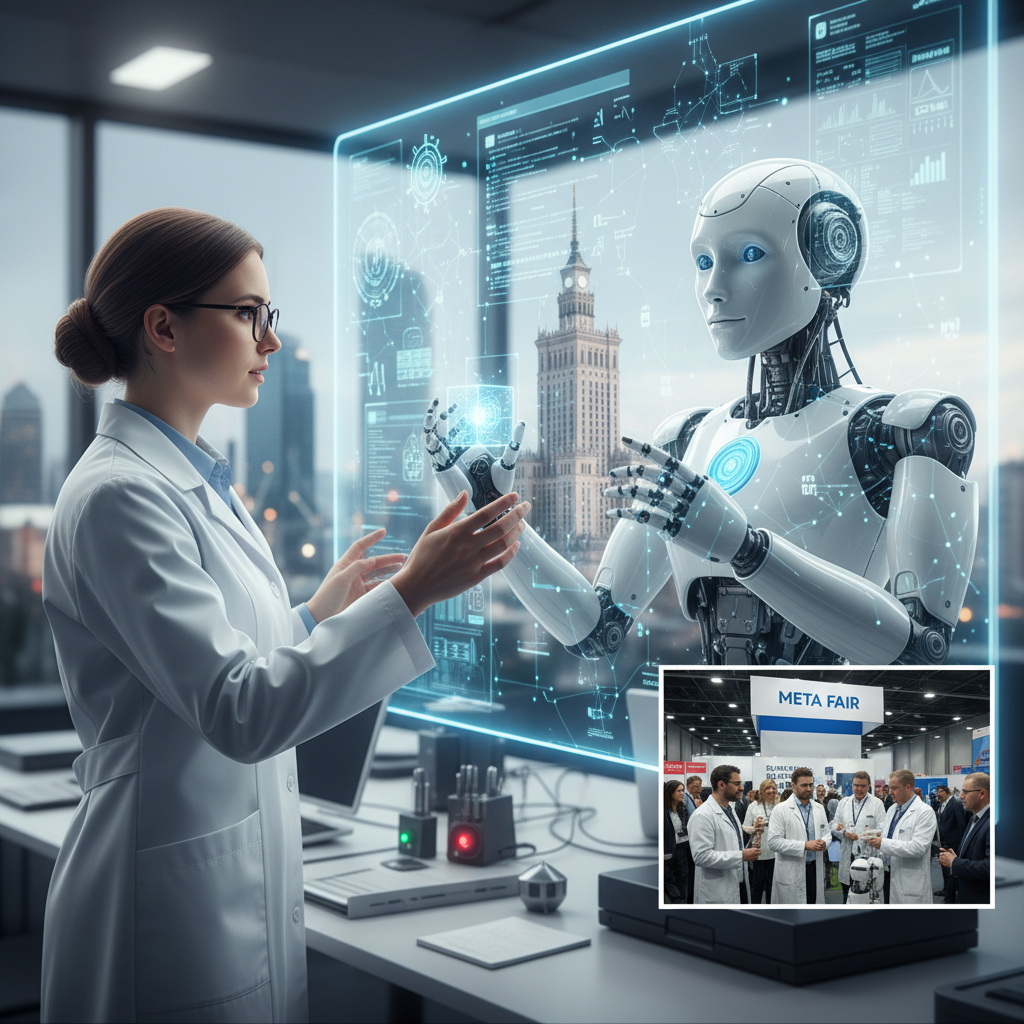
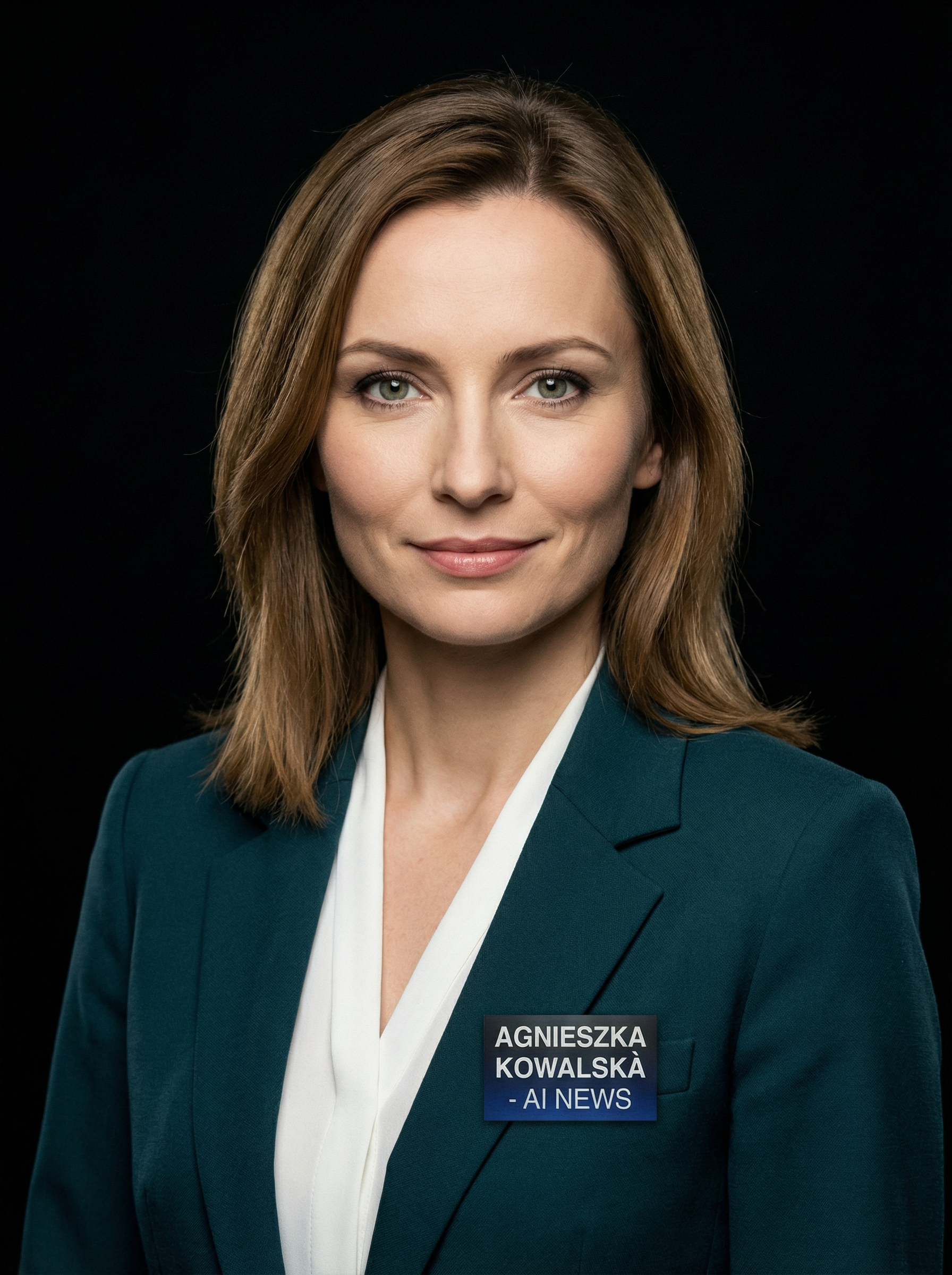
Dzień dobry, everyone! Agnieszka Kowalskà here, bubbling with excitement as always, and today we are diving deep into something truly special, something that makes my Polish heart swell with pride. We are talking about Meta's AI research lab, Fair, and its absolutely monumental contributions to open science. And guess what? Our corner of Europe, particularly Poland, is right at the heart of this global revolution.
You know, for years, the narrative was always about Silicon Valley, about the big tech giants keeping their secrets locked away like precious family recipes. But then, something shifted. Companies like Meta, with Mark Zuckerberg at the helm, started to embrace a different philosophy, a philosophy that says, 'Hey, the more we share, the faster we all grow.' And that, my friends, is the magic of open science, especially in artificial intelligence.
Meta's Fair, or Fundamental AI Research, has become a beacon for this movement. They are not just developing cutting-edge models; they are releasing them to the world. Think about Llama, their large language model. When Llama 2 was released last year, it was a game-changer. Suddenly, researchers, startups, and even hobbyists around the globe had access to a powerful, state-of-the-art AI model that they could adapt, fine-tune, and build upon. This is not just a nice gesture; it is a strategic move that accelerates innovation for everyone, not just Meta.
I recently spoke with Dr. Marek Nowak, a brilliant AI ethicist and lead researcher at the Warsaw University of Technology, a place I affectionately call the 'MIT of the Vistula.' He told me, "Meta's open-source strategy, particularly with models like Llama, has democratized AI research in an unprecedented way. It has allowed smaller institutions, like ours in Warsaw, to compete and contribute on a global scale without needing the multi-billion dollar compute budgets of the giants. It is a true equalizer." And he is absolutely right. We have seen a surge in AI projects here, inspired directly by this open access.
This commitment to openness is deeply resonant with the collaborative spirit we often find in Polish academia and our startup scene. We have always believed in sharing knowledge, in building communities. It is like our 'Polish hospitality' but for code! And this is where Poland's tech talent is Europe's best-kept secret. Our engineers are not just consumers of open-source; they are significant contributors.
Just last month, a team from a small Polish startup, 'Cognito Labs' based in Kraków, released an open-source fine-tuning of Llama 3 for Polish legal texts. This Polish startup just demonstrated how local expertise, combined with global open-source resources, can create incredibly valuable, niche AI applications. This model is already being tested by legal firms across the country, potentially revolutionizing how legal research is conducted here. It is a testament to the power of accessibility.
But why does Meta do this? Why give away something so valuable? It is a question I hear often. The answer, I believe, is multi-faceted. Firstly, it fosters a vibrant ecosystem around their technologies. The more people who use Llama, the more feedback they get, the more improvements are made, and the more indispensable it becomes. It is a virtuous cycle. Secondly, it positions Meta as a leader, not just in developing AI, but in shaping its future direction and ethical considerations. By engaging a wider community, they are building trust and collective responsibility.
Consider the sheer volume of research coming out of Fair. Their publications are consistently at the forefront of major AI conferences. They are pushing boundaries in areas like multimodal AI, robotics, and even foundational mathematical research for AI. And then, they share the code, they share the papers, they share the datasets. It is a generosity that fuels the entire field.
"The impact of FAIR's open science initiatives on the global AI community cannot be overstated," explains Dr. Elena Petrova, a senior AI researcher at the European Commission's Joint Research Centre, whom I caught up with during a recent AI policy summit in Brussels. "It is fostering a generation of AI developers and researchers who are building on each other's work, accelerating progress exponentially. This is crucial for Europe to maintain its competitive edge and ensure AI development aligns with our values." Her words echo the sentiments of many across the continent.
Of course, there are challenges. The open release of powerful AI models also raises questions about safety and misuse. Meta has been proactive in addressing these concerns, implementing responsible release strategies and engaging in extensive discussions with the research community. It is a delicate balance, but one they are navigating with a clear commitment to progress and safety.
What does this mean for us, for Poland, for Europe? It means opportunity. It means our bright young minds, whether they are in Gdańsk, Wrocław, or Warsaw, have the tools to innovate, to create, to solve problems that are unique to our region and beyond. It means we are not just consumers of technology, but active participants and creators. Warsaw is the new Berlin when it comes to AI innovation, and this open-source movement is a significant catalyst.
The future of AI, in my optimistic view, is collaborative. It is about sharing, learning, and building together. Meta's Fair, with its open science philosophy, is showing us the way. They are proving that true leadership in technology is not about hoarding knowledge, but about empowering everyone to contribute. And for a journalist like me, who believes in the power of human ingenuity, that is a story worth telling, again and again.
For more insights into cutting-edge AI research, you can always check out MIT Technology Review. And if you are curious about the latest in AI business and strategy, Reuters Technology is an excellent resource. For a deeper dive into Meta's own AI work, their official AI blog is a treasure trove of information. The journey of AI is just beginning, and I, for one, cannot wait to see what incredible things we will build together, with open hearts and open code.