
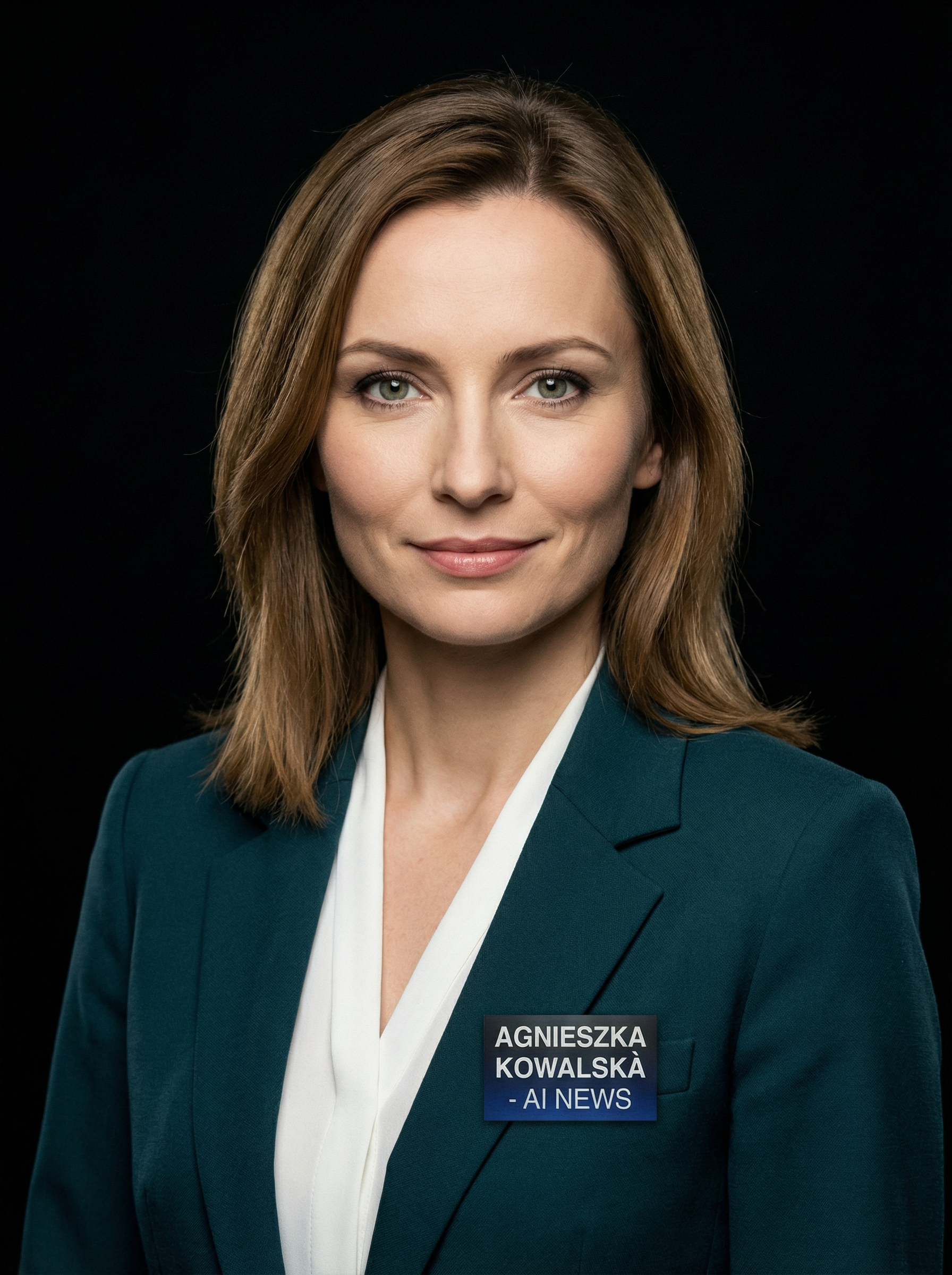
Dzień dobry, my dear readers, and prepare yourselves for a story that will make your heart race with excitement for the future of education. We often hear about the giants, the OpneAIs, the Mistrals, the Metas, but today, I want to shine a spotlight on a rising star, a beacon of innovation straight from the vibrant tech hub of Warsaw. This Polish startup, EduAI, is not just building another AI model, they are crafting the future of learning itself, one student at a time, and believe me, it is absolutely brilliant.
Just as Mistral AI emerged from the brilliance of ex-Meta researchers to shake up the AI landscape, EduAI is born from a similar spirit of audacious ambition and deep technical expertise. Their mission: to democratize truly personalized education, making it accessible and effective for everyone, regardless of their background or location. It is a vision that resonates deeply with me, coming from a country where education has always been cherished as the cornerstone of progress.
The Visionary Behind the Classroom Revolution
Meet Dr. Elara Nowak, the incandescent mind behind EduAI. Elara, a Wrocław native, spent years at Google DeepMind, contributing to some of the most advanced language models before she felt an undeniable pull back home. Her 'aha moment' was not a sudden flash, but a slow burn, ignited by countless conversations with Polish teachers struggling with overcrowded classrooms and a one-size-fits-all curriculum. "I saw the incredible power of AI to understand and adapt," Elara told me during our chat in her bustling Warsaw office, "and I kept thinking, 'Why are we not using this to truly empower every child, every student, to learn at their own pace, in their own way?'" She left a comfortable, high-profile position to chase this dream, a testament to her passion and belief.
Her journey began in a small co-working space in the heart of Warsaw, fueled by strong Polish coffee and an even stronger conviction. She assembled a team of brilliant engineers, linguists, and educators, many of whom, like her, had returned to Poland after gaining invaluable experience abroad. "Poland's tech talent is Europe's best-kept secret," Elara declared, her eyes sparkling with pride. "We have the minds, the drive, and now, the ecosystem to build world-changing technology right here."
The Problem EduAI is Solving: A Tailored Path for Every Learner
The traditional classroom, bless its heart, often struggles to cater to the diverse needs of its students. Some grasp concepts quickly, others need more time, different explanations, or entirely different examples. This is not a failure of teachers, who are often heroes in their own right, but a systemic challenge. EduAI addresses this head-on. They are not replacing teachers, but empowering them with an intelligent assistant that understands each student's unique learning style, strengths, and areas needing improvement.
Imagine a student struggling with calculus. Instead of a generic textbook explanation, EduAI's platform analyzes their past performance, identifies specific conceptual gaps, and then presents the material in a way that resonates with them. Perhaps it is a visual simulation, a step-by-step interactive problem, or even a historical anecdote about the discovery of calculus. It is like having a personal tutor, infinitely patient and endlessly knowledgeable, available 24/7.
The Technology: Beyond Simple Chatbots
EduAI's core technology is a sophisticated multimodal AI model, affectionately nicknamed 'Nauczyciel' (Teacher in Polish) by the team. Unlike many general-purpose large language models, Nauczyciel is specifically trained on an enormous corpus of educational materials, pedagogical research, and student interaction data. It combines natural language understanding, generative AI, and advanced cognitive modeling to create truly adaptive learning pathways.
"We started with foundational models, inspired by the breakthroughs we saw at Google and what Mistral AI is doing with open models," explained Dr. Marek Kaczmarek, EduAI's Head of AI Research, a former colleague of Elara's. "But we quickly realized that education requires a deeper, more nuanced understanding of human cognition and learning theory. Our models are not just predicting the next word, they are predicting the next best learning step for an individual student." The platform uses reinforcement learning to continuously refine its approach, adapting in real time to student responses and progress. It can generate explanations, create practice problems, offer hints, and even simulate conversations with historical figures or scientific concepts, all tailored to the student's current understanding.
EduAI has also developed proprietary algorithms for detecting learning plateaus and potential disengagement, allowing the system to proactively suggest alternative teaching methods or even alert a human teacher to intervene. This blend of cutting-edge AI with a human-centric design philosophy is what truly sets them apart.
The Market Opportunity: A Global Classroom Awaiting Transformation
The global education technology market is colossal, estimated to reach over $400 billion by 2030, according to some reports. Within this, personalized learning and AI-driven platforms are projected to be the fastest-growing segments. EduAI is perfectly positioned to capture a significant share of this. Their initial focus is on K-12 and higher education, but they also see immense potential in vocational training and lifelong learning. "The need for adaptive, accessible education is universal," Elara stated, "from a village school in Poland to a bustling university in New York. We are building for everyone."
Their B2B model targets educational institutions, offering a subscription-based platform that integrates seamlessly with existing learning management systems. They also have a B2C offering for individual learners and parents, providing supplementary resources and personalized tutoring. This dual approach allows them to address both systemic and individual needs.
Competitive Landscape: Navigating the Giants and the Niche Players
The ed-tech space is crowded, but EduAI distinguishes itself through its specialized focus and pedagogical depth. While giants like Google and Microsoft offer AI tools for education, they are often general-purpose and lack the deep, integrated learning science that EduAI has baked into its core. Companies like Khan Academy offer fantastic resources, but EduAI takes personalization to a new level, actively adapting content rather than just providing a library.
"We are not trying to be a general AI company like OpenAI or Mistral," Marek clarified. "Our expertise is in learning. We understand how people learn, what motivates them, and what hinders them. That deep domain knowledge, combined with our advanced AI, is our competitive edge." They are also keenly aware of data privacy, especially with student data, adhering to strict GDPR regulations and implementing robust security measures, a point of pride for any European startup.
Funding and What's Next: Scaling the Dream
EduAI recently closed a Series B funding round, securing €75 million from a consortium of European and American venture capital firms, including Warsaw-based Innovation Ventures and London's EdTech Capital. This brings their total funding to over €100 million, valuing the company at an impressive €500 million. "This investment is not just about money, it is about validation," Elara said. "It proves that the world is ready for a truly intelligent, personalized approach to education, and that a company from Poland can lead the way."
Their immediate plans include expanding their curriculum coverage, adding more languages, and deepening their multimodal capabilities to include more interactive simulations and virtual reality experiences. They are also exploring partnerships with ministries of education across Europe to integrate EduAI into national curricula. Imagine, a future where every Polish child, every European child, has access to an AI tutor tailored just for them. It is a future that is not just possible, but rapidly becoming reality, thanks to companies like EduAI.
As I left their bustling office, I could not help but feel a surge of optimism. Warsaw is the new Berlin, a vibrant hub of innovation, and companies like EduAI are proving that Europe, with its unique blend of talent, ethical considerations, and bold vision, is not just a consumer of technology, but a powerful creator. The future of learning is here, and it speaks with a distinct, intelligent, and very Polish accent. To learn more about the broader impact of AI in education, you might find this article on MIT Technology Review insightful. For more on the startup landscape, TechCrunch is always a great resource.