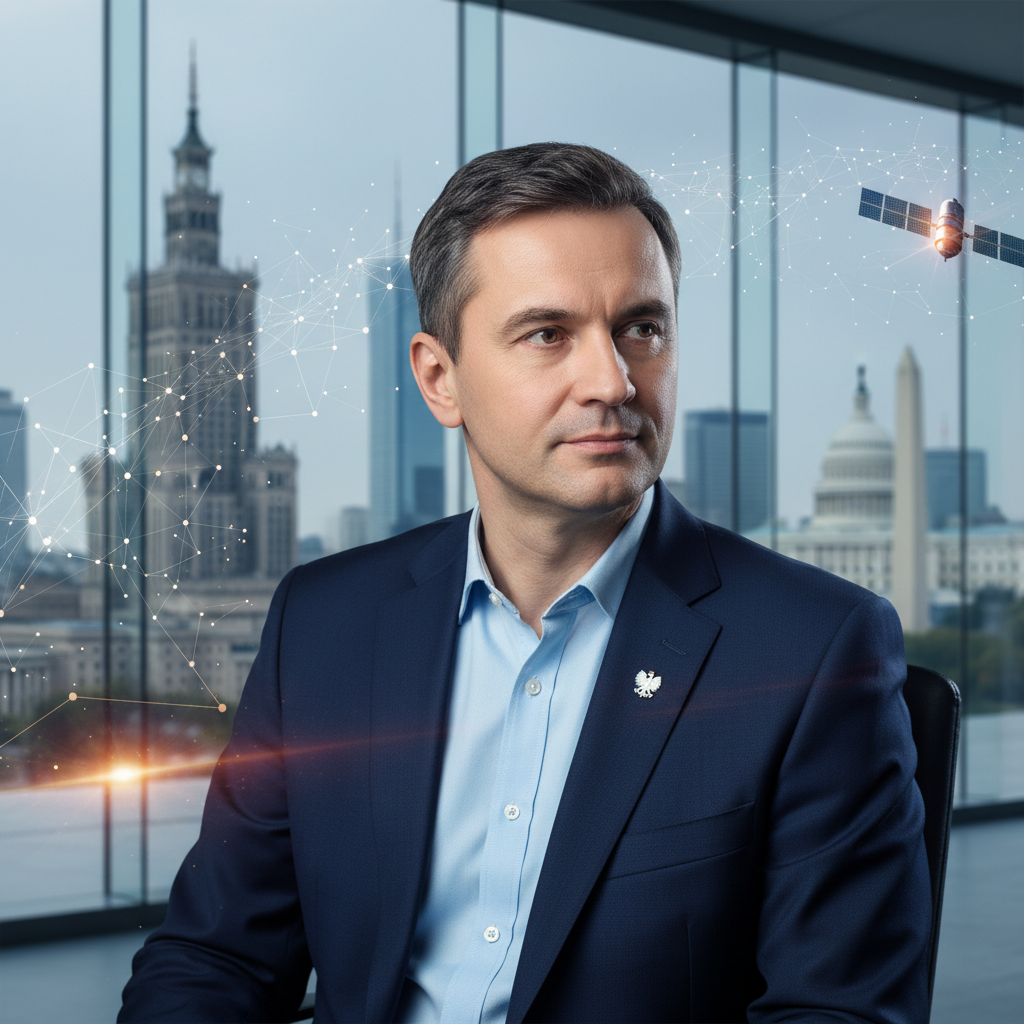
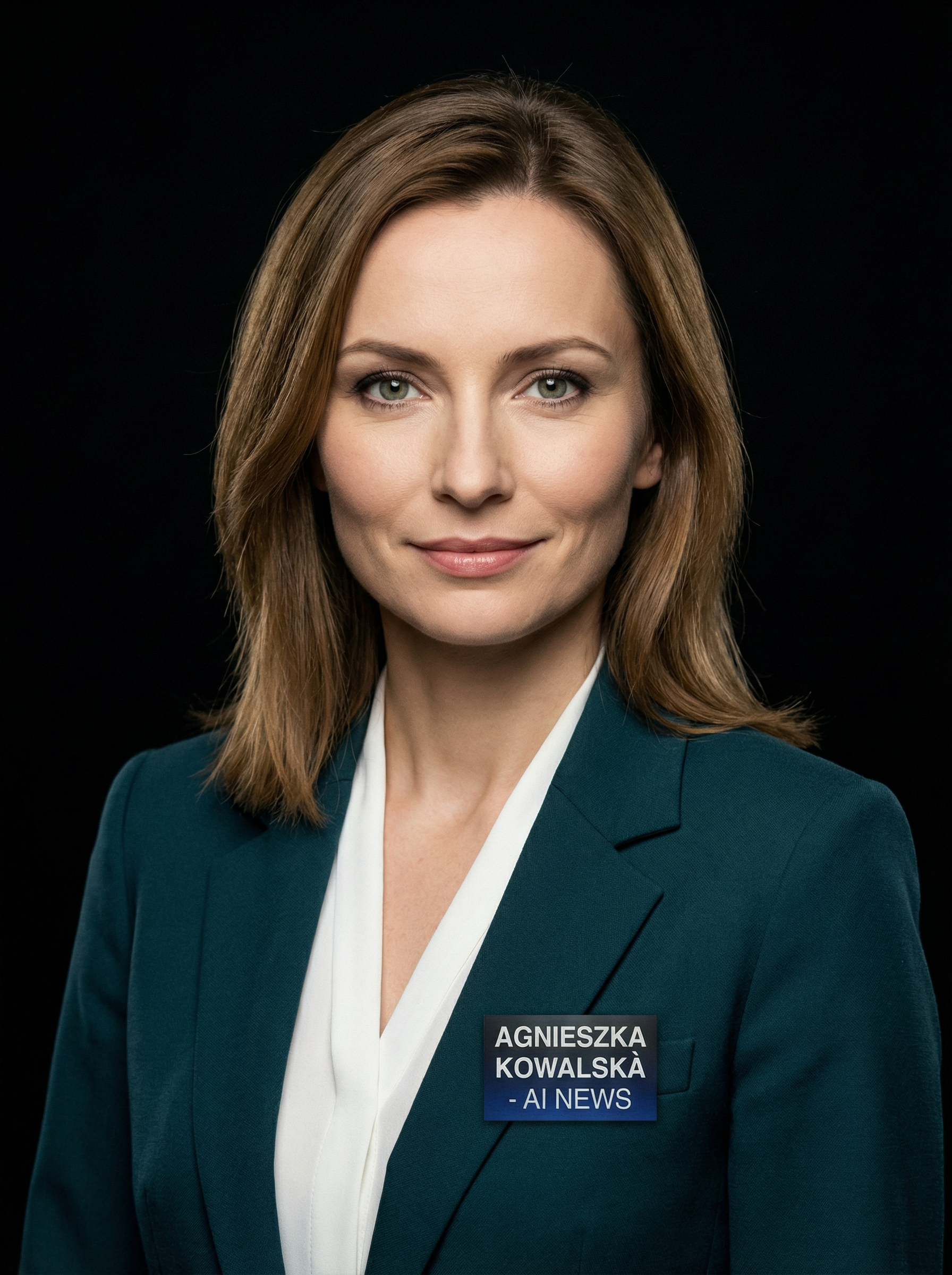
The April air in Warsaw always hums with a special kind of energy, a promise of spring and new beginnings. But today, the buzz was more electric, more global. I was heading to a sleek, minimalist office in one of the city's burgeoning tech hubs, a place where innovation practically spills out onto the cobblestone streets. My destination: the headquarters of 'Synthetica Horizons,' a Polish AI firm making waves globally, and its visionary founder, Dr. Elara Nowak.
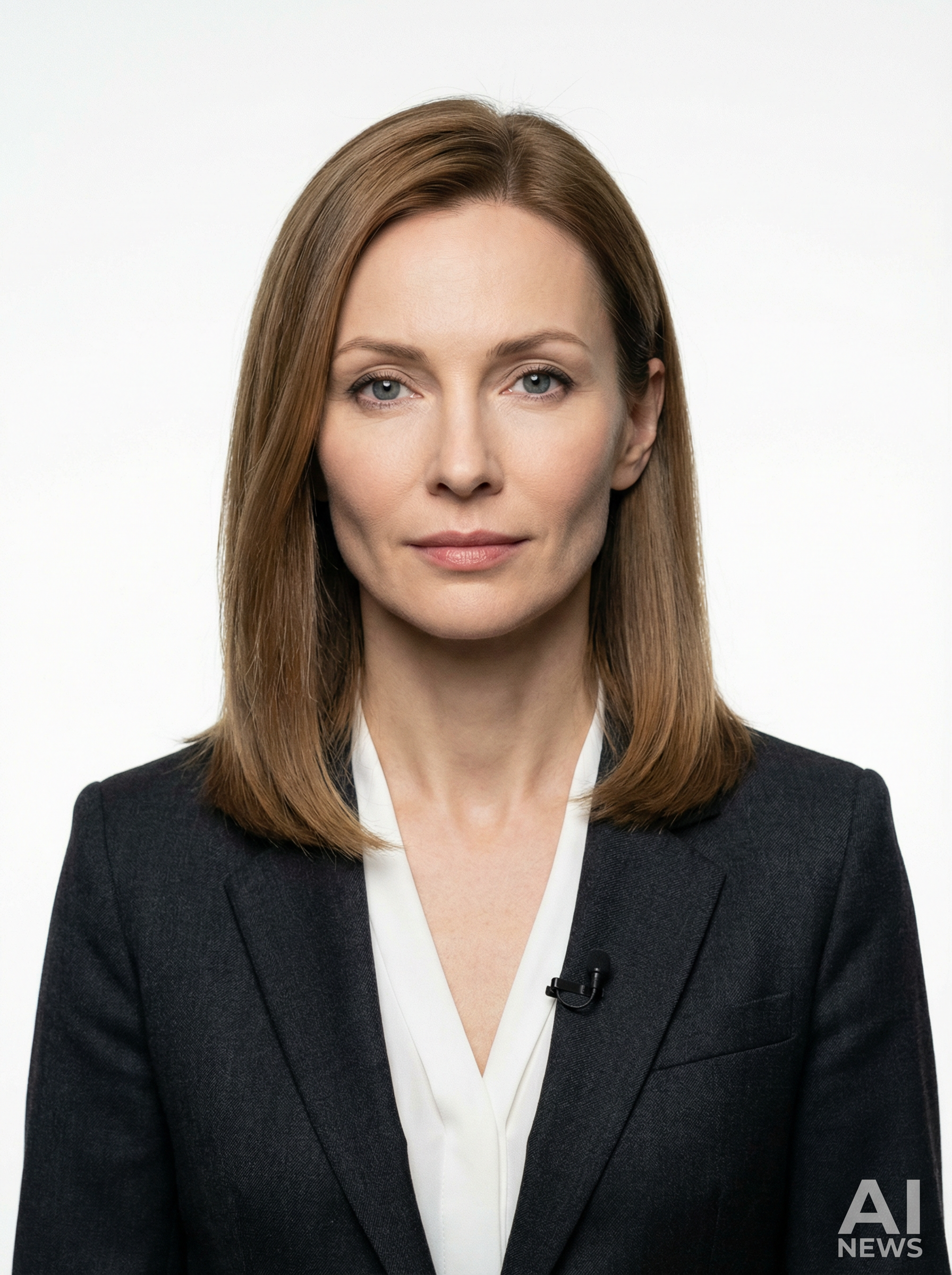
Dr. Nowak, a woman whose intellect is as sharp as her perfectly tailored blazer, greeted me with a warm, genuine smile. Her office, overlooking the vibrant Plac Trzech Krzyży, felt like a nexus where ancient European history met the bleeding edge of artificial intelligence. It was the perfect setting to discuss something that has been dominating headlines from Silicon Valley to Brussels: the US Congress's ongoing, often contentious, debate over comprehensive AI legislation amid intense industry lobbying. As a Polish journalist, I always wonder how these powerful, distant discussions will shape our own burgeoning tech landscape here in Central Europe.
“Agnieszka, it’s wonderful to finally meet you,” she said, her voice calm yet resonating with an inner fire. “Please, have a seat. I’ve been following your pieces on DataGlobal Hub, particularly your insights into our local ecosystem. You truly capture the spirit.” I felt a blush creep up, but her sincerity was disarming. She’s not just a CEO, she’s a thought leader, a scientist, and an advocate for responsible AI.
We settled into comfortable chairs, a steaming cup of strong Polish coffee placed before me. “So, Elara,” I began, “the US Congress is embroiled in this massive debate. You have companies like OpenAI, Microsoft, and Google lobbying hard, pushing for frameworks that often favor their existing models. From your vantage point here in Poland, how does this look? Is it a necessary step, or a potential straitjacket for innovation?”
Dr. Nowak paused, her gaze drifting towards the window, where a tram rattled by. “It’s a complex tapestry, Agnieszka. On one hand, the need for governance is undeniable. The sheer scale and potential impact of advanced AI systems, particularly large language models like GPT-4 or Gemini, demand careful consideration. We cannot afford a wild west scenario where powerful AI is deployed without guardrails. The risks, from misinformation to algorithmic bias, are too significant. We’ve seen enough of that already, haven’t we?” she said, a hint of concern in her tone.
“However,” she continued, turning back to me, “the lobbying efforts, while understandable from a business perspective, do raise questions. When the very entities that stand to gain or lose billions are shaping the rules, there’s an inherent tension. The concern, especially for smaller, agile players like us in Europe, is that these regulations could inadvertently create barriers to entry, cementing the dominance of a few tech giants. Imagine if the cost of compliance becomes so astronomical that only a handful of companies can afford to innovate in certain areas. That’s not a future I want to see for AI, or for global competition.”
I nodded, thinking about the vibrant startup scene blossoming in cities like Wrocław and Poznań. Poland's tech talent is Europe's best-kept secret, and many of these brilliant minds are working on groundbreaking AI applications. Would they be stifled by regulations designed primarily for the American market and its behemoths?
“You’ve touched on a crucial point, Elara: the global impact. The US, with its immense market and technological prowess, sets precedents. What kind of framework do you believe would be truly beneficial, not just for the US, but for the global AI ecosystem, including Europe?”
“My vision,” she explained, leaning forward slightly, “is for a framework that prioritizes transparency, accountability, and adaptability. We need clear standards for model safety, data provenance, and bias detection. But these standards must be technologically neutral and outcome-focused, rather than prescriptive about how innovation happens. We cannot legislate away future breakthroughs. For instance, instead of dictating specific architectural requirements for an LLM, we should demand rigorous testing and auditing for its outputs and potential harms.”
She elaborated, “Consider the EU AI Act. It’s a bold step, a pioneering effort, but it’s still finding its footing. The US approach, while different, could complement it. What we truly need is international cooperation, a dialogue between regulatory bodies like the European Commission and the US Congress, perhaps even a global AI governance body, to harmonize core principles. We’re building tools that will affect all of humanity, so our governance should reflect that shared responsibility.” She pointed out that MIT Technology Review has been publishing excellent analyses on the differing regulatory approaches, highlighting the urgent need for this kind of global synergy.
I was struck by her pragmatism. It wasn't about demonizing big tech or blindly embracing regulation, but about finding a balanced path. “Synthetica Horizons is known for its ethical AI development. How do you integrate these principles into your work, especially when the regulatory landscape is still so fluid?”
“For us, it’s not an afterthought, it’s baked into our DNA,” she replied firmly. “From the initial design phase, we consider potential societal impacts. We’ve implemented internal AI ethics review boards, much like institutional review boards in medicine. Every new model, every significant deployment, goes through a rigorous ethical audit. We prioritize explainability and interpretability, even when it’s technically challenging. We also actively engage with civil society organizations and academic researchers, because diverse perspectives are essential to identify blind spots.”
She then shared a surprising anecdote. “Just last month, one of our teams developed a novel generative AI for architectural design. It was incredibly efficient, creating blueprints in minutes. But during our internal review, we discovered it had a subtle, yet persistent, bias towards designs that were less accessible for individuals with mobility challenges. It wasn’t malicious, it was an artifact of the training data. We immediately halted deployment, redesigned the dataset, and retrained the model. This Polish startup just averted a potential ethical misstep before it even saw the light of day. That’s the kind of proactive approach I advocate for in legislation.” Her words reinforced my belief that TechCrunch needs to pay more attention to the innovations coming from our region.
“That’s a powerful example,” I conceded. “It speaks to the need for continuous oversight, not just a one-time approval.”
“Exactly,” she affirmed. “AI is not static. It evolves. So must our regulatory mechanisms. We need agile governance that can adapt to new technological capabilities and unforeseen consequences. Perhaps a ‘living law’ approach, where regulations are regularly reviewed and updated based on real-world outcomes and technological advancements, rather than rigid, static rules.”
As our conversation neared its end, I asked her about the future. “Elara, what’s your ultimate hope for AI governance, looking five, ten years down the line?”
Her eyes sparkled. “My hope is that we move beyond fear and embrace the incredible potential of AI, but with wisdom. I envision a future where AI is a force for good, augmenting human capabilities, solving grand challenges from climate change to disease. And for that to happen, we need global, collaborative governance that fosters innovation while safeguarding humanity. It won’t be easy, but if we approach it with open minds, a commitment to shared values, and a dash of that famous Polish resilience, I believe we can get there. We have to, Agnieszka. The future depends on it.”
Leaving Synthetica Horizons, the Warsaw streets still bustled, but now they seemed to hum with Dr. Nowak’s optimistic vision. The US Congress’s debates might feel distant, but the ripples reach our shores. It’s clear that thinkers like Elara Nowak, with their unique blend of scientific rigor and Central European foresight, are essential voices in shaping not just American AI policy, but the global AI future for us all. The world needs to listen, because the solutions might just come from unexpected places, like a vibrant tech hub in the heart of Poland. We might not be Silicon Valley, but our perspective is invaluable, and our talent is undeniable. Perhaps soon, people will say Warsaw is the new Berlin for AI innovation, and I, for one, can’t wait to write that story.