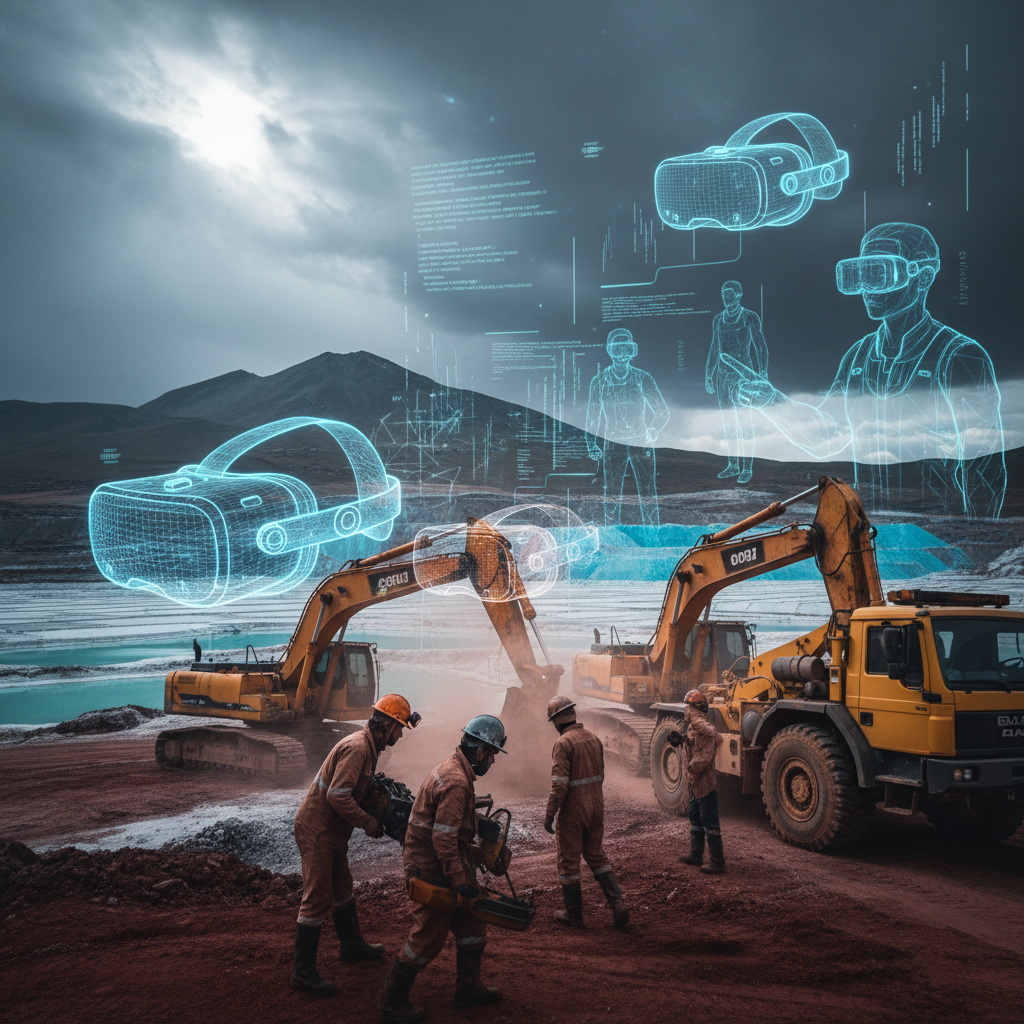
The digital world, once a distant concept for many in the Bolivian highlands, now exerts a tangible force upon our very soil. Today, news broke that Meta Platforms, under the leadership of Mark Zuckerberg, is accelerating its strategic pivot from the ambitious, capital intensive metaverse concept towards a relentless focus on artificial intelligence. This is not a subtle recalibration; it is a full-scale redirection, and its implications for a resource-rich nation like Bolivia are immediate and profound.
For years, the narrative surrounding Meta was dominated by virtual reality headsets and the promise of immersive digital spaces. Billions were poured into this vision. However, the market's reception has been lukewarm, and the financial pressures undeniable. Now, with the AI revolution in full swing, Zuckerberg has made a decisive move, one that analysts at Bloomberg Technology suggest is a pragmatic response to both investor demands and the undeniable momentum of generative AI. This shift means a voracious new appetite for computational power, advanced chips, and, crucially, the raw materials that fuel their creation and operation.
Bolivia, a nation often overlooked in the grand schemes of global technology, finds itself in an unexpected spotlight. Our vast salt flats, particularly the Salar de Uyuni, hold some of the world's largest proven lithium reserves. This 'white gold' is indispensable for the high-density batteries required to power the data centers that house advanced AI models. Every computational cycle, every data point processed by Meta's new AI infrastructure, will indirectly draw upon resources extracted from places like our Altiplano.
“The scale of energy consumption for these large language models is staggering,” stated Dr. Elena Quispe, a leading metallurgist at the Universidad Mayor de San Andrés in La Paz. “More data centers mean more batteries, and more batteries mean an exponential increase in demand for lithium. Bolivia has a responsibility, and an opportunity, to manage this resource wisely, ensuring it benefits our people directly, not just distant tech giants.” Dr. Quispe's words underscore a growing sentiment here: Bolivia's challenges require Bolivian solutions, especially when global forces exert such pressure.
The immediate impact of Meta's pivot is already being felt in the commodities markets. While the metaverse required consumer devices, AI demands industrial scale infrastructure. The price of lithium carbonate futures, already volatile, saw a notable uptick following early signals of Meta's intensified AI investment. This surge is not solely attributable to Meta, of course, but their colossal spending and strategic reorientation add significant weight to the demand side of the equation. According to recent reports, Meta is reportedly investing billions more into AI infrastructure this year, a figure that dwarfs their previous metaverse expenditures.
Officials in La Paz are keenly aware of this developing situation. “We are monitoring the global tech landscape with great interest,” commented Fernando Mamani, an advisor to the Ministry of Mining and Metallurgy. “The world’s shift to AI presents both immense opportunities and significant challenges for our national lithium strategy. We must ensure that any increase in demand translates into sustainable development and equitable benefits for our communities, not merely raw material extraction for foreign profit.” This perspective reflects a cautious optimism, tempered by historical experience.
Expert analysis suggests that this pivot by a company of Meta's scale will accelerate the global AI arms race, pushing other tech giants like Google, Microsoft, and Amazon to further intensify their own AI investments. This competitive environment will inevitably drive up demand for critical minerals. The race for AI supremacy is, in many ways, a race for lithium. The altitude of innovation, it seems, is directly linked to the depths of our mineral wealth.
What happens next is a complex interplay of geopolitics, economics, and environmental stewardship. Bolivia has been working to develop its own lithium processing capabilities, aiming to move beyond simply exporting raw brine. The state owned Yacimientos de Litio Bolivianos, or YLB, has been exploring various direct lithium extraction technologies and partnerships. This intensified global demand could either bolster these efforts by providing a robust market, or it could overwhelm them, pushing for rapid, potentially unsustainable, extraction.
For the average Bolivian, this news might seem abstract. Yet, the decisions made in Silicon Valley directly influence the economic prospects of our nation. Increased lithium revenue could fund critical infrastructure, education, and healthcare. Conversely, poorly managed extraction could lead to environmental degradation and social unrest, problems we have seen before with other natural resources. Let's talk about what actually works at 4,000 meters, and that means practical, sustainable development, not just abstract technological dreams.
The strategic calculus behind Zuckerberg’s pivot is clear: AI is the immediate future, the next frontier for growth and dominance. What remains to be seen is how nations like Bolivia, holding the keys to essential components of this future, will navigate this new landscape. Will we be passive suppliers, or active participants in shaping the value chain? The stakes are incredibly high, not just for Meta's balance sheet, but for the very trajectory of our nation's development. The world is watching, and so are we, here on the Altiplano, where the future of AI is, quite literally, being mined. For more detailed analysis on the tech industry's shifts, readers can consult TechCrunch. This is a developing story, and its implications will continue to unfold in the coming months, shaping not just the digital realm, but the very ground beneath our feet.