
The world of high finance, with its dizzying algorithms and lightning-fast trades, often feels like a distant galaxy, far removed from the sun-drenched plazas and ancient traditions of Spain. But what if I told you that a startup born right here, under the Mediterranean sun, is not only entering this hyper-competitive arena but is poised to redefine it? My friends, Spain's AI moment has arrived, and it is absolutely brilliant.
Today, I want to introduce you to Finestra AI, a Valencian powerhouse that is injecting a much-needed dose of human intuition and localized intelligence into the cold, hard logic of Wall Street. Their story is a testament to the power of diverse perspectives in the global tech landscape, proving that true innovation can blossom anywhere, even far from the usual Silicon Valley spotlight.
The Founder's Origin Story: A Data Scientist's 'Aha!' Moment in Valencia
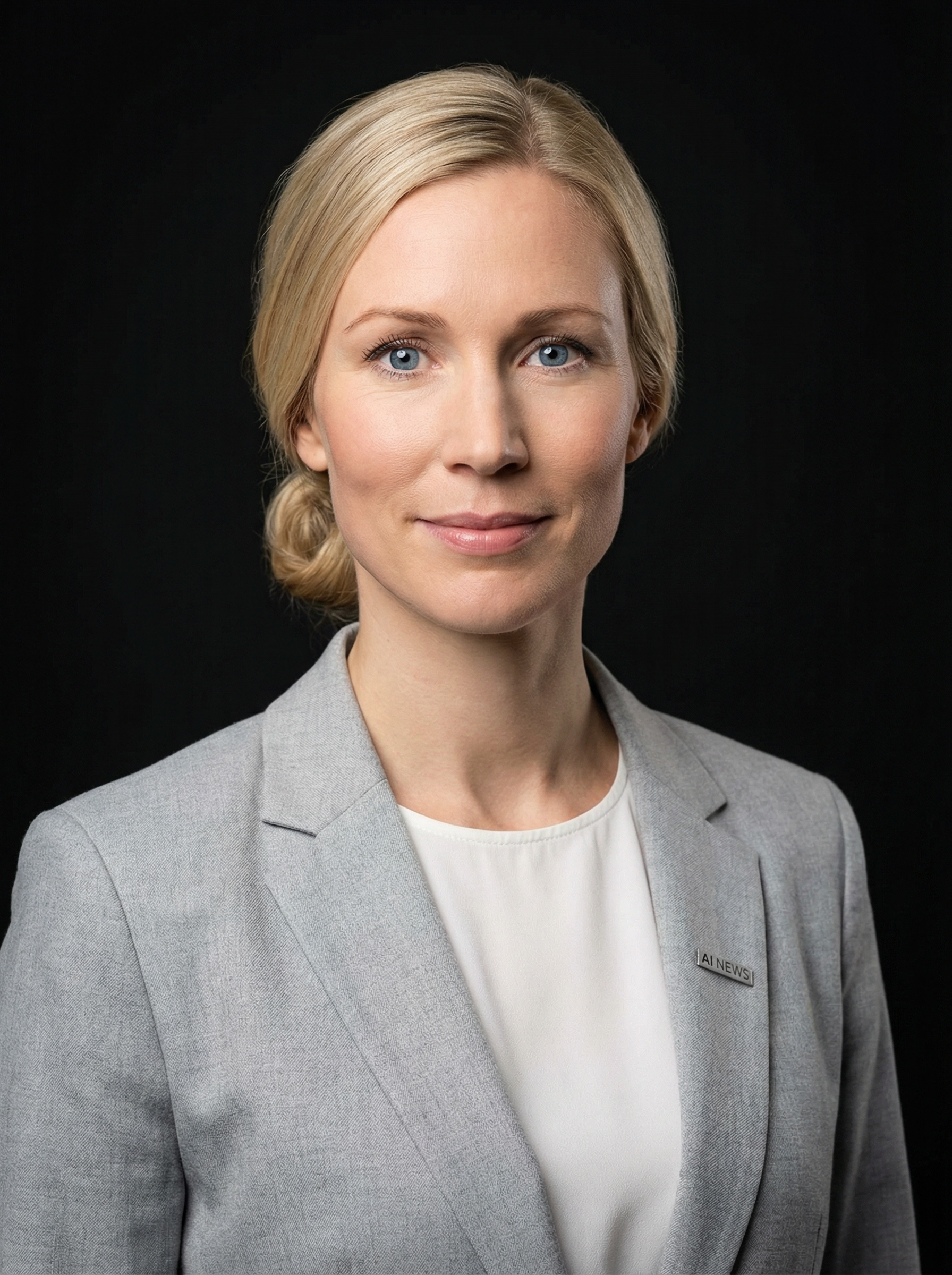
Our journey begins with Dr. Elena Ramos, a name you will soon hear echoing through the halls of global finance. Elena, a native of Valencia, grew up with the scent of orange blossoms and the rhythmic waves of the Mediterranean Sea. Her early career, however, took her far from home, deep into the world of quantitative finance in London and New York. She spent years at a major investment bank, immersed in the complex models that drove algorithmic trading, but something always felt missing.
“I saw firsthand how powerful these systems were,” Elena told me during a recent video call, her passion palpable even through the screen, “but they often felt… detached. They were brilliant at processing numbers, but sometimes blind to the qualitative shifts, the 'feeling' of the market, the subtle geopolitical tremors that could ripple through global economies.” She described a particular moment during the 2008 financial crisis, witnessing how even the most sophisticated models struggled to grasp the human elements of fear and uncertainty. “It was like watching a supercomputer try to understand a flamenco dance; it could analyze the steps, but it missed the soul.”
This experience, coupled with a growing frustration with the lack of diverse data inputs in traditional models, became her 'aha!' moment. She realized that while the West excelled at structured data, there was a wealth of unstructured, culturally nuanced information that could offer a richer, more resilient understanding of market dynamics. She returned to Valencia in 2022, drawn by the city's burgeoning tech scene and its unique blend of tradition and innovation, determined to build something different.
The Problem Finestra AI is Solving: Beyond the Numbers Game
Traditional algorithmic trading and risk assessment platforms are incredibly adept at crunching historical price data, economic indicators, and company financials. However, they often struggle with the 'unknown unknowns', the subtle shifts in sentiment, the impact of local political discourse, or the ripple effects of cultural events that can significantly influence market behavior. This is where Finestra AI steps in.
“Imagine trying to predict the weather in Spain just by looking at temperature readings from Norway,” Elena explained. “You're missing the context, the local patterns, the unique atmospheric pressures. Financial markets are similar. Global events are interconnected, but their impact is filtered through local lenses.”
Finestra AI addresses this by integrating a vast array of alternative data sources, including localized news sentiment, social media trends from specific regions, geopolitical risk indicators derived from open-source intelligence, and even cultural event calendars. They are building models that can detect early signals of market shifts by understanding the underlying human narratives, not just the numerical outcomes.
The Technology: A Fusion of Local Nuance and Global Power
At the heart of Finestra AI's platform is a proprietary Multimodal Sentiment Analysis Engine powered by advanced transformer models, similar in architecture to what you might find in Google's Gemini or OpenAI's GPT. However, Finestra's models are specifically trained on a massive corpus of multilingual and culturally-specific data, with a particular emphasis on European and Latin American markets.
“We're not just translating; we're interpreting cultural context,” said Dr. Javier Soler, Finestra AI's Head of Machine Learning, formerly of Microsoft Research. “Our models understand that a protest in Madrid about housing policy has a different market implication than a similar protest in, say, Frankfurt. The nuances of language, the historical context, the political climate, these are all factored in.”
Their system employs a three-pronged approach:
- Sentiment Harvesting: Continuously ingesting and analyzing news articles, social media posts, regulatory filings, and public statements from diverse global sources, with a strong focus on regional media and local expert opinions.
- Contextual Embedding: Using sophisticated natural language processing (NLP) to create rich, context-aware embeddings of these textual data points, capturing not just keywords but underlying sentiment, tone, and potential implications.
- Predictive Modeling: Integrating these contextual embeddings with traditional quantitative data into deep learning models that can identify emerging trends, predict market volatility, and flag potential risks with greater accuracy than purely numerical systems. They are seeing a 15-20% improvement in early risk detection compared to traditional models in their backtesting scenarios.
This fusion allows their robo-advisors to offer more personalized and resilient investment strategies, adapting not just to economic shifts but to the broader socio-political currents that often catch traditional systems off guard. The MIT Technology Review has highlighted the growing importance of such alternative data in financial forecasting, and Finestra AI is at the forefront of this movement.
Market Opportunity: A €50 Billion Horizon and Beyond
The market for AI in financial services is exploding. According to a recent report by Bloomberg, the global market for AI in finance, encompassing algorithmic trading, risk management, and robo-advisors, is projected to reach over €50 billion by 2030, growing at a compound annual growth rate of over 20%. This is not just a niche; it is a seismic shift.
Finestra AI is targeting institutional investors, hedge funds, and large wealth management firms who are hungry for an edge. Their initial focus on European and Latin American markets, where cultural and linguistic nuances are particularly pronounced, gives them a unique competitive advantage. “We’re not trying to be everything to everyone,” Elena stated emphatically. “We’re building the best 'finestra,' or 'window,' into these specific markets, offering a clarity that global players often miss.”
Their early pilot programs with several Spanish and Portuguese asset managers have shown promising results, demonstrating a significant reduction in unexpected market volatility exposure and an increase in alpha generation through more informed trading decisions. The feedback has been overwhelmingly positive, with one fund manager noting a 7% increase in risk-adjusted returns over a six-month period.
Competitive Landscape: Navigating Giants and Nimble Rivals
The financial AI space is crowded, with established players like BlackRock's Aladdin platform, various offerings from Google Cloud's AI services, and specialized fintechs. Large tech companies like NVIDIA are also providing the underlying computational power and AI frameworks that many of these financial firms rely on. However, Finestra AI believes its unique value proposition sets it apart.
“Many large players offer powerful tools, but they are often generic,” explained María José Pérez, a financial analyst and early investor in Finestra AI. “They lack the deep, localized understanding that Elena and her team are building. Finestra isn't just selling algorithms; they're selling insight, a 'duende' for the data, if you will.”
Their main competitors fall into two categories: large incumbent financial technology providers and other niche AI startups. The incumbents often have deep client relationships but are slower to adapt to new data sources and AI methodologies. Niche startups might offer similar alternative data integration, but few possess Finestra AI's deep cultural and linguistic expertise, especially across multiple Romance languages and their associated markets. Their focus on the Mediterranean and Latin American markets also helps them carve out a distinct identity.
What's Next: Expanding Horizons and Deepening Insights
Finestra AI recently closed a seed funding round of €8 million, led by a prominent European venture capital firm, with participation from several angel investors from the Spanish financial sector. This capital will be used to expand their engineering team, further refine their multimodal AI models, and accelerate their market penetration across Europe and Latin America.
“Our next step is to expand our language capabilities and data sources to include more nuanced dialects and regional media,” Elena shared, her eyes sparkling with excitement. “We're also exploring partnerships with academic institutions to further research the intersection of cultural psychology and market behavior. The human element, after all, is what truly drives markets.”
Barcelona is buzzing with new tech ventures, but Valencia is quickly becoming a hub for specialized AI innovation, and Finestra AI is a shining example. They are not just building a product; they are building a bridge between the rich tapestry of human experience and the intricate dance of global finance. It is a bold vision, one that promises not just better returns, but a more resilient and insightful understanding of our interconnected world. We are seeing a new era unfold, and it is being shaped right here in Spain, with a warmth and intelligence that is undeniably Mediterranean. What a time to be alive, watching these brilliant minds at work! For more on cutting-edge AI startups, keep an eye on TechCrunch's AI section. The future is bright, and it smells faintly of orange blossoms.