
Alright, let's talk about something that hits right at the core of being human in the 21st century: finding connection. Remember those days of awkward first dates set up by friends, or maybe a chance encounter at a coffee shop in Brooklyn? Well, those stories are becoming as rare as a flip phone in Silicon Valley. Now, it's all about the apps, baby, and the AI that powers them. And let me tell you, I just saw the future and it's incredible, but it's also a little complicated.
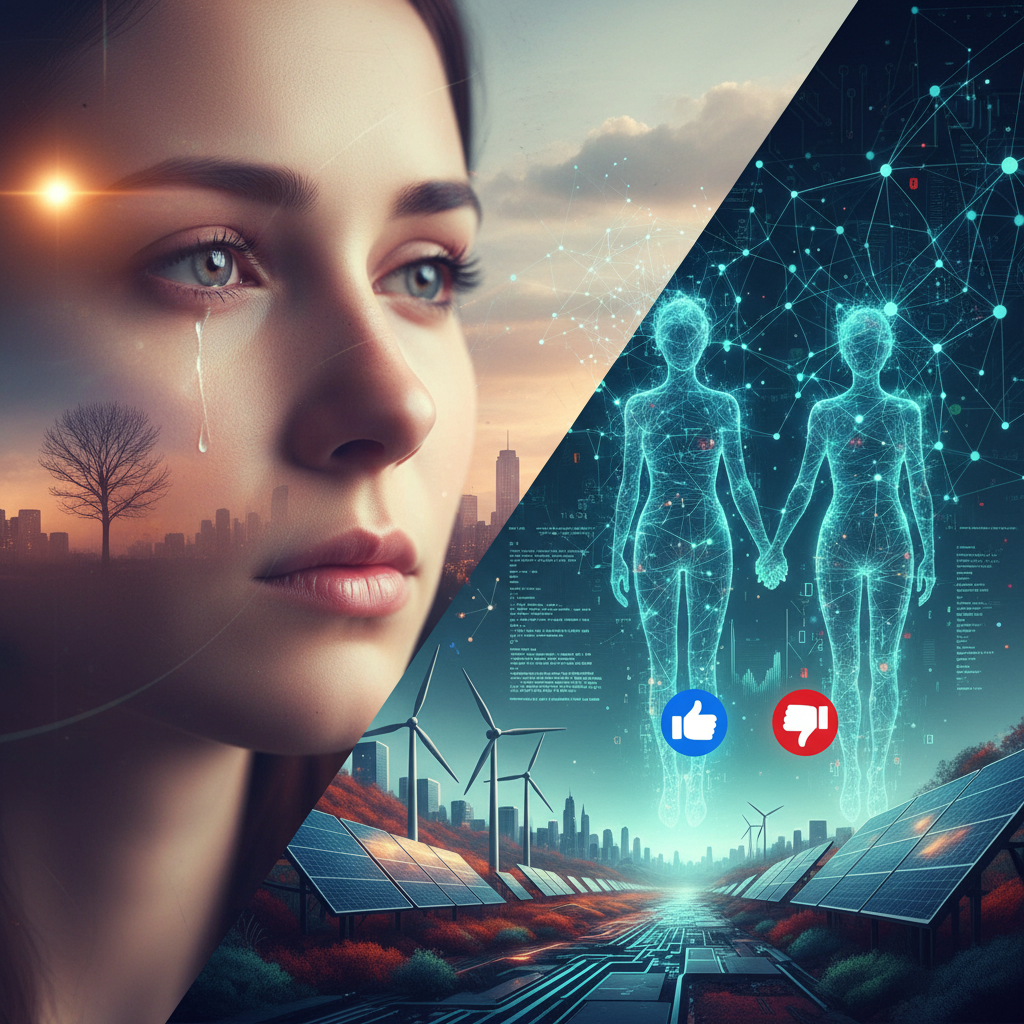
Picture this: my friend, Sarah, a brilliant software engineer from Seattle, was telling me about her recent dating app experience. She's been on all of them, from Bumble to Hinge, and now she's trying out a new feature on a Meta-powered dating platform. This isn't just about swiping left or right anymore. This AI, let's call it 'Cupid 2.0,' analyzes her past conversations, her profile quirks, even her Spotify playlists, to suggest matches. It's like having a hyper-efficient, digital matchmaker who knows you better than your best friend, sometimes even better than you know yourself! Sarah said it was uncanny how accurate some of the suggestions were, leading to genuinely engaging conversations. But then she paused, a little frown creasing her brow, and asked, 'Dontè, am I actually connecting with a person, or just with an algorithm's perfect projection of a person?' That question, my friends, is why you need to pay attention to this.
We're living in an era where AI is not just recommending what movies to watch or what to buy on Amazon, it's stepping into the most intimate parts of our lives. Dating apps, powered by sophisticated machine learning models from companies like Google's DeepMind and even specialized startups using NVIDIA's powerful GPUs for faster processing, are evolving at warp speed. These algorithms are designed to optimize for engagement, for matches, for something. But what is that something, exactly? Is it genuine connection, or just an illusion of it?
Recent research from the University of California, Berkeley, indicates a fascinating trend. Dr. Evelyn Reed, a leading social psychologist, shared some preliminary findings with me. 'Our longitudinal study, tracking over 5,000 dating app users across major US cities like New York, Los Angeles, and Chicago, shows a paradoxical effect,' Dr. Reed explained. 'While algorithmic matchmaking significantly increases the quantity of initial matches and first dates, it doesn't necessarily translate to an increase in relationship longevity or reported satisfaction. In fact, nearly 60% of users reported feeling more 'dating fatigue' despite the perceived efficiency.' This is a head-scratcher, isn't it? More options, more dates, but less satisfaction. It's like having a massive menu but still feeling hungry.
So, what's going on in our brains when we interact with these AI-driven platforms? Expert psychological analysis suggests a few things. Firstly, there's the 'paradox of choice.' When an AI presents us with an endless stream of seemingly perfect profiles, we become hyper-critical, always wondering if there's someone even better just one more swipe away. This cognitive overload can lead to decision paralysis and a constant sense of dissatisfaction. 'The gamification of dating, amplified by AI's predictive capabilities, can turn the search for a partner into a never-ending quest for optimization,' says Dr. Marcus Thorne, a cognitive scientist from Stanford University. 'It shifts our focus from building deep connections to evaluating superficial metrics, which can be incredibly detrimental to our emotional well-being.'
Then there's the 'algorithmic echo chamber.' Just like social media AI can show you more of what you already like, dating AI can inadvertently narrow your dating pool. If you've historically swiped right on a certain type of person, the AI will keep feeding you more of that type, potentially limiting your exposure to diverse individuals who might actually be a better, albeit unexpected, match. It's efficient, yes, but does it foster discovery? Not always. 'We've seen instances where users, after months on these platforms, feel like they're seeing the same five people recycled, just with different profile pictures,' notes Jessica Chen, a data ethicist at the Electronic Frontier Foundation, who has been vocal about the need for transparency in these algorithms. 'The AI gets really good at predicting what you think you want, but sometimes what you need is entirely different.'
The broader societal implications here are huge, especially in a country like the USA where the loneliness epidemic is a very real and growing concern. We're more connected than ever digitally, but are we truly connecting? These AI systems are designed to keep us engaged, to keep us swiping, to keep us on the app. The business model often relies on that engagement. If everyone found their soulmate on the first try, these platforms would cease to exist. This creates a subtle, almost insidious, tension between the user's desire for genuine connection and the platform's need for sustained interaction. It's a dance between human desire and algorithmic design, and sometimes, the algorithm leads us down a path of perpetual searching rather than finding.
Consider the rise of AI companions, like those offered by Character.AI or even more sophisticated models being developed by OpenAI and Anthropic. While these aren't dating apps, their increasing sophistication blurs the lines. If an AI can offer empathetic conversation and consistent emotional support, does it reduce the perceived need for human interaction? It's a fascinating, if slightly unsettling, question. We're not talking about dystopian sci-fi here, but rather subtle shifts in human behavior and expectation. This is going to change everything about how we perceive relationships.
So, what's a human to do in this brave new world of algorithmic affection? Practical advice for readers is crucial. First, remember that the app is a tool, not a destiny-maker. Don't let the algorithm dictate your entire dating strategy. Be intentional. Take breaks from swiping. Meet people in real life, at your local coffee shop, a community event, or even a dog park. Remember that human connection is messy, imperfect, and often unpredictable, and that's precisely what makes it beautiful. Second, diversify your dating portfolio. Don't rely on just one app or one type of algorithm. Explore different platforms, and be open to meeting people outside your usual 'type.' Finally, and perhaps most importantly, cultivate self-awareness. Understand what you're truly looking for in a partner, and don't let the endless scroll distract you from that core desire. If you find yourself feeling more frustrated than fulfilled, it might be time to re-evaluate your approach, not just your matches.
The promise of AI in dating is immense: to help us cut through the noise, to find compatible partners more efficiently, and perhaps, to alleviate some of that modern loneliness. But like any powerful technology, its impact is shaped by how we use it. We have to be smart, be present, and remember that at the end of the day, love isn't an algorithm, it's a human experience. And that, my friends, is something no amount of code can truly replicate, only enhance, if we let it. For more insights into the evolving world of AI and its impact on society, check out articles on Wired or MIT Technology Review. You can also find compelling discussions on the latest AI trends over at TechCrunch.
As we navigate this exciting, sometimes bewildering, landscape, let's keep the conversation going. How has AI changed your dating life? Are you finding more connection or more confusion? Drop me a line, I'd love to hear your stories.