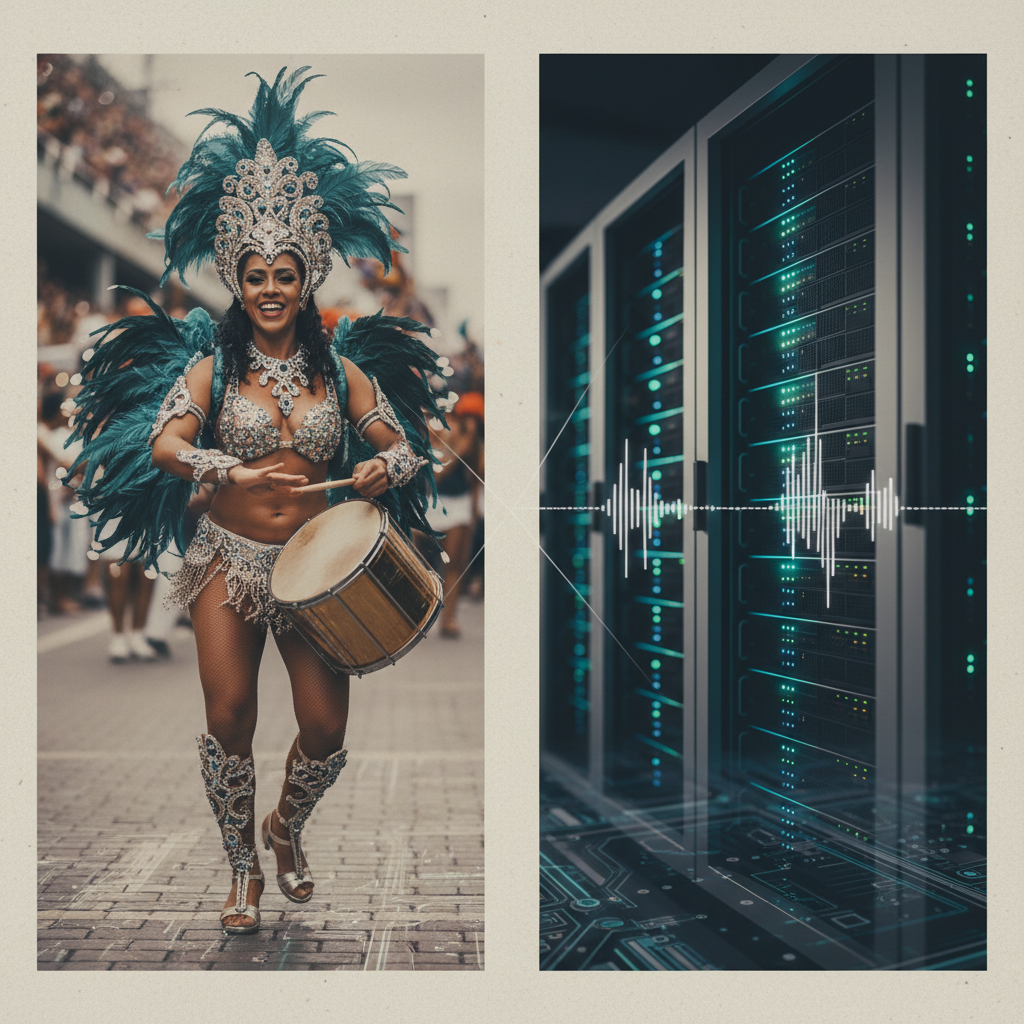
The digital world, my friends, is a lot like a vast, bustling street market in São Paulo. You have the established vendors, the new stalls popping up, and then, every so often, someone arrives with a product so unique, so compelling, it changes the whole atmosphere. In the grand 'feira' of artificial intelligence, ElevenLabs is that vendor right now, turning AI voice cloning from a cool novelty into a business valued at over a billion dollars. But the question that keeps me, Luciànò Ferreiràs, pondering from my desk here in Rio, is this: how will this sonic revolution truly echo across the diverse, passionate, and sometimes chaotic soundscape of Brazil?
For years, AI voice synthesis felt like a parlor trick, impressive but ultimately limited. Think of those early, robotic voices that sounded like a machine trying to read a phone book. Fast forward to today, and ElevenLabs has achieved something remarkable. Their models can capture the nuances, the inflections, the very soul of a human voice, and then replicate it with astonishing fidelity. This isn't just about making a machine speak, it's about making it sound human, feel human. It's like comparing a black and white photograph to a vibrant, high-definition film, the difference is profound.
The numbers tell a compelling story, as they always do. Reports from late 2025 indicated ElevenLabs had secured significant funding rounds, pushing their valuation past the $1 billion mark, a testament to investor confidence in their proprietary deep learning architectures. Their user base has exploded, with millions now experimenting with their tools, from independent content creators to major media houses. This isn't just a Silicon Valley phenomenon, the impact is global. According to TechCrunch, the AI voice market is projected to grow at a compound annual rate exceeding 25% over the next five years, with ElevenLabs positioned at the forefront.
But what does this mean for us, for Brazil? Our culture is rich with oral tradition, with music, with storytelling. From the booming voices of our football commentators to the soothing tones of our telenovela stars, from the rapid-fire delivery of a street vendor to the soulful melodies of a bossa nova singer, voice is central to who we are. The potential applications here are immense, almost overwhelming.
Consider the burgeoning creator economy. Brazil's developer community is massive and talented, and our content creators are constantly innovating. Imagine a small podcast producer in Salvador, Bahia, who can now localize their content into multiple Portuguese dialects, or even Spanish, with their own voice, without the prohibitive cost of hiring multiple voice actors. Or an educational platform in Minas Gerais that can generate engaging, personalized audio lessons for students with different learning styles. The accessibility this technology offers could democratize content creation on an unprecedented scale.
“The ability to clone and synthesize voices with such high quality opens up incredible avenues for accessibility and creative expression, particularly in markets like Brazil where diverse linguistic needs and a vibrant creative sector exist,” says Dr. Sofia Almeida, a leading AI ethics researcher at the Federal University of Rio Grande do Sul. “However, it also brings significant ethical challenges that we must address proactively.”
And Dr. Almeida is absolutely right. With great power comes great responsibility, as the saying goes. The flip side of this innovation is the potential for misuse. Deepfakes, voice scams, and the unauthorized replication of voices are serious concerns. We've already seen instances globally where AI generated voices have been used for malicious purposes, from impersonating executives for financial fraud to spreading misinformation. This is not a distant threat, it is a present reality. The code tells the real story, and the code can be wielded for good or ill.
ElevenLabs, to their credit, has implemented safeguards, including voice verification processes and watermarking. But the cat-and-mouse game between technology and its misuse is eternal. Regulators, like Brazil's own National Data Protection Authority (anpd), are watching closely. The discussion around AI governance, copyright, and digital identity is more urgent than ever. We need robust frameworks, not just reactive measures, to protect individuals and maintain trust in our digital interactions.
“We are actively engaging with AI developers and policymakers to understand the implications of advanced voice synthesis,” states Ricardo Mendes, a legal expert specializing in digital rights at the Brazilian Bar Association. “The balance between innovation and protection of personal rights, including voice identity, is delicate. We need clear guidelines on consent, attribution, and the commercial use of cloned voices.”
Beyond the ethical considerations, there are also economic shifts to consider. Will this technology displace voice actors? It's a valid concern, one that echoes the fears artists have had with every technological leap, from photography to digital art. However, many in the industry believe it will augment, rather than replace. Voice actors might become 'voice artists,' licensing their unique vocal prints for AI models, or focusing on roles that require human improvisation and emotional depth that AI cannot yet fully replicate. Think of it as a new instrument in the orchestra, not a replacement for the musicians.
Let me explain the architecture behind some of this. ElevenLabs leverages transformer models, similar to those powering large language models like OpenAI's GPT series, but specifically trained on vast datasets of human speech. These models learn not just what words are spoken, but how they are spoken, capturing prosody, emotion, and speaker identity. It's a complex dance of neural networks learning the intricate patterns of human communication. This sophistication is precisely what makes their output so convincing and their valuation so high.
The global AI landscape is moving at a dizzying pace. Companies like Google, Meta, and Microsoft are all heavily invested in similar research, pushing the boundaries of what's possible with synthetic media. But ElevenLabs, with its focused approach, has carved out a significant lead in the voice domain. Their success is a clear signal: the era of truly natural, customizable AI voices is here, and it's big business.
For Brazil, this means both opportunity and challenge. We have the talent, the creativity, and the sheer volume of unique voices that could benefit from, and contribute to, this technology. But we also need to be vigilant, to educate, and to regulate responsibly. The future of sound, it seems, will be increasingly synthesized, and we must ensure it sings a tune that benefits all, from the bustling markets of São Paulo to the quiet corners of the Amazon. The conversation around AI's impact on culture and identity is just beginning, and it's one we must all participate in. For more on the broader implications of AI in creative fields, you can explore articles on Wired.
What are your thoughts, my dear readers? How do you see AI voice cloning shaping our future here in Brazil? The digital stage is set, and the voices, both human and synthetic, are ready to perform.