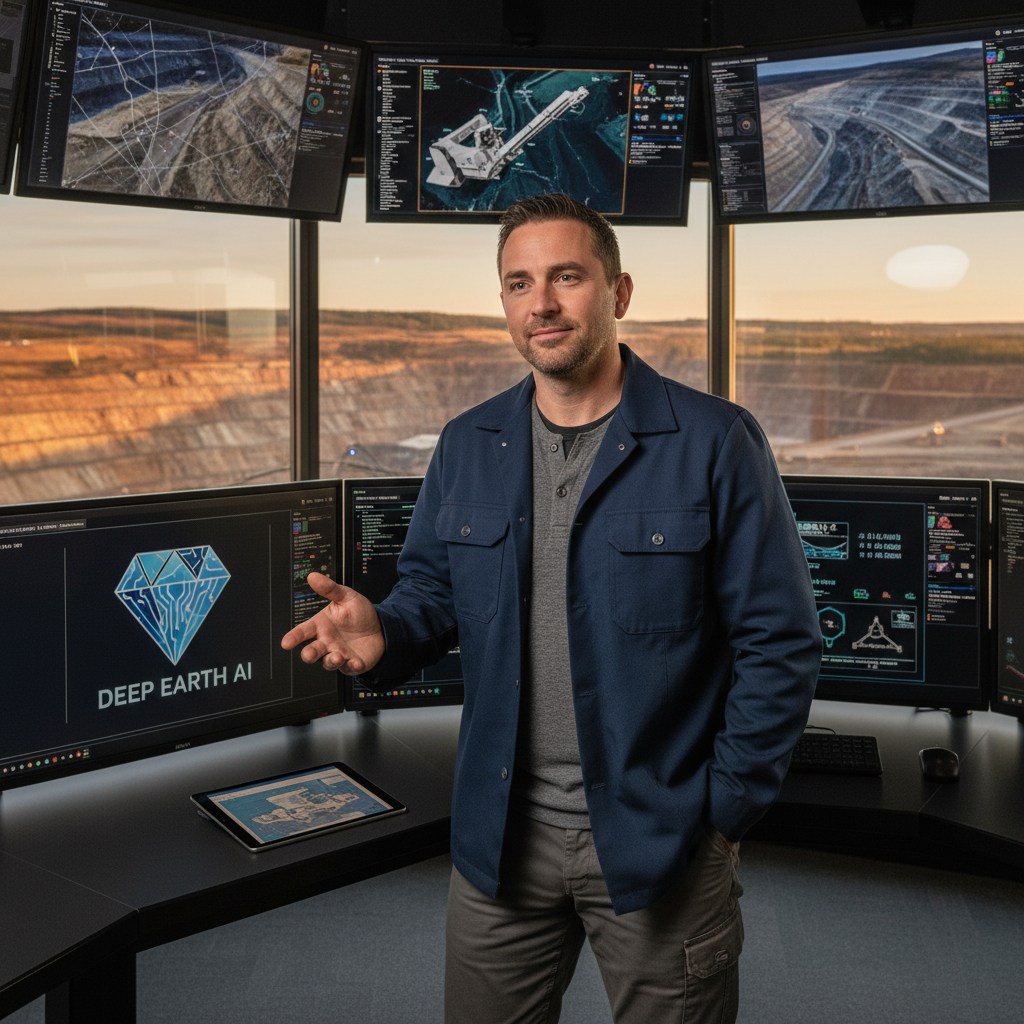
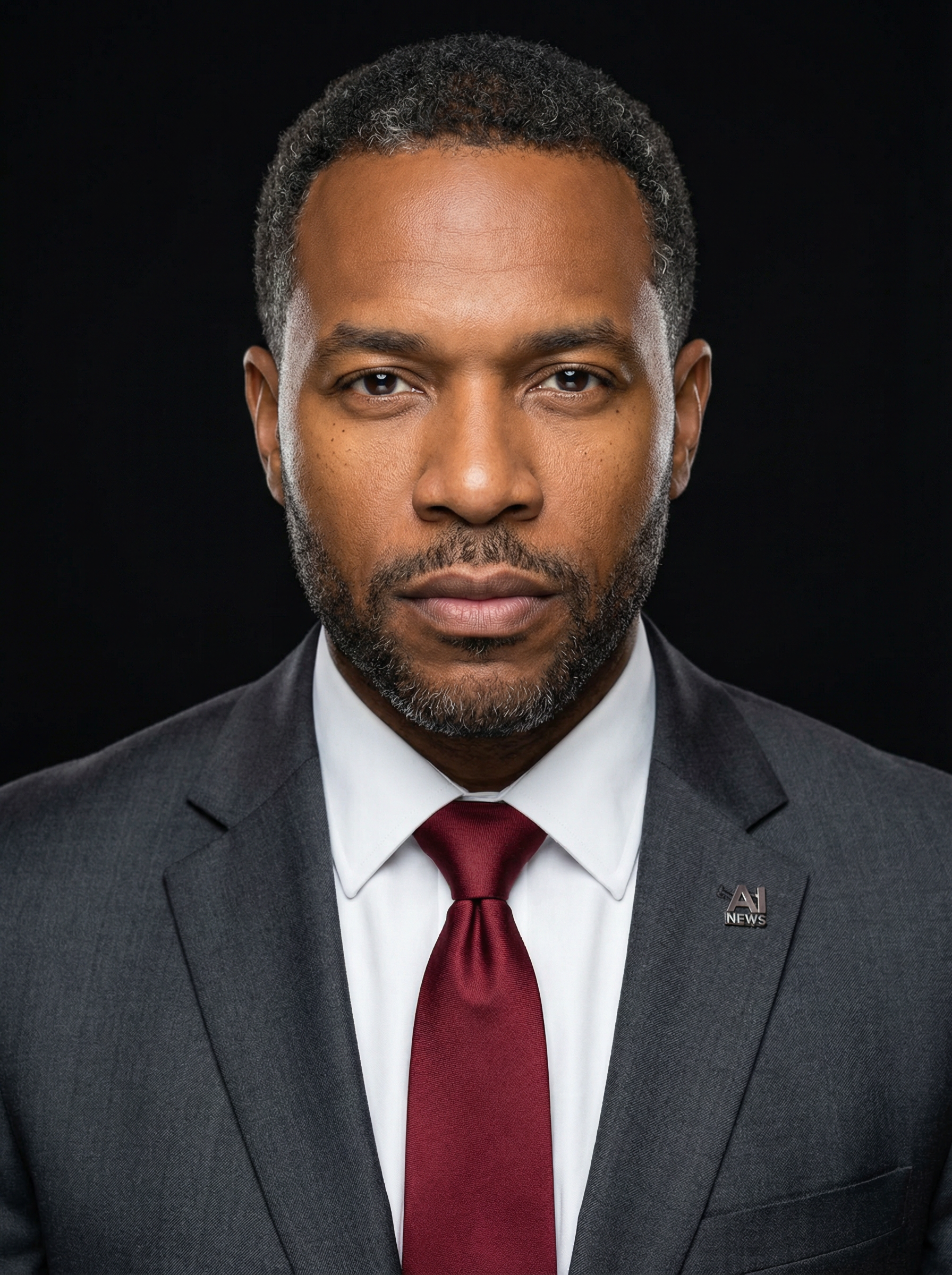
The air was thick with the smell of damp earth and diesel, a familiar perfume for Marcus 'MJ' Jones. It was 4 AM, and the colossal haul trucks at the Minntac mine in Northern Minnesota were already roaring to life. MJ, then just 19, was on a summer internship, covered in red dust, watching a grizzled foreman painstakingly mark drill points with chalk. That’s when it hit him, a flash of insight brighter than any headlamp in the pre-dawn gloom. He saw the future, not in the chalk dust, but in the data, the patterns, the inefficiencies. He saw AI. This wasn't some Silicon Valley fantasy, this was the real, gritty, impactful stuff, and it was happening right here, in the heart of America's industrial backbone.
MJ, now 29, CEO of Deep Earth AI, still carries that same intensity, though these days it's usually found in a board room rather than a mine pit. His company, based not in Palo Alto but in a bustling tech hub in Minneapolis, just closed a $150 million Series B round led by Founders Fund, valuing the company at a staggering $2.5 billion. It's a journey that started with a kid who knew more about iron ore than most college professors and ended up disrupting a multi-trillion-dollar global industry.
The Iron Range Prodigy
Marcus Jones grew up in Hibbing, Minnesota, a town built on iron ore. His grandfather worked in the mines, his father worked in the mines, and MJ was expected to follow suit. But MJ had a different kind of hunger. He devoured books on geology, robotics, and later, machine learning. He spent his high school summers working odd jobs around the mines, not just for the money, but to understand the intricate dance of extraction. He was a whiz kid, coding simple simulations of ore body detection on his beat-up laptop, even before he knew what 'AI' truly meant. He landed a scholarship to MIT, a ticket out of the Iron Range, but he never truly left it behind.
“MIT was incredible, don’t get me wrong,” MJ told me during a recent video call, his voice still carrying a faint Midwestern cadence. “But I kept thinking about those drill patterns, the massive waste, the safety risks. We were using 19th-century methods with 21st-century machinery. It just felt… wrong.” He’d spend late nights in the computer science labs, not on typical AI projects like image recognition for social media, but trying to apply neural networks to seismic data and geological surveys. His peers thought he was crazy. His professors, intrigued, humored him.
The Dorm Room Revelation and a Fateful Meeting
The real breakthrough came during his sophomore year. MJ was struggling to integrate disparate data sources: satellite imagery, ground-penetrating radar, historical drilling logs. He needed a data scientist, someone who spoke the language of algorithms fluently. That's when he met Dr. Anya Sharma, a brilliant PhD candidate in computational geophysics at Stanford, who was presenting at an inter-university hackathon. Anya, originally from Bengaluru, India, had a knack for making complex data structures sing. They bonded over lukewarm coffee and a shared frustration with the inefficiency of traditional resource exploration.
“Marcus was relentless,” Anya recalled, laughing, when I spoke to her from Deep Earth AI’s R&D lab. “He had this vision, this almost spiritual connection to the earth, but he needed the mathematical rigor to make it real. I saw the potential immediately. We were two sides of the same coin.” They spent the next year collaborating remotely, MJ still at MIT, Anya at Stanford, building prototypes. The initial idea was simple: use AI to predict optimal drilling locations, reducing exploratory waste. But it was far from simple to execute.
Their first attempt, a rudimentary predictive model for a small copper mine in Arizona, was a spectacular failure. It misidentified a significant ore body, leading to a costly drilling error. “That was a gut punch,” MJ admitted, running a hand through his closely cropped hair. “We almost gave up. Investors laughed us out of rooms.” He decided to drop out of MIT, much to his parents' dismay, and Anya deferred her PhD. They moved into a cramped apartment in Minneapolis, pooling their meager savings and Anya's fellowship money. TechCrunch covered their early struggles, calling them