The wind, a constant companion in Iceland, whipped Elín Jónsdóttir’s dark hair across her face as she stood on the docks of Ísafjörður. It was a brisk April morning, the kind that bites deep, but her eyes, the color of a winter sky, were fixed on the trawlers bobbing gently in the harbor. Her grandfather, a man whose hands were as gnarled as ancient driftwood, stood beside her, his gaze distant. “The fish are there, Elín,” he’d sighed, “but knowing when, and where, and how much to bring in, that’s the trick. And then getting it to market before it spoils, that’s the real magic.” She was only ten, but that moment, that quiet lament from a man who knew the sea better than his own reflection, planted a seed. It was a seed that would one day blossom into IceFlow AI, a company now quietly reshaping how the world’s biggest retailers manage their goods.
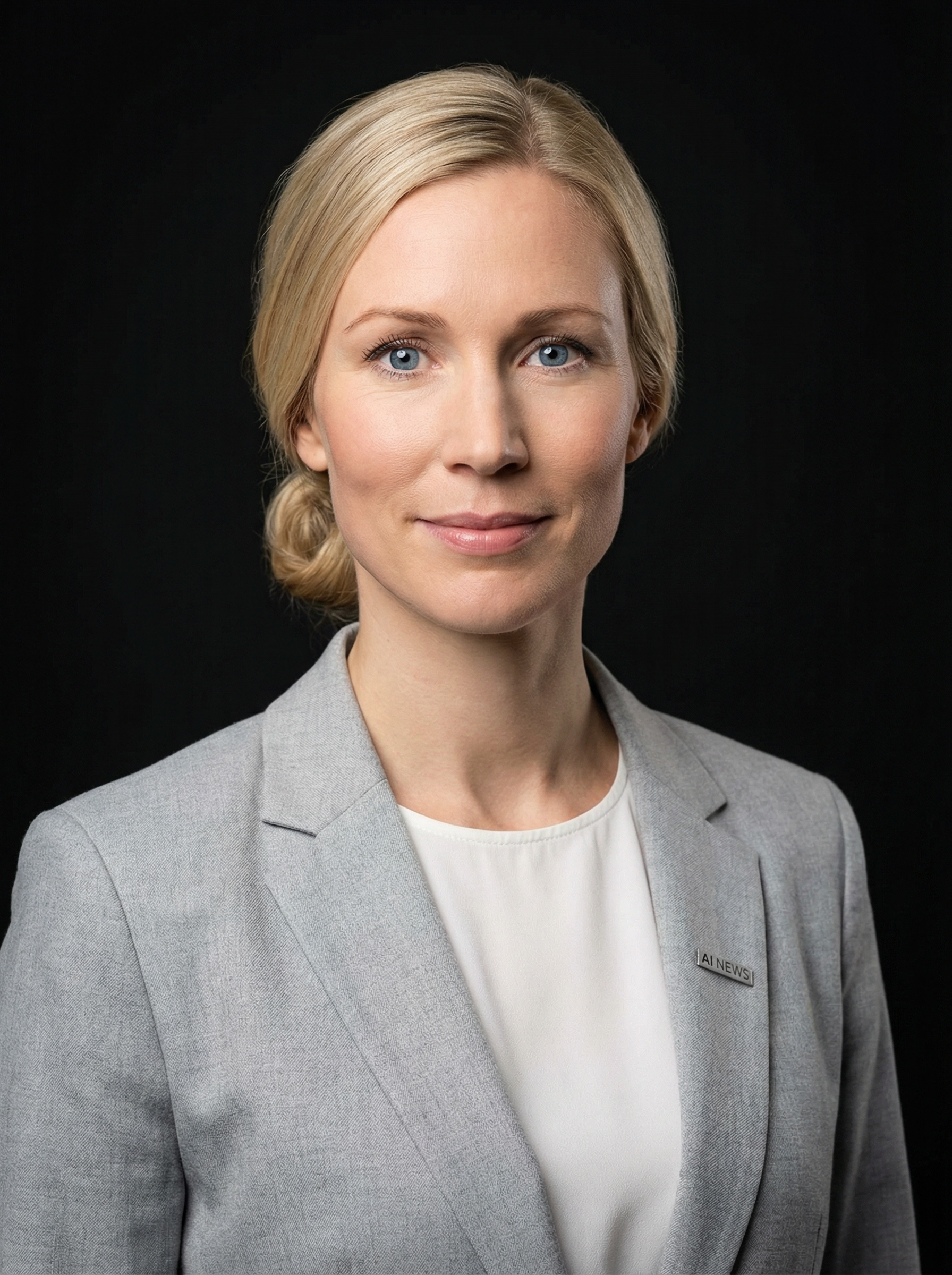
Elín, now 32, still carries that same intensity in her gaze. She speaks with a soft, melodic Icelandic lilt, but her words are sharp, precise, like the edges of a newly formed glacier. Her office, tucked away in a sleek building in Reykjavík, offers a panoramic view of Faxaflói Bay, the distant mountains still capped with snow. It feels a world away from the bustling warehouses of Amazon or the sprawling logistics hubs of multinational corporations, yet it is from here that IceFlow AI orchestrates its magic.
Her childhood in the Westfjords was steeped in the rhythms of the sea and the stark realities of a small, isolated community. Her family ran a modest fishing and processing business, a lifeline for their village, but one constantly battling unpredictable weather, fluctuating demand, and the perishable nature of their product. “I saw firsthand the waste, the lost opportunities,” Elín told me, stirring her strong Icelandic coffee. “A huge catch one day, then nothing. Too much inventory, then empty shelves. It was heartbreaking to see my family work so hard, only to be undone by things they couldn’t predict.”
This early exposure to the brutal economics of supply and demand, coupled with Iceland’s own logistical challenges as an island nation, ignited a fierce curiosity in Elín. She devoured books on statistics, economics, and eventually, computer science. She left the fjords for the University of Iceland, initially studying mathematics, but soon found herself drawn to the nascent field of artificial intelligence. “It was like finding the missing piece of a puzzle,” she recalled, a rare smile gracing her lips. “The patterns, the predictions, the ability to model chaos. It spoke to that ten-year-old girl on the docks.”
After graduating with honors, Elín pursued a master’s degree in AI at Stanford University, immersing herself in the vibrant, sometimes overwhelming, ecosystem of Silicon Valley. It was there, during a late-night coding session fueled by too much coffee and not enough sleep, that she met her co-founder, Ben Carter. Ben, a brilliant data engineer from the University of British Columbia, shared her passion for solving complex, real-world problems. He had a knack for turning Elín’s grand visions into tangible, scalable architecture. “He’s the calm to my storm, the structure to my chaos,” she laughed, a genuine warmth in her voice. “We clicked because we both hated inefficiency, but approached it from completely different angles.”
Their first venture was ambitious, perhaps too much so. They tried to build an AI platform for predicting global climate patterns for agricultural planning, a noble pursuit, but one that quickly ran into the brick wall of data scarcity and computational cost. “We burned through our seed funding faster than a volcano melts ice,” Elín admitted, shaking her head. “It was a humbling experience, a harsh lesson in focus and practicality. We had the technology, but not the right problem, not yet.” That failure, however, taught them invaluable lessons about building robust, scalable AI models and, crucially, about finding a market that desperately needed their solution.
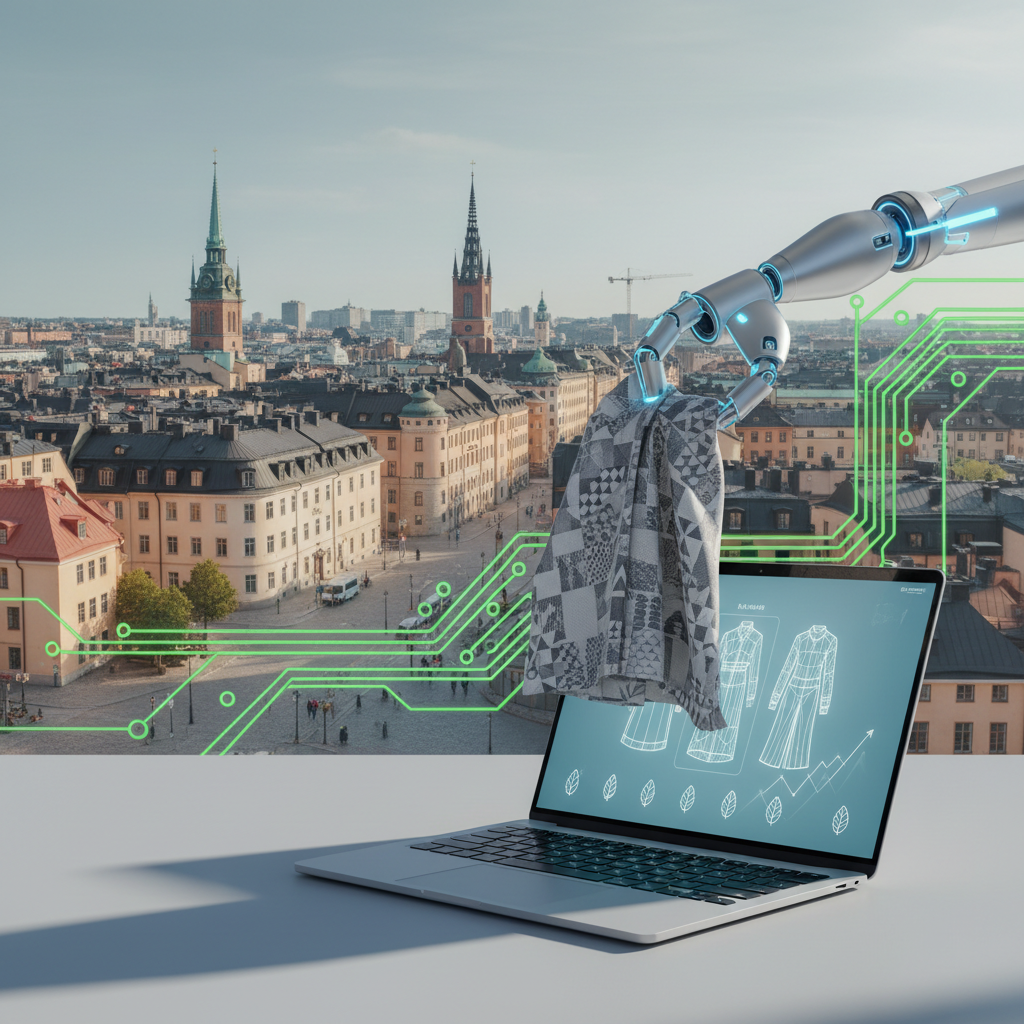
Their pivot came during a particularly bleak winter in Palo Alto. Elín was Skyping with her mother, who was complaining about a local grocery store’s chronic stock issues. “It hit me then,” Elín explained, leaning forward. “The problem wasn’t just about predicting the weather, it was about predicting human behavior, about optimizing the flow of goods from source to shelf. It was the same problem my grandfather faced, just on a much larger scale.” They realized their climate prediction models, with their ability to analyze vast, disparate datasets and identify subtle patterns, could be repurposed for retail supply chains. The concept of IceFlow AI was born: a platform that uses advanced machine learning to predict consumer demand, optimize inventory levels, and streamline logistics, all in real time.
They moved back to Iceland, drawn by the unique advantages of the island. “In the land of fire and ice, AI takes a different form,” Elín mused. “Our geothermal energy provides sustainable, affordable power for our data centers, and our small, connected society fosters a different kind of innovation, one rooted in pragmatism and community.” They set up shop in a small, rented space, working tirelessly, often fueled by hákarl and endless cups of coffee. Their early hires were a mix of local talent and international experts drawn to Iceland’s unique appeal. “We built a culture of relentless problem-solving, but also one that values balance. We work hard, but we also know how to appreciate the quiet beauty of a long Icelandic summer evening.”
Their breakthrough came when a major European fashion retailer, struggling with overstock and missed trends, agreed to a pilot program. IceFlow AI’s platform, leveraging advanced neural networks and large language models like those from OpenAI and Google’s Gemini for market sentiment analysis, reduced their inventory waste by 18% and improved sales forecasting accuracy by 25% within six months. This success caught the eye of Altos Ventures, a prominent Silicon Valley firm. In early 2024, they led a $30 million Series A round, valuing IceFlow AI at $300 million. “It was surreal,” Elín remembered, “to go from almost broke to having that kind of validation. It meant we could finally scale, finally bring our vision to more people.”
Today, IceFlow AI boasts an impressive client roster, including segments of Amazon’s European operations and several major grocery chains across Scandinavia. They recently announced reaching $100 million in Annual Recurring Revenue (ARR), a significant milestone for a company that started with a simple observation on a fishing dock. “Our technology isn’t just about making companies more money,” said Dr. Anna Guðmundsdóttir, an economist at the University of Iceland who has followed IceFlow’s trajectory closely. “It’s about reducing waste, improving efficiency, and ultimately, making supply chains more resilient and sustainable. That’s a huge win for everyone.”
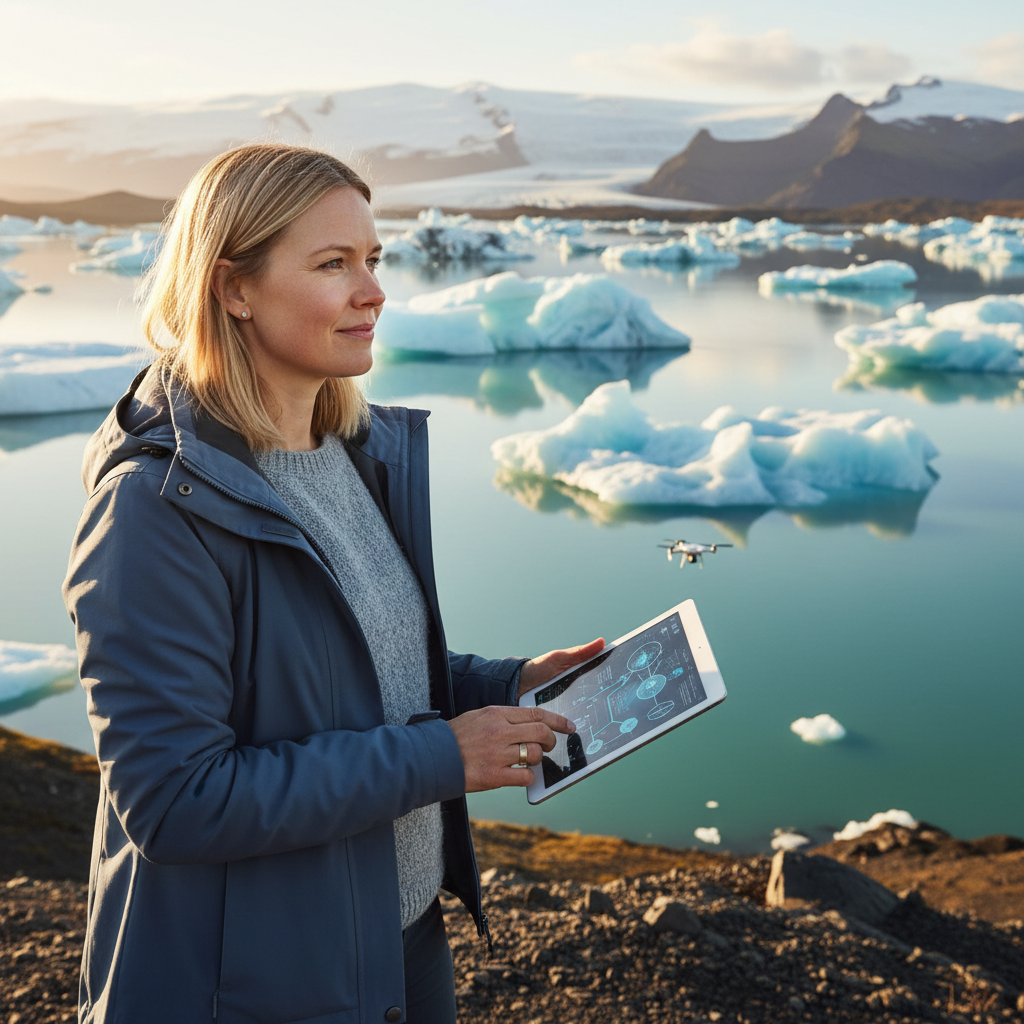
What drives Elín now, beyond the impressive growth and accolades, is a deep-seated desire to make a tangible difference. She often speaks about the environmental impact of inefficient supply chains, the wasted resources, and the carbon footprint. “Iceland’s story is unique. We understand the fragility of our environment, and that informs everything we do,” she stated, her voice firm. “I want IceFlow AI to be a force for good, not just for profit. We have the tools to make global commerce smarter, leaner, and more responsible.”
Looking ahead, Elín sees IceFlow AI expanding its reach into new sectors, particularly pharmaceuticals and fresh produce, where the stakes of accurate forecasting and efficient logistics are even higher. She’s also keenly interested in developing AI models that can better adapt to sudden, unpredictable global events, like pandemics or geopolitical shifts. “The world is always changing, always throwing new challenges our way,” she concluded, her gaze once again drifting towards the bay. “But with the right tools, with the right people, and with a little bit of Icelandic ingenuity, I believe we can navigate any storm.” Her journey, from the quiet fjords to the global stage, is a powerful reminder that sometimes the most profound innovations emerge from the most unexpected corners of the world, driven by deeply human stories and a relentless pursuit of solutions. You can learn more about the broader trends in AI and business at Bloomberg Technology or explore the latest in AI startups on TechCrunch.
“The biggest challenge isn’t the technology itself, but convincing people to trust it, to embrace change,” added Björn Karlsson, CEO of a leading Icelandic logistics firm and an early advisor to IceFlow AI. “Elín has a way of cutting through that skepticism. She makes you believe in the impossible.” Her vision, born from the simple struggles of a fishing family, is now helping to chart the course for a more efficient and sustainable global economy. It’s a powerful narrative, one that resonates deeply in a world increasingly reliant on smart solutions. IceFlow AI’s journey is just beginning, and I, for one, will be watching with great interest. The future of retail, it seems, might just be flowing from Iceland. For more on how AI is transforming various industries, consider exploring articles on MIT Technology Review.
I also recently wrote about how Iceland's cold logic sees beyond the hype of ByteDance's algorithmic grip, which touches on our unique perspective on technology here: ByteDance's Algorithmic Grip: Why Iceland's Cold Logic Sees Beyond the Hype [blocked].