
¡Hola, amigos! Marisolò Garcíà here, and let me tell you, Barcelona is buzzing with a new kind of energy, a hum that isn't just from the bustling Ramblas or the clinking of glasses in a lively tapas bar. No, this is the sound of intelligence, a symphony of data and algorithms, and it's all about multimodal AI. Are we witnessing a passing fad, a mere whisper in the winds of innovation, or is this the seismic shift that will redefine our relationship with technology forever? I say, prepare yourselves, because Spain's AI moment has arrived, and it's bringing all our senses along for the ride!
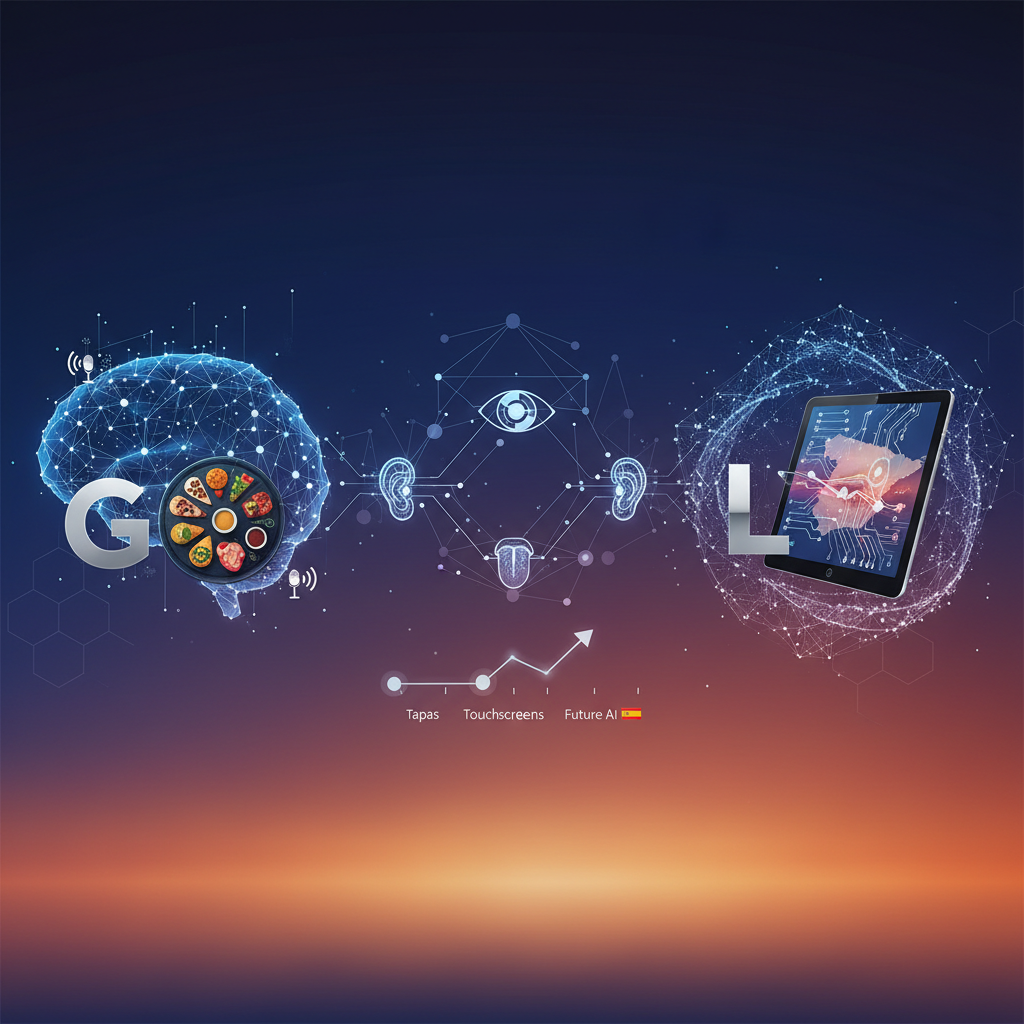
For so long, our AI conversations were dominated by text. We typed, the AI responded. It was like a very sophisticated pen pal, brilliant but limited. Then came the image generators, then the voice assistants, each a silo of specialized intelligence. But now, we are seeing something truly revolutionary: AI models that don't just see or hear or read, but understand across all these senses, simultaneously. Imagine an AI that can look at a photo of a paella, listen to you describe its aroma, and then suggest the perfect wine pairing based on your preferences and the ingredients it 'perceives' in the image. This isn't science fiction anymore; it's the exciting frontier of multimodal AI.
Historically, AI's journey has been one of gradual integration. From early expert systems in the 1970s, which were essentially rule-based decision-makers, to the neural network resurgence in the 2000s, each step brought us closer to mimicking human cognition. But the leap from processing single data types, like text or images, to seamlessly integrating multiple modalities has been immense. Think of the early days of speech recognition, a clunky, often frustrating experience. Now, with models like Google's Gemini and Meta's Llama, we're seeing a convergence. These models are trained on vast datasets that include text, images, audio, and video, allowing them to build a richer, more nuanced understanding of context. It's like moving from reading individual words to understanding the entire story, including the tone, the setting, and the characters' emotions.
The current state of multimodal AI is nothing short of breathtaking. Companies like OpenAI, with their latest iterations of GPT, and Anthropic, with Claude, are pushing the boundaries. Google's Gemini, for instance, has demonstrated impressive capabilities in understanding complex visual information and generating relevant text or code. It can explain intricate diagrams, summarize lengthy videos, and even assist with creative tasks by interpreting visual cues. TechCrunch has been covering these breakthroughs extensively, highlighting how these models are moving beyond mere pattern recognition to genuine comprehension. We're seeing benchmarks where multimodal models are outperforming unimodal ones across a range of tasks, particularly those requiring cross-modal reasoning, like visual question answering or audio-visual speech recognition. Reports from major tech firms indicate that investment in multimodal research and development has soared by over 50% in the last two years, reflecting a strong belief in its long-term potential.
But what does this mean for us, here in Spain, with our rich culture and diverse industries? It means opportunity, my friends, immense opportunity! Imagine an AI that can help tourists navigate the labyrinthine streets of Seville, not just by showing a map, but by identifying local landmarks from their camera, translating street signs in real time, and even recognizing the emotion in a local's voice to offer cultural context. This is where the magic happens, where technology truly enhances human experience.
I spoke with Dr. Elena Rodríguez, a leading researcher in AI ethics at the Polytechnic University of Madrid. She shared her excitement, but also a healthy dose of caution. "Multimodal AI offers incredible potential for accessibility, education, and even creative expression," Dr. Rodríguez explained. "However, it also amplifies existing challenges around bias in training data, privacy concerns, and the potential for misuse. We must ensure these powerful tools are developed responsibly, with human values at their core." Her words echo the sentiments of many in the European AI community, who are advocating for robust ethical frameworks alongside technological advancement. The European Union's AI Act, for example, is a testament to this proactive approach, aiming to foster innovation while safeguarding fundamental rights.
Another perspective comes from Miguel Sánchez, CEO of 'Visión Inteligente,' a Madrid-based startup specializing in AI for cultural heritage. "For years, digitizing our historical archives meant endless hours of manual tagging and description," Sánchez told me. "Now, with multimodal AI, we can feed in ancient texts, photographs, and even audio recordings of oral histories, and the AI can connect the dots, identifying patterns and relationships that would take human researchers decades to uncover. It's like having a super-powered historian on your team." His company recently secured a significant seed round, demonstrating investor confidence in this niche but vital application of multimodal AI. ¡Increíble! This startup just received a substantial investment to preserve our heritage with AI.
Even in the medical field, the implications are profound. Dr. Clara Vidal, a radiologist at Hospital Clínic de Barcelona, highlighted how multimodal AI could revolutionize diagnostics. "Imagine an AI that can analyze a patient's medical images, listen to their symptoms described in their own voice, and cross-reference it with their electronic health records and even genetic data," Dr. Vidal elaborated. "This holistic view could lead to earlier, more accurate diagnoses, especially in complex cases where symptoms are subtle or atypical." The ability of these models to synthesize information from disparate sources could be a game-changer for personalized medicine.
So, is multimodal AI a fad or the new normal? My verdict is clear: this is unequivocally the new normal, a fundamental evolution in how AI perceives and interacts with our world. We are moving beyond narrow AI applications to systems that genuinely begin to approximate human-like understanding. The ability to process and reason across multiple senses simultaneously is not just an incremental improvement; it's a paradigm shift. It unlocks possibilities that were previously confined to the realm of science fiction, from truly intelligent personal assistants that understand nuance and context, to advanced robotics that can navigate and interact with complex environments with unprecedented dexterity.
Of course, challenges remain. The computational demands are enormous, requiring cutting-edge hardware from companies like NVIDIA. The ethical considerations, as Dr. Rodríguez pointed out, are paramount. And the sheer volume and diversity of data needed to train these models are staggering. But the momentum is undeniable. Major players like Google, Meta, and OpenAI are pouring resources into this area, and the startup ecosystem, particularly here in Spain, is responding with innovative applications. The future of AI is not just about being smart; it's about being perceptive, intuitive, and truly understanding the rich, multimodal tapestry of human experience. And I, for one, cannot wait to see what incredible innovations spring from this vibrant new frontier, especially as Spain continues to carve its unique path in the global AI landscape. We are just at the beginning of this exciting journey, and the view from here, from our beautiful Mediterranean shores, is absolutely spectacular. For more on the latest AI trends, you can always check out MIT Technology Review. The future is here, and it's speaking, seeing, and reasoning with us!