
Let me tell you something, my friends. For too long, the world has danced to the tune of a single orchestra, a Silicon Valley symphony conducting every note of our technological progress. We bought their chips, we used their software, we followed their lead. But the music, it is changing. The global economic shifts and the simmering trade wars, they are not just ripples on the surface; they are tectonic plates grinding against each other, reshaping the very foundations of the technology supply chain. And from my vantage point here in São Paulo, I see a future where Brazil, alongside its Brics partners, is not just a consumer, but a co-creator, a formidable force in this new digital order.
This is not some abstract economic theory, this is real life. You see it in the headlines, don't you? The United States and China, locked in a digital embrace that is more chokehold than hug. Restrictions on advanced chip exports, bans on certain technologies, the constant drumbeat of 'decoupling.' What does this mean for us, for countries like Brazil, India, South Africa, and the others joining the Brics family? It means opportunity, my friends. It means necessity breeds innovation. It means we cannot afford to be spectators any longer.
For decades, the idea was simple: design in the West, manufacture in the East, and everyone benefits from globalized efficiency. But efficiency, it turns out, is a fragile flower when geopolitical winds turn cold. Now, every nation, every bloc, is looking inwards, asking: 'Can we build this ourselves?' And the answer, increasingly, is sim, nós podemos, yes, we can. Brazil is the sleeping giant of AI and it's waking up, and this shift in the supply chain is the alarm clock.
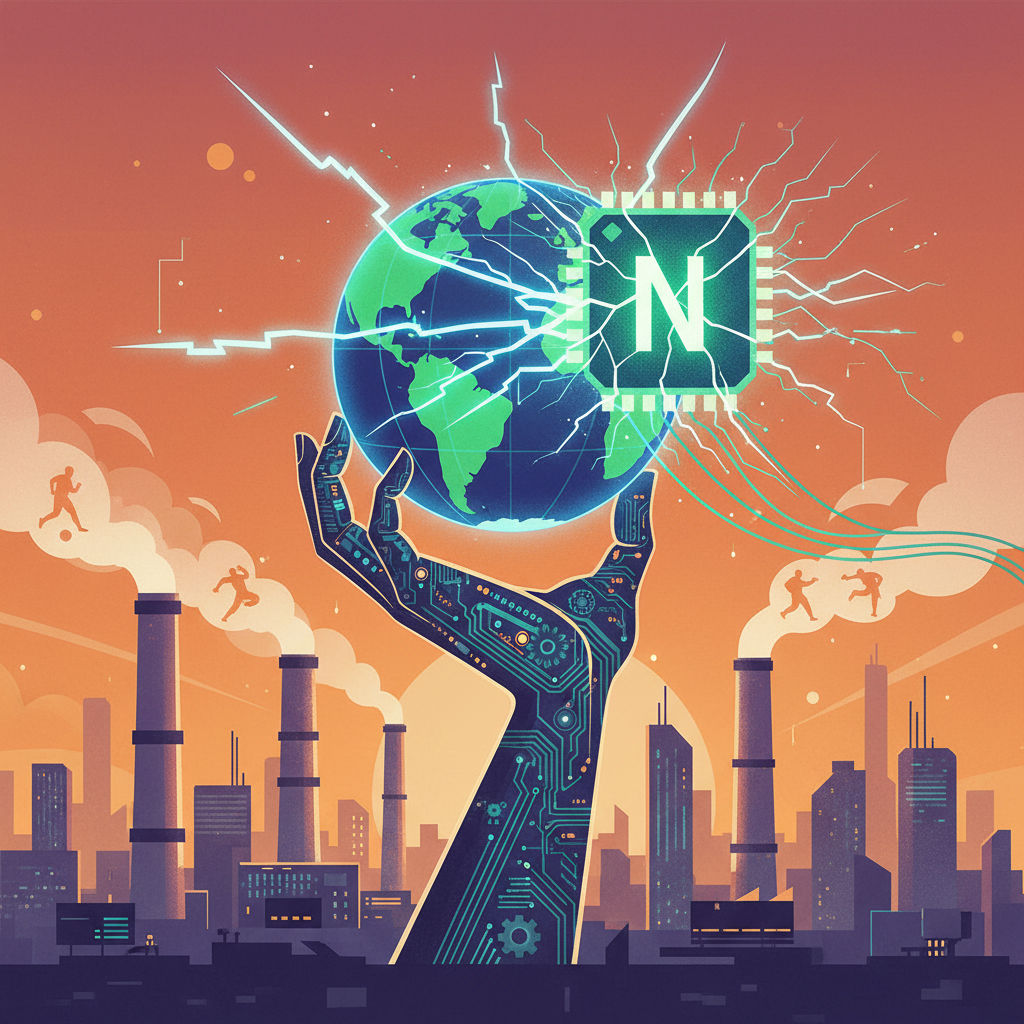
Consider the semiconductor industry, the very lifeblood of modern technology. NVIDIA, with its dominant position in AI GPUs, has become a kingmaker. Their H100 and upcoming B200 chips are essential for training the large language models that everyone from OpenAI to Google is developing. But what happens when access to these critical components becomes a political tool? What happens when a single company, or a single nation, holds the keys to the AI kingdom? It's a dangerous game. As Dr. C. S. Prakash, a distinguished professor at Tuskegee University and a vocal advocate for technological self-reliance, once put it, "Technological independence is not a luxury, it is a strategic imperative for national security and economic resilience." He is absolutely right.
This is where the Brics nations come in. We have the talent, the resources, and the sheer market size to build parallel ecosystems. India, with its vast pool of software engineers and burgeoning startup scene, is already making strides in chip design. China, despite the sanctions, continues to pour billions into its domestic semiconductor industry, pushing the boundaries of what's possible with older fabrication nodes and innovating in areas like packaging and materials science. Brazil, with its rich mineral resources crucial for electronics and a rapidly growing tech sector, can contribute significantly to the raw materials and even advanced manufacturing components. We are not talking about replicating Silicon Valley overnight, that would be foolish. We are talking about building complementary, resilient, and sovereign supply chains.
Some might argue that this 'decoupling' will lead to inefficiencies, higher costs, and slower innovation. They will say that global collaboration is the only way forward, that protectionism stifles progress. And yes, there's a grain of truth to that. A fully fragmented world would be less efficient. But what is the cost of efficiency if it comes at the price of sovereignty? What is the cost of cheap chips if their supply can be cut off at a moment's notice? The world has learned a harsh lesson from the pandemic, when global supply chains for everything from masks to microchips buckled under pressure. Resilience, not just efficiency, is the new mantra.
Moreover, this push for localized or bloc-specific supply chains will foster entirely new waves of innovation. When you are forced to solve problems without relying on established giants, you often come up with novel solutions. Think about the incredible advancements in Brazilian fintech, for example. Companies like Nubank and PicPay didn't just copy Western models; they adapted, innovated, and built solutions tailored to our unique market needs. The same will happen in hardware and AI infrastructure. We will see new architectures, new materials, and new manufacturing processes emerge from places like São Paulo, Bangalore, and Shenzhen.
This isn't just about chips, mind you. It is about the entire stack. It is about open-source AI models, like Meta's Llama, which are democratizing access to powerful AI capabilities, allowing countries to build their own large language models without being beholden to proprietary systems. It is about developing our own cloud infrastructure, our own data centers, powered by renewable energy sources, something Brazil has in abundance. It is about training our own AI talent, fostering local research, and creating a vibrant ecosystem where innovation flourishes from the ground up.
I recently spoke with a senior executive at a major Brazilian agricultural tech company, who wished to remain anonymous due to the sensitivity of discussing geopolitical risks. He told me, "We are actively exploring diversifying our hardware suppliers and investing in local AI research. The days of relying on a single source for critical technology are over. Our food security, our economic future, depends on it." This sentiment, I assure you, is echoed across industries here.
São Paulo's tech scene rivals any in the world, and we are not just talking about software. We have brilliant engineers, world-class universities, and a government that is increasingly recognizing the strategic importance of technological sovereignty. The investments in AI research and development, particularly in areas like agritech AI and Portuguese language AI, are growing exponentially. We are building the foundations for a future where Brazil is a significant player, not just a market.
So, what is the takeaway here? The global tech supply chain is undergoing a fundamental transformation. The era of unquestioned globalization is giving way to an era of strategic regionalization and national self-reliance. For countries like Brazil, this is not a threat, it is an immense opportunity. It is a chance to build our own technological future, to foster local innovation, and to secure our place in the coming decades. The giants of yesterday may struggle to adapt, but the agile, the ambitious, the ones who see this shift not as a problem but as a canvas for new creation, they will be the winners. This is Brazil's decade, and we are ready to paint our masterpiece. The world better be ready for what we are building, from the Amazon to the Atlantic. We are not just waking up; we are already at work.
For more insights into global tech trends and their impact on emerging markets, keep an eye on DataGlobal Hub. You can also follow the latest in AI research and development at MIT Technology Review. The future is being built, brick by digital brick, and we are right in the middle of it. For a deeper dive into the complexities of AI ethics and global implications, consider exploring resources from Wired.