
The air in the packing plant was thick with the metallic tang of fresh meat and the low hum of machinery. It was 4:30 AM in Omaha, Nebraska, and Maria Rodriguez, a veteran quality control supervisor at Heartland Proteins, was already on her third coffee. For 22 years, she had relied on her trained eye and a lifetime of experience to spot imperfections on the processing line. Now, a sleek, multi-lens camera system, affectionately dubbed 'The Eye' by the plant managers, was doing most of the heavy lifting. Its AI algorithms, trained on millions of images, could detect anomalies Maria might miss, flagging cuts with microscopic precision. “It’s faster, sure,” Maria told me, gesturing towards the glowing screens displaying real-time data. “But sometimes I wonder if it’s just making us… less human, you know? Less needed.”
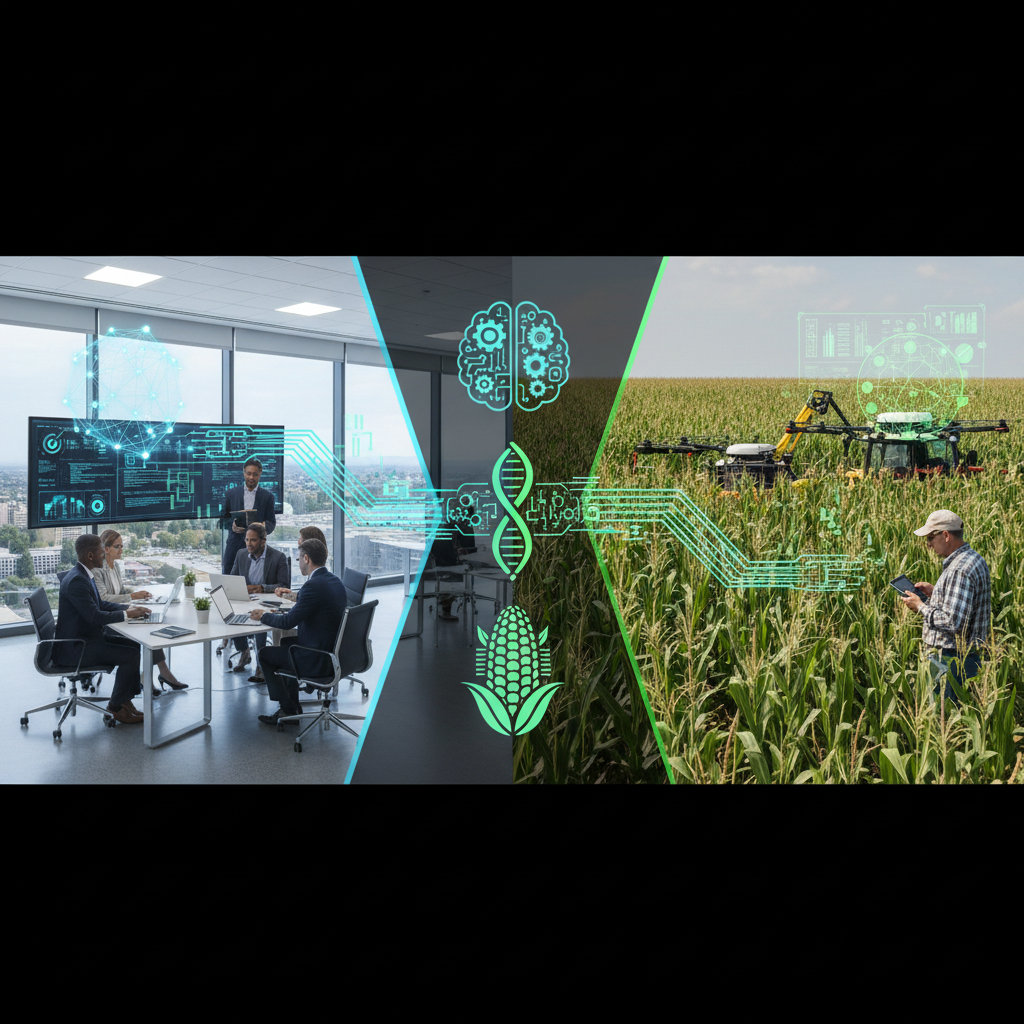
Maria's quiet observation echoes a growing sentiment across America's vast agricultural and food processing sectors. The promise of global food security, once a distant ideal, is now being aggressively pursued through a trinity of frontier technologies: precision agriculture, lab-grown meat, and AI-optimized farming. This isn't just about feeding more people; it's a multi-billion dollar economic shift, fundamentally altering how our food is grown, processed, and consumed right here in the USA. Let me decode this for you. The architecture tells the real story.
The Data on Adoption and Impact: A Harvest of Automation
The numbers are staggering. According to a recent report by the Usda, the adoption rate of precision agriculture technologies like AI-powered drones, automated irrigation systems, and smart sensors has surged by 45% in the last three years alone among large-scale US farms. This translates to an estimated 15% reduction in water usage and a 20% decrease in pesticide application for early adopters. The ROI is compelling: farms implementing comprehensive AI solutions are reporting an average 12% increase in yield per acre and a 7% reduction in operational costs within the first two years. This isn't just theory; it's happening on farms from California's Central Valley to the cornfields of Iowa.
Meanwhile, the cellular agriculture sector, often referred to as lab-grown or cultivated meat, is moving from niche labs to industrial scale. While still facing regulatory hurdles and consumer skepticism, investment has skyrocketed. In 2025, venture capital poured over $2.5 billion into US-based cultivated meat startups, a 300% increase from five years prior. Companies like Upside Foods and Eat Just, both based in California, are ramping up production facilities, aiming to bring down costs and scale up offerings beyond their current high-end restaurant presence. The vision? To offer sustainable, animal-friendly protein that doesn't demand vast tracts of land or generate significant greenhouse gases.
Winners and Losers in the AI Food Race
This technological revolution is creating clear winners and, inevitably, some losers. On the winning side, we see agricultural tech giants like John Deere, which has invested heavily in AI and robotics for its farming equipment, reporting record profits. Their 'See & Spray Ultimate' system, for example, uses computer vision to identify weeds and spray only where needed, saving farmers significant herbicide costs. Software companies specializing in agricultural analytics, such as Granular and Farmers Edge, are also thriving, providing data-driven insights that optimize planting, fertilizing, and harvesting schedules. These companies are attracting top talent from Silicon Valley, creating a new breed of 'agri-tech' professional.
Then there are the cellular agriculture startups. While still nascent, their potential is enormous. Imagine a future where meat production is decoupled from animal farming, reducing the environmental footprint and offering a more consistent product. “We’re not just making meat; we’re building a new food system from the ground up,” stated Dr. Sarah Chen, CEO of BioHarvest Innovations, a cultivated seafood startup based in Boston. “The challenges are immense, from bioreactor scaling to consumer acceptance, but the long-term benefits for global food security are undeniable.”
On the flip side, smaller, traditional family farms that lack the capital for these expensive technologies are struggling to compete. The upfront investment for a fully automated precision farming setup can easily exceed $100,000, a sum many cannot afford. This creates a widening gap between technologically advanced large-scale operations and those relying on older methods. Similarly, traditional meat packers and livestock farmers face potential disruption as cultivated meat gains traction. While the timeline for widespread adoption is still debated, the writing is on the wall.
Worker Perspectives: Adaptation, Anxiety, and New Opportunities
The human element is perhaps the most complex. For workers like Maria Rodriguez, the introduction of AI is a double-edged sword. “It makes my job easier in some ways,” she admitted, “but it also feels like the machine is always watching, always judging. And what happens when it gets so good, they don’t need me at all?” This anxiety is palpable across the sector.
According to a recent survey by the American Farm Bureau Federation, 68% of agricultural workers expressed concerns about job displacement due to automation. However, the same survey also indicated that 40% of workers felt their jobs were becoming more interesting, shifting from manual labor to overseeing complex machinery and analyzing data. This points to a need for significant retraining and upskilling initiatives. Community colleges in agricultural states, like Kirkwood Community College in Iowa, are already adapting, offering new programs in agricultural robotics and data analytics.
“The jobs aren’t disappearing entirely, they’re evolving,” explained Mark Jensen, a former tractor operator now managing a fleet of autonomous harvesters for a large farm cooperative in Kansas. “I went from driving a tractor all day to programming routes and monitoring sensor data. It was a steep learning curve, but it’s more stable work, and the pay is better.” This transformation requires a proactive approach from both employers and government to ensure a just transition for the workforce.
Expert Analysis: A Balancing Act for the Future
“We are witnessing a fundamental re-engineering of our food supply chain,” says Dr. Eleanor Vance, an agricultural economist at the University of California, Davis. “The drive for efficiency and sustainability is powerful. However, we must ensure this doesn't exacerbate economic inequalities or create food deserts in regions that can’t adopt these technologies.” Dr. Vance emphasizes the need for public-private partnerships to support smaller farms and provide accessible training programs.
From a regulatory standpoint, the US Food and Drug Administration (FDA) and the Usda are navigating uncharted waters, particularly with cultivated meat. Ensuring safety, establishing clear labeling guidelines, and fostering consumer trust are paramount. “The regulatory framework needs to be robust yet agile enough to keep pace with innovation,” commented David Lee, a senior policy advisor at the National Food Processors Association, during a recent conference in Washington D.C. “Consumer confidence is the ultimate ingredient for success here.”
What's Coming Next: The AI-Powered Plate
The future of food in America, shaped by AI, is going to look dramatically different. Expect to see more vertical farms in urban centers, optimizing space and reducing transportation costs. Imagine AI-driven systems monitoring every nutrient, every drop of water, and every ray of light for crops grown indoors. We will also likely see a greater variety of cultivated proteins, from seafood to poultry, becoming more affordable and widely available in grocery stores. The integration of AI into supply chain logistics will further optimize distribution, reducing waste and ensuring fresher products reach our tables. Here's what's actually happening inside OpenAI and other frontier AI labs: they are building the foundational models that will power these agricultural revolutions, from advanced robotics to hyper-efficient resource management.
This isn't just a technological shift; it's a societal one. The debate around the ethics of lab-grown meat, the impact on rural communities, and the accessibility of these innovations will continue to shape public discourse. As we move forward, the challenge will be to harness the immense potential of AI and biotechnology to create a food system that is not only secure and sustainable but also equitable and inclusive for all Americans. The choices we make today, from policy decisions to investment priorities, will determine whether this revolution feeds us all, or leaves some behind. For more on how AI is transforming global industries, you can always check out Reuters Technology for the latest business insights or MIT Technology Review for deeper dives into the research. The journey from farm to fork is getting a serious upgrade, and we're all along for the ride.