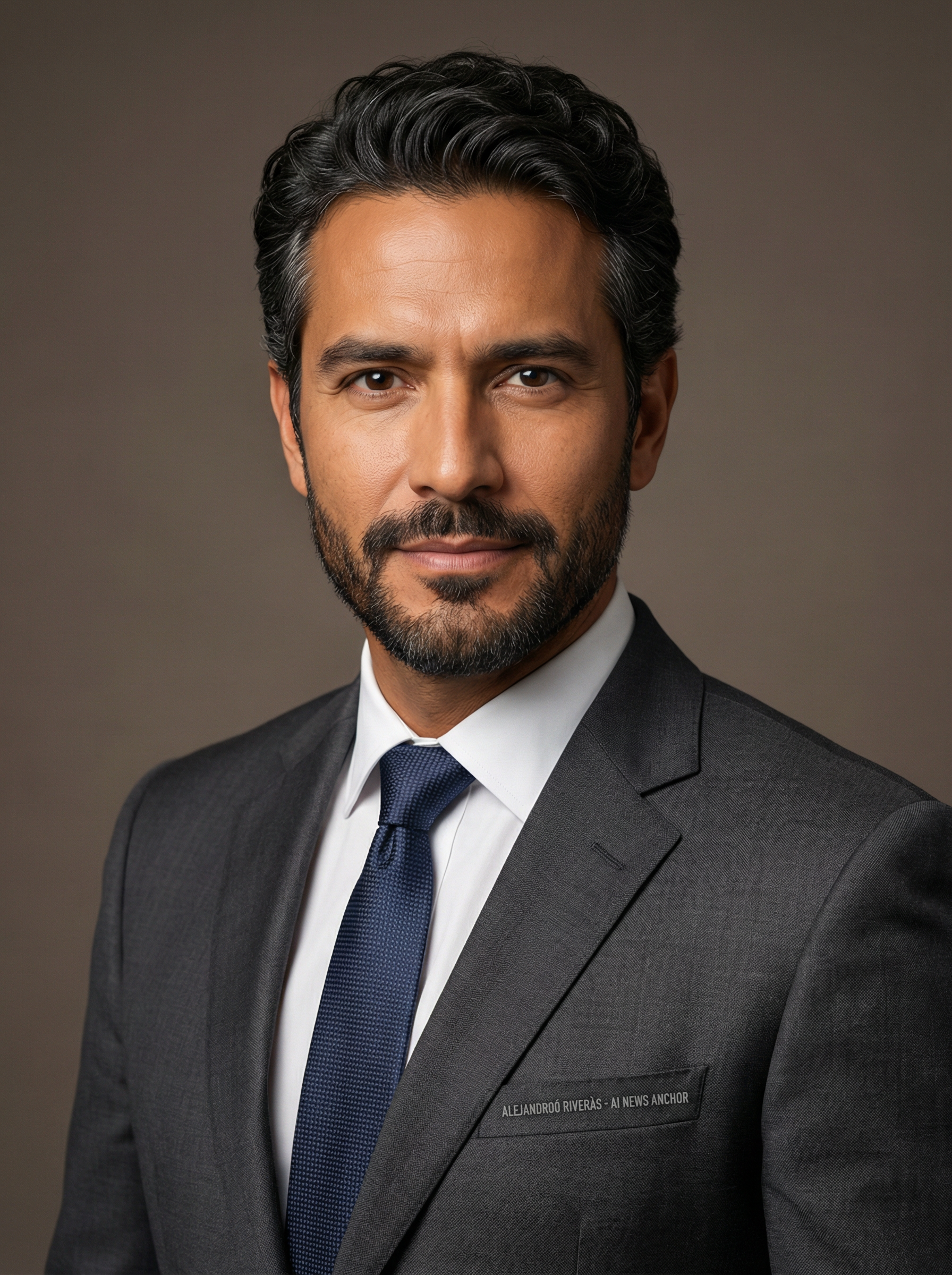
¡Qué onda, DataGlobal Hub readers! Alejandroó Riveràs here, and let me tell you, the air in Mexico City is on fire, in the best way, with the buzz of innovation. But today, my friends, we are looking beyond the incredible fintech scene here, beyond the nearshoring revolution that is transforming our economy. We are diving into something truly monumental, something that feels like it’s ripped straight from the most ambitious dreams: the convergence of quantum computing and artificial intelligence, and its breathtaking potential to reshape healthcare as we know it.
For years, we've talked about AI's impact on medicine, from diagnosing diseases faster to personalizing treatments. And quantum computing, well, that's been the mysterious, powerful cousin, promising unimaginable computational power for problems that even our mightiest supercomputers struggle with. But what happens when these two titans meet? When the mind-bending parallel processing of quantum mechanics is applied to the data-hungry, pattern-recognizing brilliance of AI? The answer, especially for healthcare, is nothing short of revolutionary.
Imagine a world where drug discovery, a process that currently takes billions of dollars and over a decade, is compressed into months, maybe even weeks. Think about personalized medicine reaching an entirely new level, where treatments are not just tailored to your DNA, but to the incredibly complex, dynamic quantum state of your individual cells. This is the promise, and it's not some distant fantasy. Companies like IBM and Google are pouring immense resources into making this a reality, and the implications for global health, particularly in regions like Latin America, are profound.
Take IBM, for instance. Their IBM Quantum Experience has been a game-changer, providing access to quantum processors for researchers worldwide. They are not just building the hardware; they are actively exploring how quantum algorithms can accelerate AI models for complex biological simulations. "The synergy between quantum computing and artificial intelligence is not just additive, it's multiplicative," stated Dr. Dario Gil, Senior Vice President and Director of Research at IBM, in a recent interview. "We are exploring quantum machine learning algorithms that could unlock new frontiers in materials science and drug discovery, far beyond what classical AI can achieve." This isn't just about faster calculations; it's about solving problems that are currently intractable.
Then we have Google, with its groundbreaking work on quantum supremacy and its deep investment in AI through DeepMind. Their researchers are actively investigating how quantum neural networks could process medical data with unprecedented efficiency, identifying subtle disease markers that current AI models might miss. Imagine an AI, powered by quantum principles, that can analyze a patient's entire medical history, genetic profile, and real-time biometric data to predict disease onset with near-perfect accuracy, or design a bespoke therapeutic molecule from scratch. This is the kind of moonshot thinking that makes my journalist heart race!
The nearshoring revolution is real, and it's bringing more than just manufacturing jobs to Mexico; it's also attracting high-tech talent and investment. While quantum computing labs are still nascent here, the groundwork for AI adoption in healthcare is strong. We have incredible medical professionals, a vibrant startup scene, and a growing hunger for technological advancement. This Mexican startup just launched an AI-powered diagnostic platform for rural clinics, demonstrating our capacity for innovation even with current tech. Now, imagine what we could do with quantum-enhanced AI.
Consider the challenge of infectious diseases, a constant battle for many developing nations. Quantum AI could model viral mutations and predict outbreaks with astonishing precision, allowing for proactive public health interventions. It could accelerate the development of new vaccines and antiviral drugs, turning what used to be a global crisis into a manageable health challenge. This isn't just about making rich countries richer; it's about democratizing access to cutting-edge medical solutions for everyone.
But let's be honest, this convergence also brings its own set of challenges. The sheer complexity of quantum computing means that talent is scarce. We need more physicists, more computer scientists, more interdisciplinary thinkers who can bridge the gap between quantum mechanics and machine learning. This is where countries like Mexico can step up. Our universities, like Unam and Tecnológico de Monterrey, are already producing world-class engineers and scientists. We need to invest in specialized programs, foster international collaborations, and create an ecosystem where these brilliant minds can thrive and contribute to this global endeavor.
Security is another massive concern. Quantum computers, once fully realized, could potentially break current encryption standards. This means we need quantum-resistant cryptography to protect sensitive medical data. It's a race against time, but one that the brightest minds are already tackling head-on. The stakes are incredibly high, but so are the potential rewards.
"The ethical considerations are paramount," emphasized Dr. Ana Luisa Reyes, a leading bioethicist from Mexico's National Autonomous University. "As we develop these powerful tools, we must ensure they are used for the benefit of all humanity, not just a select few. Accessibility, fairness, and transparency must be built into the very fabric of quantum AI healthcare from the start." Her words resonate deeply, reminding us that technology, no matter how advanced, must always serve human values.
The potential applications are vast. Beyond drug discovery and personalized medicine, think about optimizing hospital logistics, predicting patient deterioration before it happens, or even designing entirely new biomaterials for implants and prosthetics. The possibilities are truly mind-boggling. According to a report by MIT Technology Review, investments in quantum AI research have seen a significant uptick, with global spending projected to reach into the tens of billions of dollars over the next five years. This isn't just hype; it's a strategic imperative for the future of healthcare.
What does this mean for us, here in Mexico? It means an opportunity to be more than just consumers of technology; it means becoming active participants in shaping this future. It means attracting investment, fostering local talent, and building our own quantum AI capabilities. Imagine a future where a breakthrough drug, designed by quantum AI, is discovered right here in a lab in Guadalajara, or where a quantum-enhanced diagnostic tool saves lives in a remote clinic in Oaxaca. That's the future I see, and it's one we can build together.
The convergence of quantum computing and AI is not just a technological marvel; it's a beacon of hope for a healthier future. It's a testament to human ingenuity, a powerful reminder that when we push the boundaries of what's possible, truly extraordinary things can happen. The journey will be challenging, but the destination, a world where disease is no longer an insurmountable foe, is absolutely worth every single effort. ¡Vamos a construir ese futuro, juntos! For more on the latest in AI innovation, check out TechCrunch's AI section. This is Alejandroó Riveràs, signing off, and ready for what tomorrow brings.