Picture this: you are cruising down the Pacific Coast Highway, the California sun on your face, and your car is handling all the driving. No hands on the wheel, no feet on the pedals, just pure, unadulterated relaxation. That is the promise Tesla's Full Self-Driving, or FSD, has dangled before us for years. It is a vision that feels tantalizingly close, yet stubbornly out of reach, caught in a complex web of technological hurdles, public perception, and a regulatory battle that feels as old as the automobile itself. As a journalist based here in the USA, watching this unfold feels like a front-row seat to a uniquely American drama, one where innovation clashes with caution.
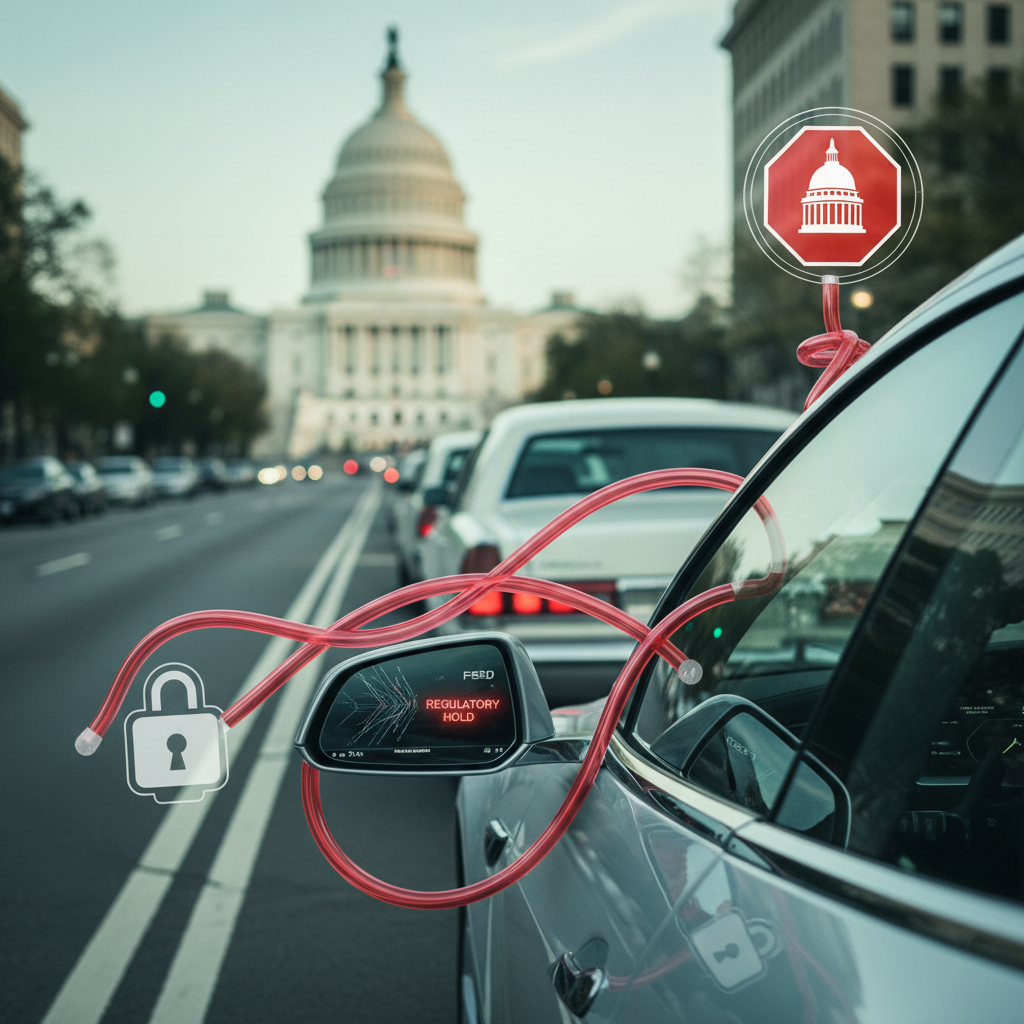
For years, Elon Musk has been the chief evangelist for FSD, often predicting its imminent arrival. Yet, despite billions invested in compute, data collection, and AI talent, the system remains a Level 2 driver assistance feature, meaning a human driver must always be ready to take over. This is not just a semantic quibble; it is the core of the regulatory quagmire. The National Highway Traffic Safety Administration, or Nhtsa, here in the States, along with Transport Canada north of the border, are grappling with how to classify and oversee a technology that blurs the lines between assistance and autonomy.
Let me decode this for you. Imagine you are teaching a teenager to drive. You give them the keys, but you are still in the passenger seat, ready to grab the wheel at any moment. That is Level 2. True Level 5 autonomy, the dream, is when you hand over the keys and go take a nap in the back, confident the car can handle any situation, anywhere, anytime. Tesla is still very much in the teenager phase, albeit a very talented one, and the regulators are the anxious parents trying to set the rules.
Recent data from Tesla's own safety reports, while showing a lower accident rate per mile for FSD engaged vehicles compared to the national average, also reveal a consistent pattern of disengagements. In the last quarter of 2025, for instance, Tesla reported an average of one intervention per 3,000 miles driven by FSD Beta users. While that sounds impressive, it means the system still encounters situations it cannot safely navigate on its own, requiring human intervention. "The numbers are improving, no doubt," says Dr. Lena Hansen, a senior researcher at the University of Michigan's Transportation Research Institute. "But the leap from needing intervention every few thousand miles to never needing it is exponential, not linear. That last 1% is proving to be the hardest, and the most critical for safety." Her point underscores the challenge: perfection is a much higher bar for autonomous systems than for human drivers, and rightly so.
This gap between perceived capability and actual regulatory approval has led to a fascinating, and at times frustrating, standoff. Regulators are understandably cautious. They remember the early days of aviation, when every crash led to new, stringent rules. For autonomous vehicles, the stakes are equally high. We are talking about public roads, shared with pedestrians, cyclists, and human-driven cars. A single high-profile accident involving an FSD vehicle can set back the entire industry for years, as we have seen with past incidents, even those not directly attributable to the core FSD system.
Take the ongoing legal battles, for example. In California, the Department of Motor Vehicles has been particularly vocal, investigating Tesla's marketing claims regarding FSD. "When a company labels a system 'Full Self-Driving,' it creates an expectation that the vehicle can operate without human input," states Sarah Chen, a legal analyst specializing in automotive technology at the Center for Auto Safety in Washington D.C. "This directly conflicts with the legal requirement for driver supervision, and that is where the regulatory friction truly begins." It is a classic case of Silicon Valley's move-fast-and-break-things ethos colliding with the slow, deliberate pace of government oversight.
Beyond the USA, the regulatory landscape is even more fragmented. While some European countries are experimenting with limited Level 3 systems, the patchwork of rules makes a universal FSD rollout a logistical nightmare. China, with its more centralized approach, might offer a clearer path for companies like Baidu, but even there, full autonomy is still years away from widespread deployment. This global inconsistency further complicates Tesla's ambitions, forcing them to develop region-specific solutions, which adds cost and complexity.
What is actually happening inside OpenAI, Google, and other AI powerhouses also sheds light on this. While their large language models like GPT-4 or Gemini are making incredible strides in understanding and generating human language, the real world is far more unpredictable. Driving requires split-second decisions based on imperfect information, understanding human intent, and navigating unforeseen obstacles. It is a multimodal, real-time problem of immense complexity. The architecture tells the real story: current FSD systems rely heavily on vision based neural networks, processing vast amounts of camera data. While powerful, these systems still struggle with edge cases, adverse weather, or unusual road conditions that a human driver might intuitively handle.
NVIDIA, a key provider of the powerful chips needed for these systems, continues to push the boundaries of automotive AI hardware, but even their Jensen Huang acknowledges the monumental task. "The compute power is there, or getting there," Huang noted in a recent industry conference. "The data is there. The algorithms are advancing. But the trust, the regulatory framework, and the societal acceptance, those are the final frontiers." His words echo a sentiment common among those who truly understand the technical depth required.
So, what does this mean for the future? It means a continued dance between innovation and regulation. We are likely to see more incremental progress, with Level 2 systems becoming increasingly sophisticated, perhaps handling more complex scenarios. The dream of Level 5 autonomy, while still the ultimate goal, will likely arrive not with a sudden flash, but with a gradual, cautious integration, state by state, country by country. The push for a unified federal framework in the USA, championed by organizations like the Alliance for Automotive Innovation, is gaining traction, but consensus is slow. "We need a clear, consistent national strategy," asserts John Smith, a former Department of Transportation official, now an independent consultant. "Without it, we risk stifling innovation and creating a chaotic regulatory environment that ultimately harms consumers and the industry alike." You can read more about the broader AI landscape and its impact on various industries at Reuters Technology.
Tesla's FSD journey is a microcosm of the broader frontier AI story. It is a testament to human ingenuity and ambition, but also a stark reminder that even the most advanced algorithms operate within a human world, governed by human laws and human expectations. The self-driving car is not just a technical challenge; it is a societal one, and the regulatory battle is merely the public face of that ongoing negotiation. The road ahead for FSD is long, and it is not just about the code; it is about trust, safety, and how we, as a society, choose to integrate these powerful new technologies into our lives. For more insights into how AI is shaping our world, check out articles on MIT Technology Review. The journey continues, and I, for one, will be watching every turn. The stakes are too high not to. While we wait for cars to drive themselves, perhaps we can learn from how other autonomous systems are being integrated, such as self-driving trucks, as explored in articles like From Baku's Bustle to Autonomous Roads: How Self-Driving Trucks Are Reshaping Our Minds, Not Just Our Highways [blocked].