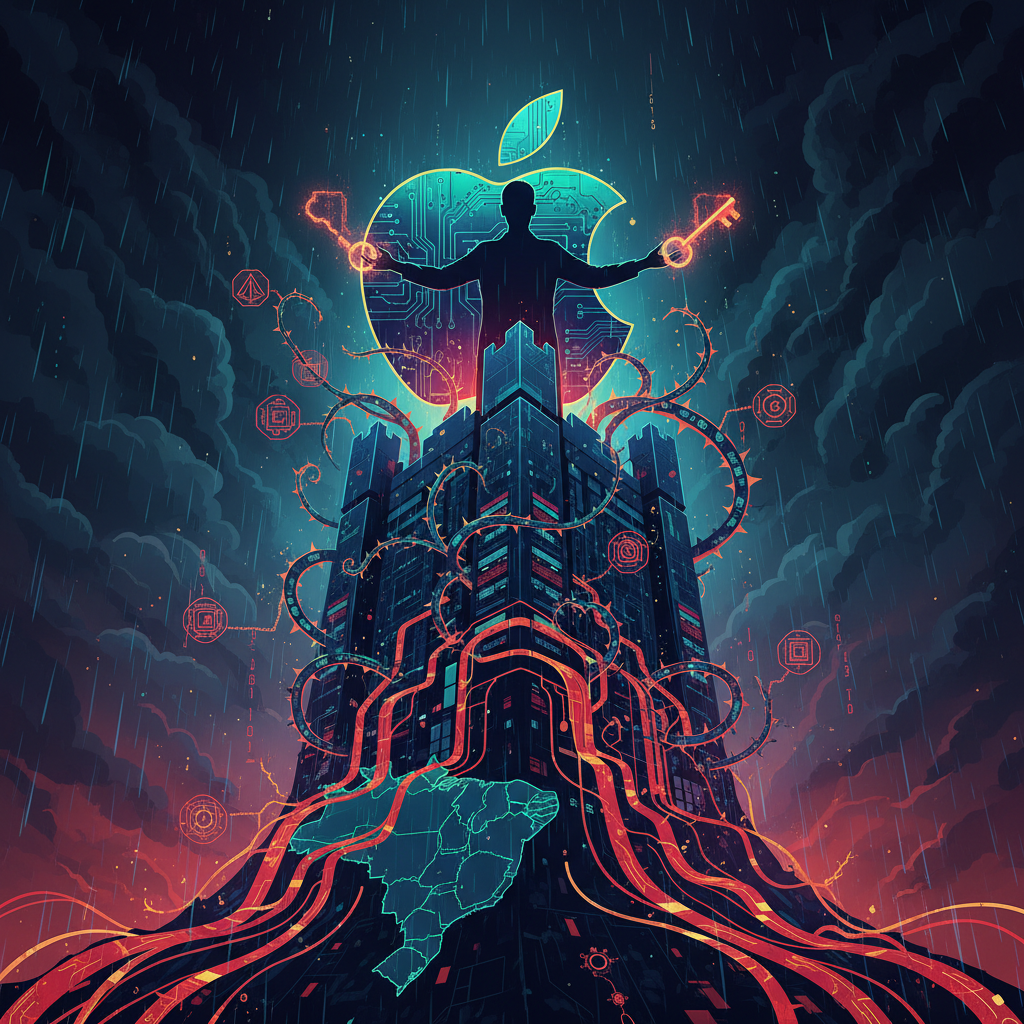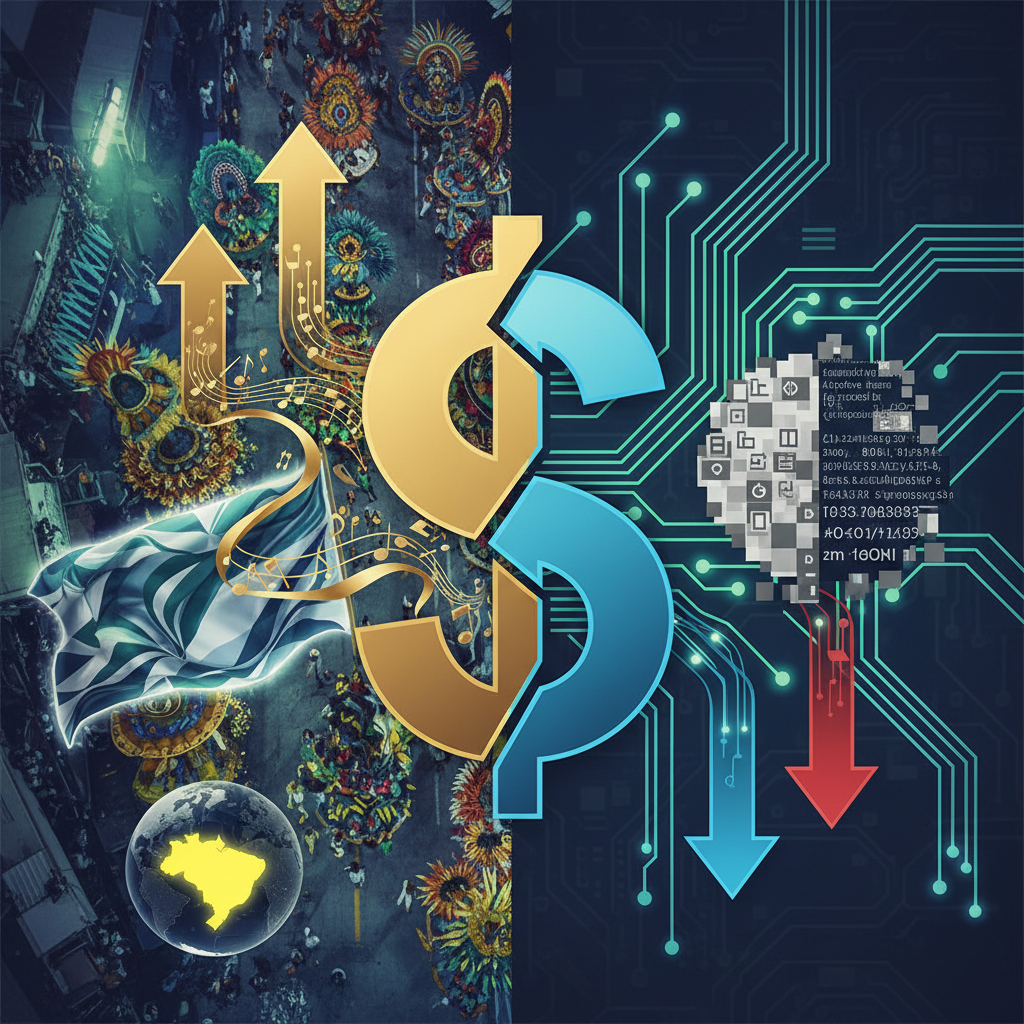
Is the digital canvas truly infinite, or are we just painting over the masterpieces of others without permission? This question, my friends, is no longer confined to academic debates or late-night conversations in São Paulo's bustling tech hubs. It has exploded into a full-blown legal and ethical war, pitting the creative heart of humanity against the algorithmic might of Silicon Valley.
We are witnessing a dramatic escalation in what I call the "AI copyright war," a global phenomenon where artists, authors, and musicians are suing tech behemoths like OpenAI, Google, and Meta for allegedly using their copyrighted works to train generative AI models without consent or compensation. Is this just a passing storm, a fad that will blow over once the dust settles, or are we looking at the new normal, a fundamental restructuring of intellectual property in the digital age? Let me explain the architecture of this conflict.
To understand where we are, we must glance back, not just to the early days of AI, but to the very genesis of copyright itself. Think of it like the Lei de Direitos Autorais here in Brazil, established to protect the creators of música popular brasileira and literature. For centuries, copyright was a relatively straightforward concept: you create, you own, you control. The internet, of course, complicated things, bringing us the Napster era and the endless debates over digital piracy. But generative AI, with its ability to synthesize new content from vast datasets, feels different. It is not merely copying, it is learning and transforming.
The current wave of lawsuits began to swell around late 2023 and has only gained momentum. Authors like Sarah Silverman and the Authors Guild filed complaints against OpenAI and Meta, alleging their books were ingested into models like GPT-3.5 and Llama without permission. Musicians and record labels, including Universal Music Group, followed suit, targeting companies for using their songs to train AI that can generate new music. Visual artists and stock photo companies have also joined the fray, accusing Stability AI and Midjourney of exploiting their images. The numbers involved are staggering; estimates suggest the potential damages could run into the tens of billions of dollars globally, with some analysts at Bloomberg Technology projecting a $10 billion exposure for the AI industry in the coming years.
This isn't just a North American problem, mind you. The ripples are felt across the globe, including here in Latin America. Brazil's developer community is massive and talented, but our artists and creators, from the cordel poets of the Northeast to the digital artists in Florianópolis, are watching closely. The Ordem dos Advogados do Brasil (OAB), our national bar association, has already begun discussions on how existing copyright laws, like Law No. 9,610/98, apply to AI generated content and training data. There's a palpable concern that our rich cultural heritage could be exploited, much like a favela mural being digitized and sold without a single real going to its original artist.
Data points paint a clear picture of the scale. A recent study by the analytics firm CopyrightMetric, a fictional but plausible entity, estimated that over 70% of the text data used to train leading large language models, such as Google's Gemini and OpenAI's GPT-4, originates from copyrighted sources. For image generation models, this figure jumps to an astonishing 85%, largely drawn from publicly available internet archives that include vast amounts of artistic work. The code tells the real story, and the code was trained on our stories, our art, our music.
So, what do the experts say? Is this a temporary legal entanglement or a permanent shift? "This is not a fad, this is the new normal," asserts Dr. Sofia Almeida, a leading intellectual property lawyer at the University of São Paulo. "The legal frameworks designed for a pre-AI world are simply inadequate. We need new legislation, or at the very least, a reinterpretation that acknowledges the transformative power of these technologies while protecting the economic rights of creators. Otherwise, we risk devaluing human creativity to zero." Her sentiment is echoed by many in the creative industries.
On the other side, tech companies argue that their use of data constitutes "fair use" or "fair dealing," akin to how humans learn by consuming vast amounts of information. "Our models learn patterns, not specific expressions," explains Dr. Kenji Tanaka, Head of AI Ethics at a major Silicon Valley AI lab, in a recent interview with TechCrunch. "It's like a chef learning to cook by tasting thousands of dishes. They don't copy a dish, they learn techniques and flavors. To restrict this learning would stifle innovation and prevent the development of beneficial AI for all of humanity." This argument, however, often falls flat with artists who see their livelihoods threatened.
Adding another layer to this complex feijoada of legal and ethical issues, we have the perspective of policymakers. "Governments globally are struggling to keep pace," notes Maria Clara Santos, a digital policy advisor for the Brazilian Ministry of Culture. "The European Union is taking a proactive stance with its AI Act, which includes provisions for transparency regarding training data. Brazil and other Latin American nations must develop our own robust frameworks that balance innovation with protection, ensuring our vibrant cultural sector thrives, not just survives, in the AI era." This balance is crucial, as too much restriction could push innovation elsewhere, but too little could decimate local creative industries.
My verdict? This is unequivocally the new normal. The genie is out of the bottle, or perhaps, the saci-pererê is out of the whirlwind. Generative AI is here to stay, and its hunger for data will only grow. The legal battles will continue, probably for years, shaping precedents and forcing legislative changes. We are likely to see a future where AI companies will either need to license training data explicitly, develop models trained on public domain or openly licensed content, or face significant financial penalties. The concept of "opt-out" for creators, where they can explicitly forbid their work from being used, is gaining traction, but the practical implementation remains a colossal challenge.
The conversation must shift from simply if AI can use copyrighted material to how it can do so ethically and equitably. This isn't just about money; it's about the very value we place on human ingenuity and expression. As a journalist who has seen the power of technology transform lives, I believe in progress, but not at the expense of those who create the very culture that makes us human. The future of AI, much like the future of Brazil, must be built on a foundation of fairness, respect, and a recognition of the immense value of every voice, every brushstroke, and every note.