
The wind howls outside my office window here in Reykjavík, a constant reminder of the raw, untamed nature that shapes our lives. It is April 2026, and the world is still buzzing about AI. Everywhere you look, there is talk of large language models, generative AI, and autonomous systems. But here, on this volcanic rock in the North Atlantic, we tend to look at things a bit differently. We are practical people, you see, and we like to cut through the hype to what actually works, what actually makes a difference.
Lately, what is making a difference, and quietly so, is the application of AI in healthcare diagnostics, particularly for serious conditions like cancer and heart disease. The U.S. Food and Drug Administration, the FDA, has been busy. They have approved a growing number of AI-powered tools designed to help doctors detect these diseases earlier and more accurately. This is not some futuristic dream anymore, it is happening now, and it is saving lives. But what does this have to do with Iceland, you might ask? More than you would think.
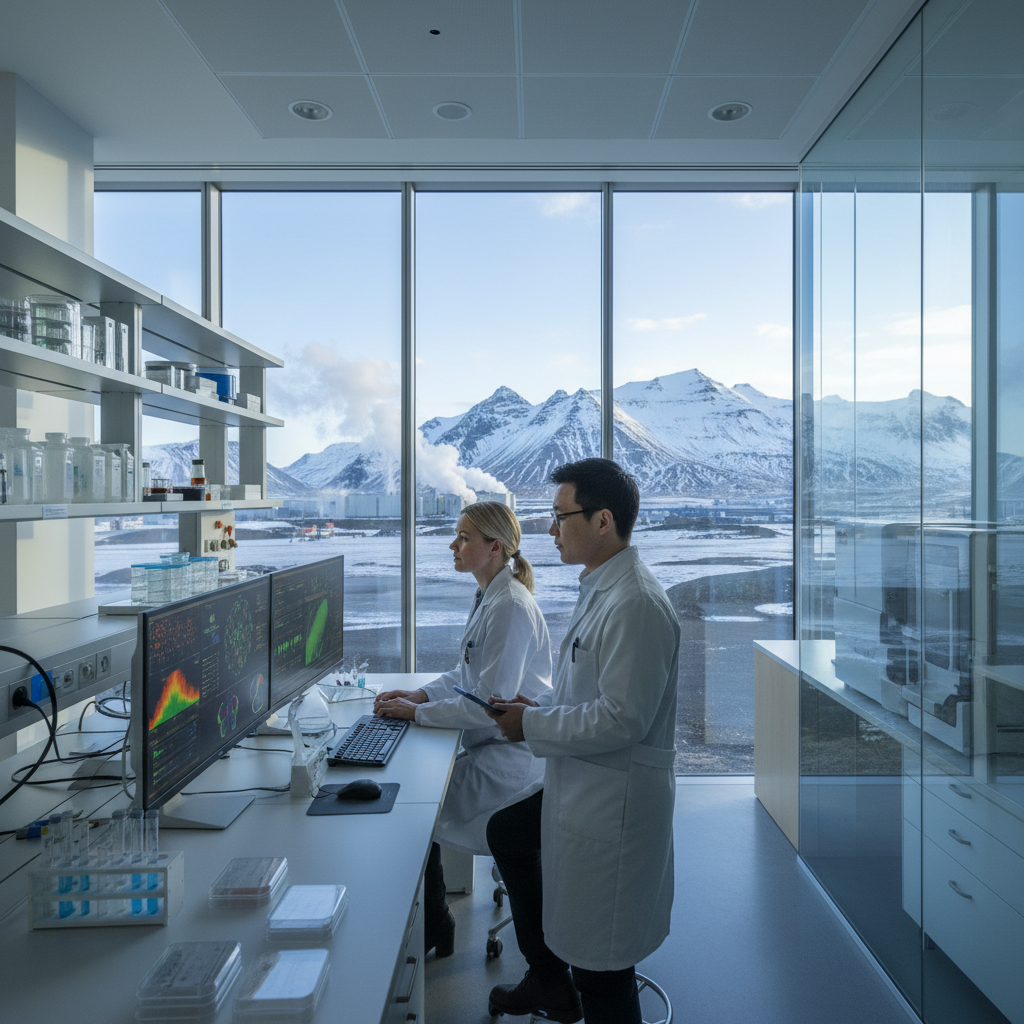
In Iceland, we think differently about this. Our small, genetically homogeneous population, coupled with comprehensive national health records that stretch back decades, presents a unique data set. This is not just 'big data,' it is 'clean data,' and that is crucial for training robust AI models. When you are talking about diagnosing cancer, you cannot afford noisy, incomplete, or biased data. The stakes are too high.
Take, for instance, the work being done by companies like Kerecis, though they are more focused on tissue regeneration, their success highlights the potential for Icelandic biotech. While Kerecis is not directly in AI diagnostics, its innovative use of codfish skin for medical purposes shows how our unique resources can be leveraged for global health solutions. This same spirit is now being applied to AI. We have a few smaller startups, names you might not recognize yet, working with our national health system, Landspítali, to refine diagnostic algorithms. They are not chasing venture capital headlines, they are chasing accuracy and clinical utility.
One of the most significant developments globally has been the FDA approval of tools like Google Health's AI for diabetic retinopathy screening, or more recently, AI algorithms from companies like Viz.ai for stroke detection. These are not just research projects, they are deployed in clinics, making real-world impact. For cancer, AI is proving invaluable in radiology. Algorithms can analyze mammograms, CT scans, and pathology slides with incredible speed and often identify subtle anomalies that a human eye might miss, especially in high-volume settings. A study published in Nature Machine Intelligence last year showed AI models achieving diagnostic accuracy comparable to, and in some cases exceeding, human experts for certain types of cancer.
Dr. Guðrún Ólafsdóttir, a lead radiologist at Landspítali, recently told me,