
The wind howls outside my window here in Reykjavík, a familiar tune that whispers of both the raw power and delicate balance of our island home. It is a sound that has always reminded me that in the land of fire and ice, AI takes a different form, often rooted in the very elements that define us. Recently, I have been following the buzz around Y Combinator's Winter 2025 batch, and what struck me most was not just the sheer number of startups, but a particular strain of innovation that felt deeply familiar, a reflection of our Icelandic spirit: climate technology, especially those harnessing geothermal energy.
What is Geothermal AI and Why Is It Suddenly So Hot?
When we talk about geothermal AI, we are not just talking about using artificial intelligence to manage a geothermal power plant. Oh no, it is much more exciting than that. Imagine a world where the very heat beneath our feet, the same heat that warms our homes and powers our electric cars, is also the engine for the next generation of supercomputers and data centers. Geothermal AI refers to the application of AI and machine learning techniques to optimize every aspect of geothermal energy, from exploration and drilling to reservoir management and efficient energy distribution. But it also extends to using geothermal energy as a sustainable, low-cost power source specifically for energy intensive AI computations, like training large language models or running complex simulations.
Why should you care about this, you might ask? Well, think about the insatiable hunger of AI. Training a single large language model can consume as much energy as hundreds of homes in a year, and this demand is only growing. The traditional data centers powering this AI boom are often massive energy hogs, relying on fossil fuels or straining existing grids. Here in Iceland, we have seen firsthand how clean, renewable energy can transform a nation. Geothermal AI offers a path to power the future of AI with a minimal carbon footprint, making it not just an environmental imperative, but also an economic advantage for nations blessed with this natural resource. It is about making AI sustainable, and that affects us all, from the air we breathe to the stability of our global climate.
How Did This Develop? A Brief History of Heat and Code
The idea of harnessing geothermal energy is ancient, of course. For centuries, Icelanders have used hot springs for bathing, cooking, and heating. But the marriage of geothermal power and advanced computing is a more recent affair. For a long time, data centers were built where land was cheap and connectivity was good, often overlooking the energy source. However, as the scale of computing grew, so did the energy bill and the environmental conscience. Companies like Verne Global established their data centers in Iceland over a decade ago, specifically to tap into our 100% renewable energy grid, powered by hydro and geothermal sources. This laid the groundwork, proving that high-performance computing could thrive in our unique environment.
The real shift came with the explosion of AI. Suddenly, the energy demands became so astronomical that the cost and environmental impact of traditional power sources became unsustainable. This pushed innovators to look for truly green, scalable solutions. Our universities, like the University of Iceland, have been researching geothermal applications for decades, and now, with the rise of AI, that expertise is finding new, exciting avenues. It is a natural progression, really, from heating our greenhouses with volcanic steam to cooling our servers with the same clean power.
How Does It Work in Simple Terms? The Earth's Own Supercomputer Powerhouse
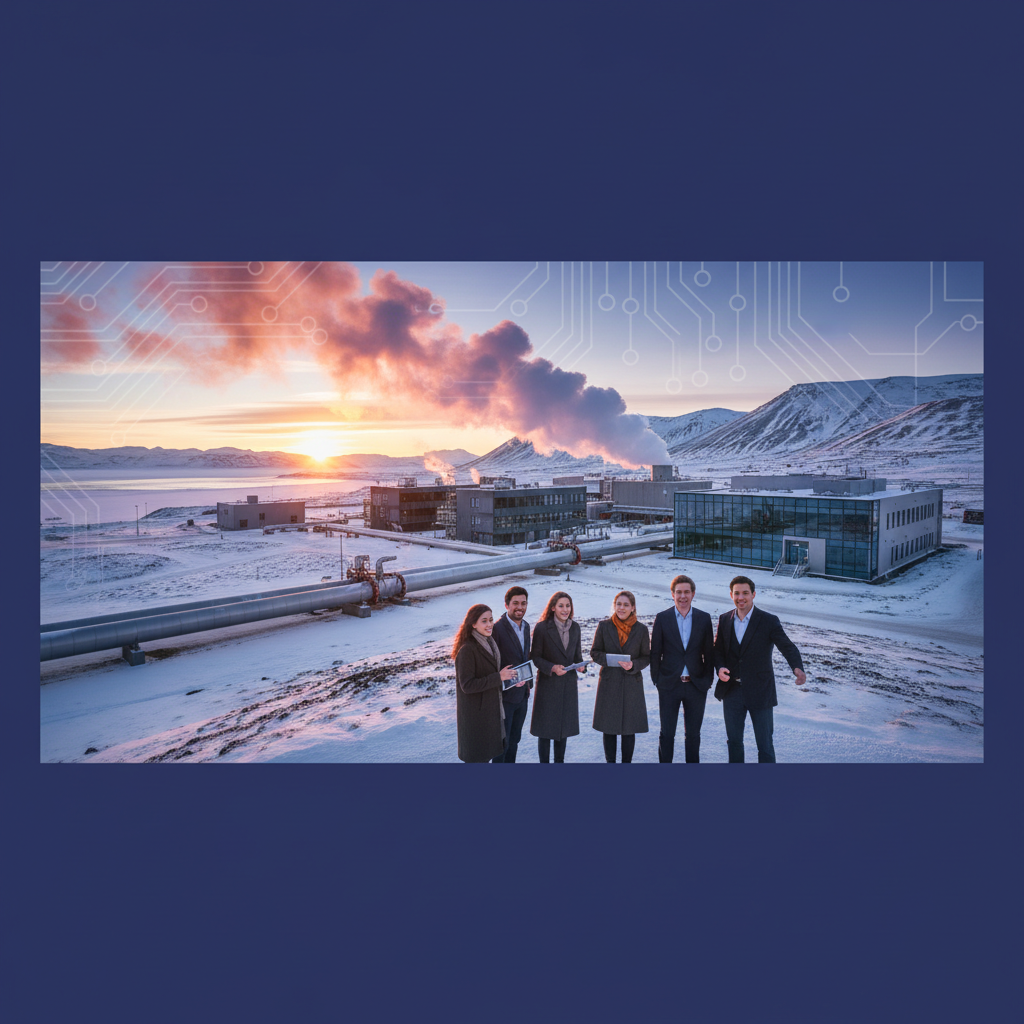
Imagine our planet as a giant, warm blanket, constantly generating heat from its core. In places like Iceland, this heat is closer to the surface, manifesting as geysers, hot springs, and volcanoes. We tap into this heat by drilling wells, bringing superheated water and steam to the surface. This steam then spins turbines, generating electricity, which is incredibly clean and reliable. That is the geothermal power plant part.
Now, for the AI connection: instead of sending this electricity across long grids to a distant data center, we are building the data centers right next to the geothermal power plants. Think of it like a chef growing herbs right outside the kitchen door, fresh and ready for use. This direct connection means less energy loss and lower costs. The AI servers, which generate a lot of heat themselves, can then be cooled efficiently using the naturally cool air or even the cooler geothermal water, creating a circular, sustainable system. It is like having a perfectly balanced ecosystem where the earth provides the power, and the AI thrives on it, with minimal waste. It is a beautiful synergy, really, a dance between ancient geological forces and cutting-edge algorithms.
Real-World Examples: Startups Heating Up the Scene
This is where the Y Combinator W2025 batch comes in. I spoke with Dr. Elín Jónsdóttir, a geothermal energy expert and co-founder of VoltaCore, one of the Icelandic startups that just raised a significant Series A round. She showed me her research in a lab overlooking a glacier, a stark reminder of the environmental stakes. "We are not just building data centers, we are building a new paradigm for sustainable AI," Dr. Jónsdóttir told me, her voice resonating with quiet determination. "Our AI models predict subterranean heat flows with unprecedented accuracy, allowing us to site new wells and manage existing reservoirs more efficiently. Then, we use that very energy to power the next generation of AI development." VoltaCore, for example, is developing specialized hardware and software to optimize server performance specifically for geothermal cooling systems, boasting a reported 40% reduction in operational costs compared to traditional setups.
Another exciting company from the batch is GeoCompute, which is not Icelandic but was inspired by our model. They are building modular, containerized data centers designed to be deployed directly at geothermal sites globally, from Indonesia to Kenya. Their AI-driven predictive maintenance systems for these modular units promise to reduce downtime and maximize energy utilization. Then there is CarbonFlow, a startup focused on carbon capture using geothermal byproducts. While not directly powering AI, their AI-optimized capture technology, which uses geothermal heat for the chemical processes, could turn data centers into carbon sinks, a truly revolutionary concept.
Even larger players are taking notice. Microsoft has been exploring sustainable data center solutions for years, and while they have not explicitly announced geothermal AI projects, their investments in renewable energy and modular data centers align perfectly with this trend. NVIDIA, with its insatiable demand for power for its GPUs, is also keenly aware of the need for sustainable energy, and I would not be surprised to see them partner with such innovative geothermal startups in the near future. This is not just a niche; it is becoming a cornerstone of future AI infrastructure.
Common Misconceptions: Not Just Hot Air
One common misconception is that geothermal energy is only available in a few volcanic regions. While Iceland is a prime example, viable geothermal resources exist in many parts of the world, often in unexpected places. Another myth is that it is too expensive or too difficult to scale. While initial drilling costs can be high, the long-term operational costs are incredibly low and stable, making it highly competitive, especially for energy-intensive operations like AI training. It is also sometimes thought that geothermal power is inherently unstable, but with proper reservoir management, it provides a remarkably consistent baseload power, unlike intermittent solar or wind. The AI itself helps solve these challenges, optimizing exploration and maintenance, making the process more efficient and cost-effective.
What to Watch for Next: The Future, Powered by Earth
As we look ahead, I believe geothermal AI is poised for significant growth. The global push for decarbonization, coupled with the ever-increasing energy demands of AI, creates a perfect storm for this technology. We will see more startups emerging, not just in Iceland, but in places like New Zealand, Turkey, and the Philippines, all rich in geothermal resources. Expect to see major tech companies investing heavily in these regions, establishing new, green AI hubs. The competition for clean energy sources will intensify, and those nations with abundant geothermal power will find themselves with a unique strategic advantage. Iceland's story is unique, our small scale and abundant resources have allowed us to be pioneers in this space, and now the world is catching up.
This shift will not just be about energy, it will be about talent. We will see a demand for engineers and data scientists who understand both AI and geology, a new breed of interdisciplinary experts. The University of Iceland is already seeing an uptick in students interested in these combined fields, a testament to the growing relevance. As Dr. Björn Helgason, a leading researcher in sustainable computing at the University of Iceland, recently put it, "The next frontier of AI will not just be about smarter algorithms, but about smarter infrastructure. And that infrastructure will be powered by the earth itself." It is a future that feels both ancient and utterly cutting-edge, a testament to human ingenuity working in harmony with our planet. And from my window, watching the steam rise from the distant mountains, I feel a quiet pride in the role our small island is playing in this global transformation. For more insights into how AI is reshaping industries, you can always check out TechCrunch's AI section or MIT Technology Review for deeper dives into the scientific advancements.