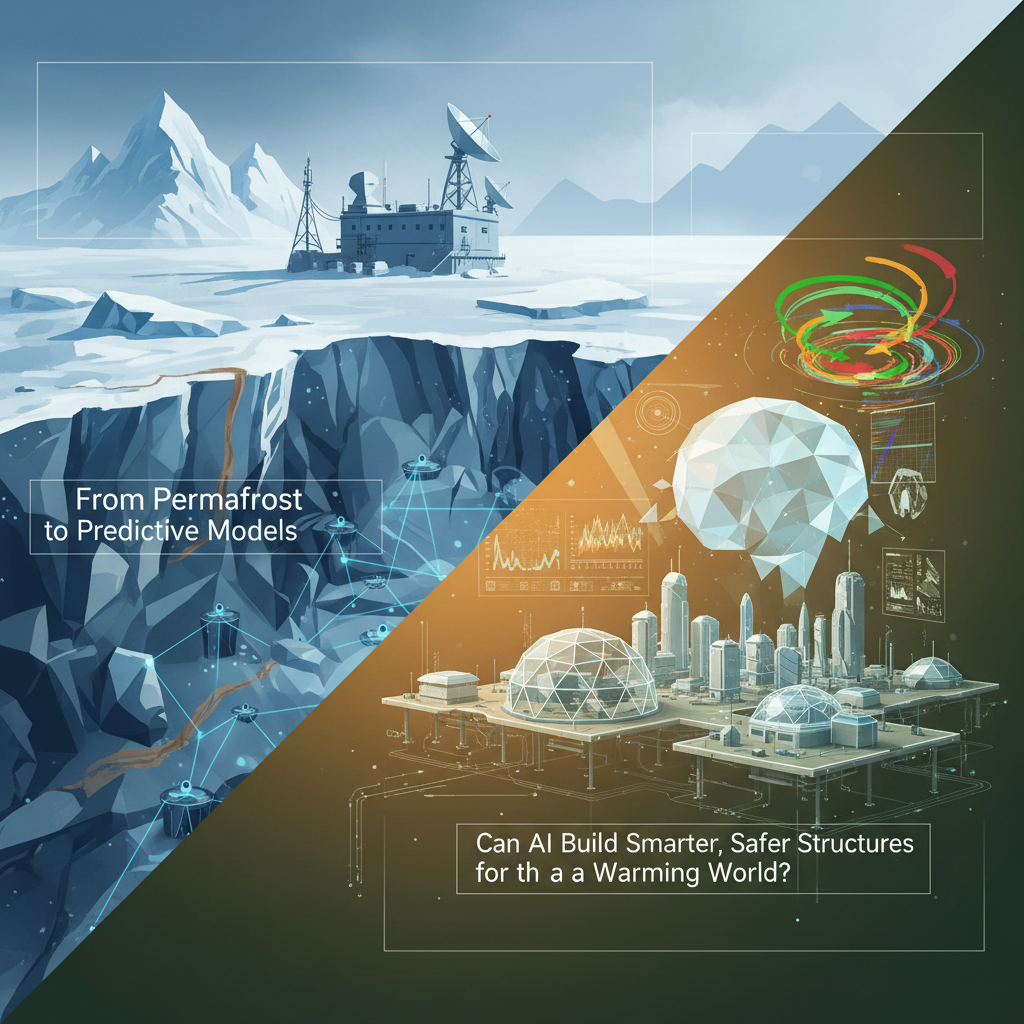

The relentless winds outside Vostok Station, currently registering at a brisk -55°C, serve as a constant reminder of the unforgiving nature of our planet. Here, every structural decision carries profound weight. It is perhaps this very environment that compels us to scrutinize innovation with an unusual degree of rigor, particularly when it promises to revolutionize something as fundamental as construction. The question before us today is this: Is the burgeoning integration of artificial intelligence into building design optimization, safety monitoring, and project management merely a technological flourish, or is it the indispensable bedrock for the infrastructure of tomorrow?
Historically, the construction sector has been characterized by its reliance on established methods, often slow to adopt disruptive technologies. For centuries, the blueprint, the plumb line, and the human eye were the primary tools. Even with the advent of Computer Aided Design (CAD) in the latter half of the 20th century, the core processes remained largely manual and iterative. The sheer complexity of large-scale projects, involving myriad variables from material science to labor logistics, has always presented a formidable challenge. Errors were costly, delays were endemic, and safety, while paramount, remained a constant battle against human fallibility and unforeseen circumstances. This static paradigm, however, is now experiencing a seismic shift, driven by the analytical power of AI.
Today, AI is not just assisting; it is actively shaping the very fabric of construction. In design optimization, generative AI algorithms are exploring millions of architectural permutations far beyond human capacity. Companies like Autodesk, with its Project Discovery, are leveraging machine learning to analyze structural integrity, energy efficiency, and material usage simultaneously. This allows for the identification of optimal designs that balance aesthetic appeal with performance criteria, often reducing material waste by an estimated 10 to 15 percent on complex projects, according to recent industry reports. For instance, in the design of high-rise structures in seismic zones, AI can simulate countless stress scenarios, recommending geometries and material compositions that offer superior resilience, a critical factor for any modern metropolis. The data from our Antarctic station reveals that even in our specialized, small-scale builds, predictive modeling for snow load and ice accretion is becoming indispensable.
Safety monitoring is another domain where AI is demonstrating transformative potential. Traditional safety protocols, while essential, are often reactive. AI, conversely, offers a proactive layer of defense. Computer vision systems, deployed on construction sites, can now identify potential hazards in real time. These systems, often powered by NVIDIA's advanced GPUs, analyze video feeds to detect workers without hard hats, unsafe equipment operation, or individuals entering restricted zones. Startups such as SmartVid.io have reported a reduction in recordable incidents by up to 25 percent on projects where their AI platforms are implemented. This is not merely about compliance; it is about preventing accidents before they occur, safeguarding human lives. Here at the Antarctic, where extreme conditions amplify every risk, such real-time monitoring could be a game-changer for our research facilities, where a single incident can jeopardize years of scientific endeavor.
Project management, perhaps the most complex administrative facet of construction, is also being fundamentally reshaped. AI-powered platforms are now capable of analyzing vast datasets comprising historical project performance, weather patterns, supply chain fluctuations, and labor availability. This enables more accurate forecasting of project timelines and budgets, identifying potential bottlenecks before they materialize. Predictive analytics can optimize resource allocation, schedule equipment maintenance, and even anticipate material price surges. For example, a study published in MIT Technology Review highlighted how AI-driven scheduling tools reduced project delays by an average of 15 percent across a portfolio of commercial builds. This level of foresight transforms project management from a reactive exercise into a strategic, data-driven discipline.
Expert perspectives confirm this trajectory. Dr. Elena Petrova, a leading civil engineer and professor at the Moscow State University of Civil Engineering, recently stated,