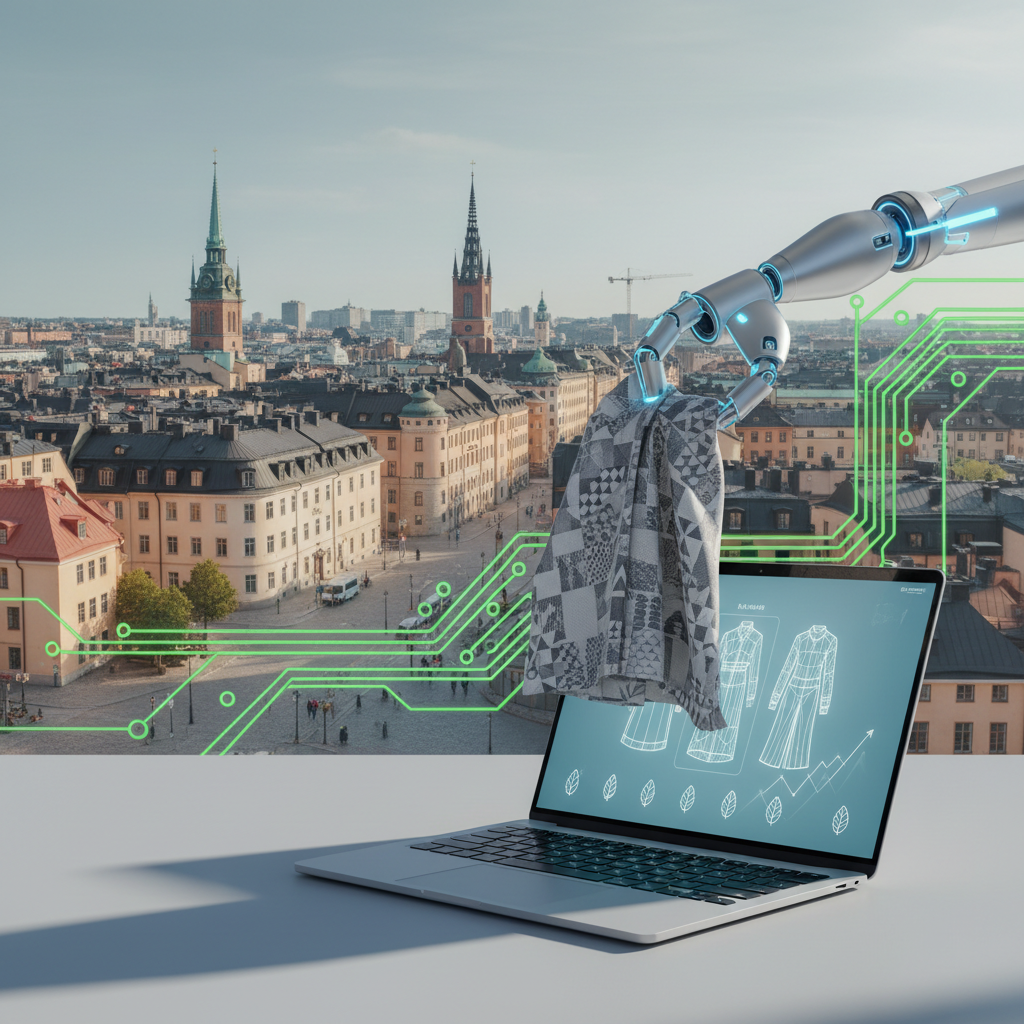

The digital landscape of Europe, much like the ancient battlefields of my homeland, is a terrain fiercely contested. For too long, the narrative of artificial intelligence has been dictated from Silicon Valley, a story of American innovation and dominance. Yet, a new chapter is being written, one that speaks of European resilience, strategic autonomy, and a quiet revolution spearheaded by companies like Mistral AI.
From its inception, Mistral AI, a French startup founded by former researchers from Google DeepMind and Meta, positioned itself as a formidable challenger to the established order. Their commitment to open source models, a stark contrast to the proprietary fortresses of OpenAI and Google, resonated deeply with the European Union's aspirations for digital sovereignty. This is not merely about technological prowess, but about fundamental questions of data governance, ethical AI development, and economic independence. The Romanian tech boom hides a darker story, often one of subservience to foreign capital and imported solutions. Mistral AI offers a different path.
My investigation uncovered a growing undercurrent of interest and adoption of Mistral's models within Romania and across the wider Eastern European bloc. While the headlines often focus on the multi billion dollar valuations of OpenAI or Anthropic, the pragmatic, cost effective, and transparent nature of Mistral's offerings is proving particularly attractive to regional enterprises and government bodies. "We cannot afford to be mere consumers of AI developed elsewhere, with data processed under foreign jurisdictions," stated Dr. Elena Popescu, a leading AI ethics researcher at the Polytechnic University of Bucharest. "Mistral's approach aligns with our strategic need for control over our digital destiny and fosters local expertise, rather than simply importing black boxes." This sentiment echoes across the region, where the memories of external control, both political and economic, remain vivid.
The sovereign AI movement, championed by Brussels, is not a naive call for autarky. It is a strategic imperative to ensure that Europe's values, its regulatory frameworks like the AI Act, and its economic interests are embedded in the foundational technologies of the future. The European Commission has been a vocal proponent of this vision, and its support, both rhetorical and financial, has been crucial for companies like Mistral. Follow the EU funding trail, and you will find significant investments channeled into initiatives that bolster European AI capabilities, often favoring open source and transparent models. Mistral AI, having secured substantial funding rounds, including a reported 385 million euros in December 2023, is a prime beneficiary of this strategic alignment. This capital injection, from investors such as Andreessen Horowitz and Lightspeed Venture Partners, alongside French and European funds, underscores the belief in Europe's capacity to build world class AI.
The appeal of Mistral's models, particularly Mistral 7B and Mixtral 8x7B, lies in their efficiency and performance. These models, while smaller than some of their American counterparts, offer remarkable capabilities for a fraction of the computational cost. For businesses in Romania, where budget constraints are a constant reality, this efficiency is not a luxury, but a necessity. A representative from a prominent Romanian software development firm, who requested anonymity due to ongoing partnerships with US tech giants, confided, "We are experimenting with Mistral's models for internal applications, particularly for code generation and customer support. The performance is competitive, and the ability to fine tune these models locally, without sending sensitive data to external cloud providers, is a significant advantage." This pragmatic adoption, often beneath the radar of public announcements, is a testament to Mistral's growing influence.
The implications for cybersecurity are also profound. In a region acutely aware of geopolitical vulnerabilities, the prospect of relying on AI models whose inner workings are opaque, and whose data processing occurs outside European legal frameworks, presents a considerable risk. The transparency offered by Mistral's open source approach allows for greater scrutiny, auditing, and ultimately, trust. This is particularly relevant for critical infrastructure, defense, and public sector applications, where data integrity and security are paramount. The European Union's emphasis on cybersecurity, as highlighted by initiatives like the NIS2 Directive, directly benefits from such open and auditable AI systems.
However, the path to true AI sovereignty is fraught with challenges. The sheer scale of investment from American tech giants, such as Microsoft's multi billion dollar commitment to OpenAI, or Google's continuous advancements with Gemini, creates an immense gravitational pull. Europe must not only fund its champions but also cultivate a robust ecosystem of talent, infrastructure, and regulatory clarity. The brain drain, a persistent issue in countries like Romania, where skilled engineers are often lured by higher salaries and more advanced research opportunities in Western Europe or the US, remains a critical hurdle. "We need to create compelling reasons for our brightest minds to stay and build here," observed Mircea Dumitrescu, CEO of a Bucharest based AI startup. "That means competitive salaries, access to cutting edge hardware, and a vibrant research environment. Mistral's success helps, it shows what is possible, but it is only one piece of the puzzle." You can find more on the broader landscape of AI startups and industry news on TechCrunch.
The debate around sovereign AI is not merely a technical one; it is deeply political and economic. It is about whether Europe, including its Eastern flank, can carve out its own destiny in the age of artificial intelligence, or if it will remain a digital colony. Mistral AI, with its open models and European roots, represents a powerful counter narrative. It demonstrates that innovation can thrive outside the confines of Silicon Valley, and that a different model of AI development, one rooted in openness and ethical considerations, is not only possible but increasingly necessary. For a deeper dive into the societal implications of AI, Wired often provides excellent analysis.
As I reflect on the quiet corridors of power in Brussels and the bustling tech hubs of Bucharest, it becomes clear that the stakes are incredibly high. The choices made today regarding AI development, governance, and adoption will shape the future of Europe for generations. Mistral AI is not just a company; it is a symbol, a beacon of hope for European digital autonomy, reminding us that the future of AI does not have to be a monologue from one continent. It can, and should, be a diverse chorus of voices, technologies, and values. The journey is long, but the first steps, taken by companies like Mistral, are proving to be remarkably significant. The pursuit of sovereign AI is a complex endeavor, requiring continuous vigilance and strategic investment, a theme often explored in MIT Technology Review.