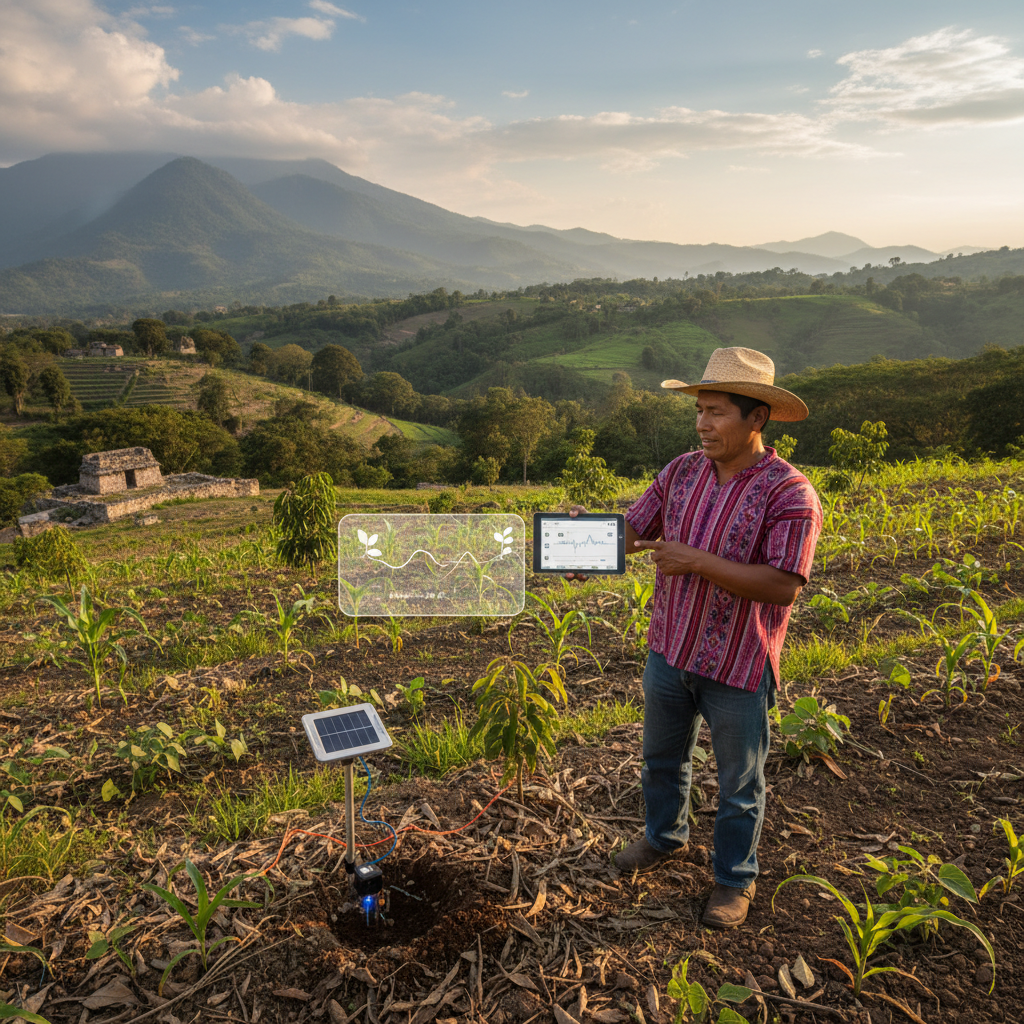

The air in the Cuchumatanes mountains, crisp and thin, carries the scent of pine and damp earth. Here, where the clouds often settle among the peaks like silent guardians, life unfolds much as it has for centuries. Farmers tend their milpas, their hands calloused from generations of working the land. Yet, even in these remote corners of Guatemala, the winds of technological change are beginning to stir, not with a roar, but with a quiet, persistent hum.
For years, the conversation around artificial intelligence has been dominated by massive data centers, colossal energy demands, and the seemingly insatiable hunger of models like OpenAI's GPT-4 or Google's Gemini for computational power. The cost, both financial and environmental, of training these behemoths has been a significant barrier, especially for developing nations. But what if the future of AI wasn't about bigger, but smarter and smaller? What if the most impactful innovations were those that dramatically reduced compute requirements, making powerful AI accessible even in places where electricity is a luxury, not a given?
This is precisely the shift we are witnessing today, a movement that holds profound implications for countries like Guatemala. Researchers and companies are pioneering new techniques, from sparse model architectures to advanced quantization methods and efficient transfer learning, that allow AI models to be trained and deployed with a fraction of the energy and hardware previously needed. Imagine an AI that can analyze crop health, predict weather patterns, or even translate indigenous languages, all running on a device no more powerful than a smartphone, potentially powered by a small solar panel. This is not a distant dream, it is becoming a tangible reality.
One of the most exciting developments comes from a startup called 'K’iche’ AI', founded by a group of Guatemalan engineers and linguists. They are using highly optimized, low-compute models to create real-time translation tools for Mayan languages, a critical effort in preserving cultural heritage. "Our goal is not to replace human connection, but to bridge gaps," explains Dr. Elena Xiloj, co-founder of K’iche’ AI. "We are training models on local dialects using techniques that require minimal data and computational resources. Her grandmother's wisdom meets machine learning, allowing us to build tools that truly serve our communities, not just Silicon Valley." This approach, focusing on efficiency from the ground up, stands in stark contrast to the 'brute force' methods often seen in larger tech companies.
Globally, the push for more efficient AI is gaining momentum. Companies like Anthropic, known for its Claude models, are exploring ways to make their AI more 'constitutional' and less resource-intensive, focusing on interpretability and safety alongside performance. Meanwhile, NVIDIA, the undisputed leader in AI hardware, is also investing heavily in software and frameworks that optimize model performance on smaller, more energy-efficient chips. According to a recent report in Reuters, the demand for 'green AI' solutions is skyrocketing, with venture capital funding for efficiency-focused AI startups reportedly increasing by over 30% in the last year alone.
The implications for Guatemala are immense, particularly in agriculture, which remains the backbone of our economy. In a small village in Guatemala, nestled in the highlands of Totonicapán, a pilot project is underway. Farmers are using simple, ruggedized devices equipped with low-compute AI models to identify crop diseases in their early stages. These models, trained on local plant varieties and common pathogens, can provide immediate, actionable advice, preventing widespread crop loss. Before, a farmer might lose an entire harvest before understanding the problem, but now, a quick scan with a handheld device can make all the difference. This initiative, supported by the Ministry of Agriculture, Livestock and Food (maga) and local NGOs, is a testament to the power of tailored technology.
Dr. Ricardo Morales, an agricultural expert working with the project, shared his observations, "The beauty of these low-compute models is their adaptability. We are not bringing in a one-size-fits-all solution from abroad. We are building systems that learn from the specific conditions of each field, each microclimate, and each farmer's experience. It is about empowering local knowledge with smart tools." This localized approach is crucial for success, ensuring that technology serves the people, rather than dictating to them.
Beyond agriculture, these advancements could democratize access to education and healthcare. Imagine AI-powered diagnostic tools running on basic tablets in rural clinics, or personalized learning assistants that adapt to a child's unique needs without needing constant internet access or expensive infrastructure. The cost of entry for AI development and deployment is dropping, opening doors for local innovators who previously faced insurmountable barriers.
However, challenges remain. Infrastructure, particularly reliable internet access and consistent electricity, is still a hurdle in many parts of Guatemala. Data privacy and ethical considerations also need careful navigation, especially when dealing with sensitive information from vulnerable communities. We must ensure that these powerful tools are developed and deployed responsibly, with community input at every stage. The lessons learned from other regions, such as the discussions around AI ethics in Brazil, offer valuable insights for our own path forward. For example, the debate over 'constitutional AI' versus more open-ended models, as explored in articles like Anthropic's 'Constitutional' AI or OpenAI's Wild West: Which Path Protects Brazil's Digital Future? [blocked], highlights the importance of thoughtful design.
The push for low-compute AI is not just a technical optimization, it is a philosophical shift. It moves AI from being an exclusive tool for the technologically advanced elite to a more inclusive, accessible resource for everyone. It is about building AI that respects the planet, conserves resources, and empowers communities, rather than overwhelming them. This is a story about resilience, about how innovation, when guided by human needs and local wisdom, can truly transform lives. As the sun sets over the Cuchumatanes, casting long shadows across the fields, one can almost hear the quiet hum of progress, a promise whispered on the wind, echoing through the valleys of Guatemala.
For more insights into the broader trends in AI efficiency and sustainability, you can explore articles on MIT Technology Review. The journey towards a more equitable and sustainable AI future is long, but with each step towards greater efficiency, we move closer to a world where technology truly serves all of humanity.