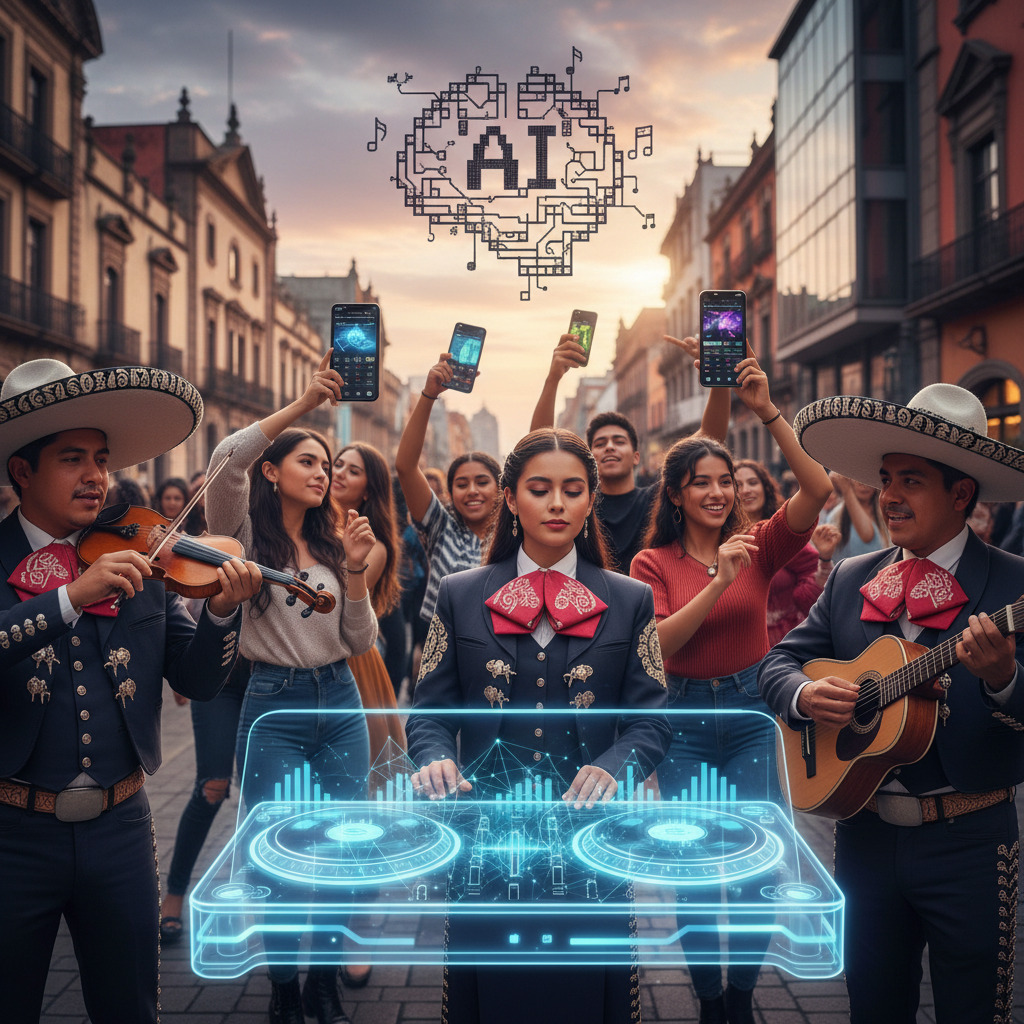

¡Qué onda, DataGlobal Hub readers! Alejandroó Riveràs here, coming to you live from the vibrant heart of Mexico City, where the future isn't just arriving, it's already dancing to a new beat. And what a beat it is, courtesy of none other than Spotify and its incredible AI DJ. This isn't just a feature; it's a revolution, a sonic fiesta that's completely reshaping how we discover music, especially here in a country as musically rich and diverse as Mexico.
For years, we've talked about personalization in streaming, but Spotify's AI DJ has taken it to a whole new level. Imagine this: you're cruising down Reforma, the city lights twinkling, and your AI DJ, in a voice that's surprisingly human, introduces you to a new track. It's a fusion of a classic cumbia beat with some indie rock vibes you never knew you needed. Then, it explains why it thinks you'll love it, perhaps drawing a connection to that obscure regional Mexican band you've been binging. It's like having a knowledgeable friend, a compadre who knows your musical soul better than you do, curating the perfect soundtrack for your day.
This isn't some distant Silicon Valley fantasy; it's happening right now, in our headphones, on our commutes, and in our homes. And the impact on music discovery, particularly for local artists, is nothing short of phenomenal. Historically, breaking through in the music industry, especially for artists outside the mainstream, has been like trying to find a needle in a haystack, or rather, a taco stand in a bustling mercado. But the AI DJ is changing that equation.
"The AI DJ is a testament to the power of generative AI to enhance human experience, not replace it," says Gustav Söderström, Spotify's Co-President, in a recent interview. "We're seeing unprecedented engagement with new artists and genres, proving that people crave discovery, they just need the right guide." And he's right. Spotify reported a significant uptick in listeners engaging with previously unheard artists since the AI DJ's wider rollout, with some emerging artists seeing their streams jump by over 30% in markets where the feature is heavily utilized. This is huge, amigos.
Here in Mexico, where music is woven into the very fabric of our culture, from the soulful rancheras to the pulsating reggaeton, the AI DJ is acting as a bridge. It's introducing listeners to the incredible depth of our local talent, from the indie electronic scene in Guadalajara to the traditional folk musicians in Oaxaca, alongside global hits. It's creating a truly global soundscape, but with a deeply personal, local flavor. It's like the AI DJ understands that sometimes you want a classic Vicente Fernández, and sometimes you're ready for something completely new from a band playing in a small foro in Condesa.
The technology behind this magic is a sophisticated blend of machine learning models. We're talking about deep neural networks analyzing not just your listening history, but also the sonic characteristics of millions of songs, user preferences, and even cultural trends. It's a symphony of data, orchestrated by algorithms that are constantly learning and adapting. Think about it: every skip, every repeat, every new artist you discover, feeds into this colossal system, making it smarter, more intuitive, and more attuned to your unique taste. It's a feedback loop of pure musical joy.
And it's not just about what you like. The AI DJ is also brilliant at introducing you to music you might like, gently nudging you outside your comfort zone. It's like that friend who insists you try a new dish at your favorite restaurant, and you end up loving it. This proactive discovery mechanism is crucial for artists who might not fit neatly into popular genres but have something truly special to offer. It democratizes discovery in a way that traditional radio or even human-curated playlists often struggle to achieve at scale.
"The nearshoring revolution is real, and it's not just about manufacturing; it's about cultural exchange and digital innovation too," I often say. This phenomenon with Spotify's AI DJ is a perfect example. As more tech companies look towards Latin America for talent and market growth, the local nuances become incredibly important. Spotify's success here isn't just about having a great algorithm; it's about understanding the diverse musical palates of a country like Mexico. The AI DJ's ability to seamlessly blend global pop with a regional corrido is a testament to the cultural intelligence baked into its design.
The implications go beyond just listening. For artists, this means new avenues for monetization and audience growth. Imagine a small independent band from Monterrey suddenly finding a global audience because the AI DJ introduced their unique sound to listeners in Tokyo or Berlin. This Mexican startup just released an app that helps local artists manage their digital rights and royalties, and they're seeing a surge in sign-ups, directly correlating with the increased exposure artists are getting through platforms like Spotify's AI DJ. It's a ripple effect that touches the entire creative economy.
However, it's not without its challenges. The question of how to ensure fairness and prevent algorithmic bias remains paramount. Are certain genres or artists being inadvertently favored or overlooked? Spotify is reportedly investing heavily in ethical AI research, ensuring their models are as diverse and representative as their global user base. "Transparency and accountability are non-negotiable as we push the boundaries of AI in creative fields," stated Dr. Ana María González, a leading AI ethics researcher at Unam, during a recent tech conference in Mexico City. "We must ensure these powerful tools serve all creators and consumers equitably." This is a conversation we need to keep having, ensuring that the magic of AI doesn't inadvertently create new gatekeepers.
Looking ahead, the potential for the AI DJ is immense. We could see it integrating even more deeply with our daily lives, perhaps suggesting music based on our mood detected from wearable tech, or even curating soundtracks for specific activities like cooking a traditional mole or unwinding after a long day. The conversational aspect could become even more sophisticated, allowing for truly dynamic, two-way interactions. Imagine asking your AI DJ to create a playlist for a road trip through the Yucatán Peninsula, and it not only plays the perfect tunes but also shares interesting facts about the region's music history. The possibilities are endless, truly.
Mexico City is on fire, in the best way, with innovation and creativity, and the adoption of technologies like Spotify's AI DJ is a clear indicator of our nation's embrace of the future. We are not just consumers of technology; we are active participants, shaping its evolution and making it uniquely our own. The way music is discovered, created, and shared is undergoing a profound transformation, and it's exhilarating to be right here, experiencing it firsthand. The future of music is personalized, intelligent, and deeply connected, and I, for one, can't wait to hear what the AI DJ plays next. For more insights into the evolving landscape of creative AI, check out TechCrunch's AI section. You can also dive deeper into the ethical considerations of AI in music at MIT Technology Review. And for a broader perspective on the music industry's digital transformation, The Verge often has excellent coverage. This is Alejandroó Riveràs, signing off from DataGlobal Hub, keeping my ears open for the next big beat!```