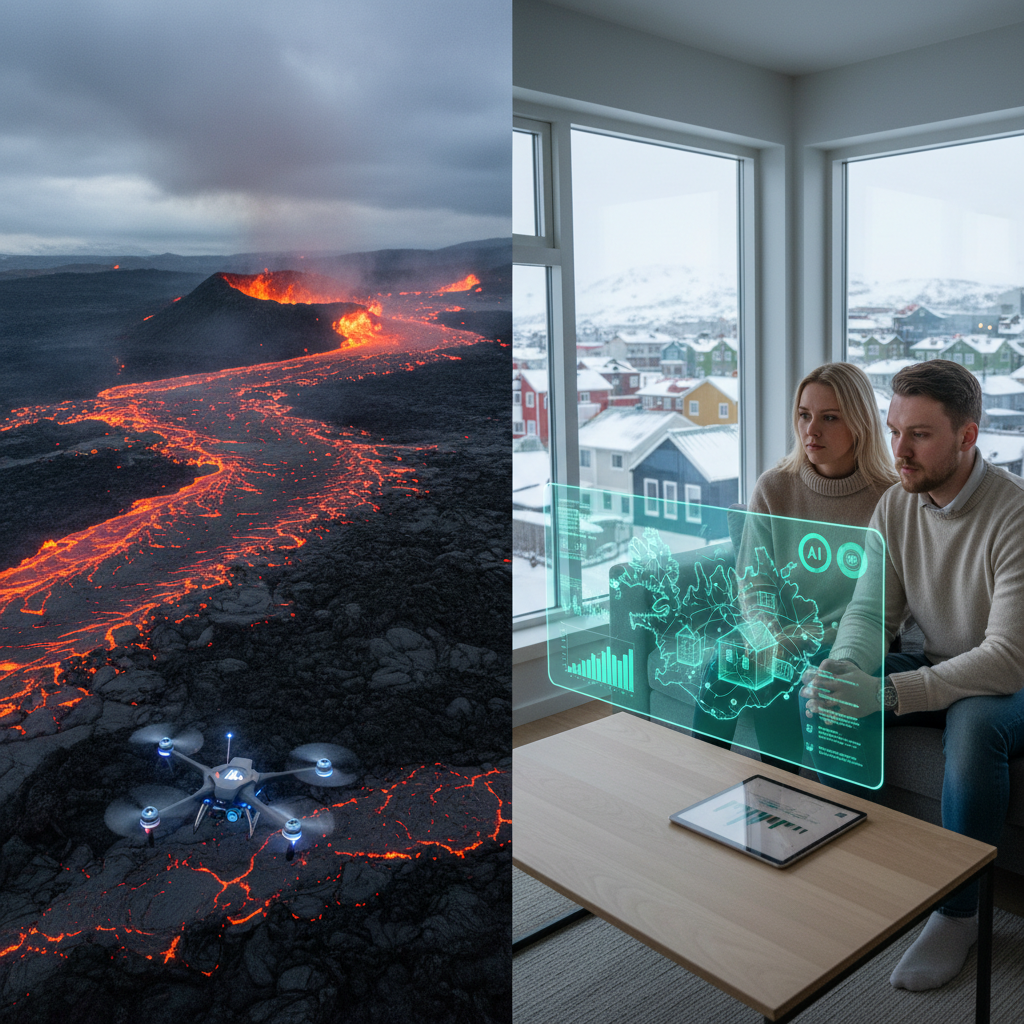

The wind whips around my face as I look out over the Faxaflói Bay, the colorful roofs of Reykjavík scattered below like Lego bricks. It is a familiar sight, one that speaks of home, of community, and of the unique challenges and charms of living in this island nation. For generations, buying a home here has been a deeply personal, often intuitive process, heavily reliant on local knowledge and a good sense of the neighborhood. But things are changing, and as with so many aspects of our lives, artificial intelligence is the quiet force behind this transformation, even in our small corner of the world.
In the land of fire and ice, AI takes a different form. It is not just about Silicon Valley giants anymore, it is about how these powerful tools adapt to our specific needs, our unique geography, and our closely knit society. The real estate market in Iceland, particularly in the capital region, has seen its share of fluctuations, driven by tourism, economic shifts, and a constant demand for housing. Now, AI is offering new ways to navigate this landscape, from predicting prices to letting you walk through a home without ever leaving yours.
Take property valuation, for instance. For years, real estate agents and banks relied on comparable sales and their own seasoned judgment. While invaluable, this process could be slow and sometimes subjective. Enter AI. Companies like Valur, a local Icelandic startup, are leveraging machine learning models to analyze vast datasets of property transactions, building characteristics, location factors, and even local amenities. "Our goal is to bring transparency and efficiency to a market that can sometimes feel opaque," explained Guðrún Jónsdóttir, CEO of Valur, when we spoke over coffee near Hallgrímskirkja. "We are not replacing the human element, but empowering it with data. Imagine knowing the precise, data driven value of your home in minutes, not days. That is what AI offers." This kind of predictive analytics is becoming increasingly sophisticated, incorporating everything from historical sales data to current interest rates and even local zoning changes, offering a more dynamic and accurate picture of a property's worth.
Virtual tours have also moved beyond simple 360 degree photos. With advancements in generative AI and 3D modeling, potential buyers can now experience properties in ways that were once confined to science fiction. Imagine a virtual walkthrough where you can change the wall color, rearrange furniture, or even see how the light falls at different times of day. This is not just about convenience, though that is a huge factor for busy families or international buyers. It is about immersion. "We are seeing a significant shift in how people first encounter a property," says Kristján Einarsson, a seasoned real estate agent in Akureyri. "Before, you had to drive for hours to see a summer house in the Westfjords. Now, with sophisticated AI driven virtual tours, you can get a real feel for the place from your living room. It saves time, money, and reduces the environmental impact of unnecessary travel." Companies like Matterport, though not Icelandic, are providing the underlying technology that local agencies are adopting, allowing for highly detailed, interactive digital twins of properties. These tools are particularly valuable in a country like Iceland, where distances can be vast and weather conditions unpredictable, making physical viewings challenging.
Market prediction is another area where AI is making significant inroads. Understanding market trends is crucial for both buyers and sellers. When is the best time to sell? Will prices rise or fall in the next six months? These are questions that AI models are becoming increasingly adept at answering. By analyzing economic indicators, demographic shifts, interest rate forecasts from institutions like the Central Bank of Iceland, and even social media sentiment, AI can provide insights that were previously impossible to gather. "The predictive power of AI is truly remarkable," stated Dr. Anna María Þorsteinsdóttir, an economist at the University of Iceland, during a recent conference on technology and society. "While no model is perfect, the ability to forecast market movements with greater accuracy allows for more informed decisions, potentially stabilizing markets and reducing risk for consumers. It is about understanding the currents before the wave hits." This is not just about macro trends, but micro trends too, predicting which specific neighborhoods might see growth or decline, based on factors like new infrastructure projects or changes in local employment.
Of course, there are challenges. Data privacy is a significant concern, especially in a small nation where personal information can feel more exposed. Ensuring that AI systems are fair and do not perpetuate existing biases in housing markets is also paramount. "We must be vigilant," Guðrún Jónsdóttir emphasized, "that these powerful tools serve everyone equitably. The data we feed them shapes their output, so responsible data collection and ethical algorithm design are non negotiable." The Icelandic Data Protection Authority is actively monitoring these developments, ensuring that innovation does not come at the cost of individual rights.
What does this mean for the future of Icelandic real estate? It means a market that is more transparent, more efficient, and more accessible. It means that whether you are a young couple buying your first apartment in Selfoss, or an investor looking at commercial properties in Kópavogur, you will have more tools at your disposal than ever before. The human element, the trusted advice of a local agent, the personal connection to a community, will always remain vital. But AI is becoming an indispensable partner, helping us navigate the complexities of property, one data point at a time.
Iceland's story is unique, and our approach to technology often reflects our pragmatic, community oriented values. We are not just adopting AI, we are adapting it, shaping it to fit our landscape and our people. As the northern lights dance across our skies, the algorithms are quietly working, helping us build our homes and our futures. It is a testament to how even in the most ancient of lands, innovation finds a way to bloom.
For more on how AI is transforming various industries globally, you can explore articles on TechCrunch or MIT Technology Review. The conversation around AI's impact on daily life is ongoing, and Iceland is certainly playing its part in that evolving narrative. The future of home buying here looks to be a blend of traditional warmth and cutting edge technology, a truly Icelandic blend. You can also find more global perspectives on AI in business and finance at Bloomberg Technology.