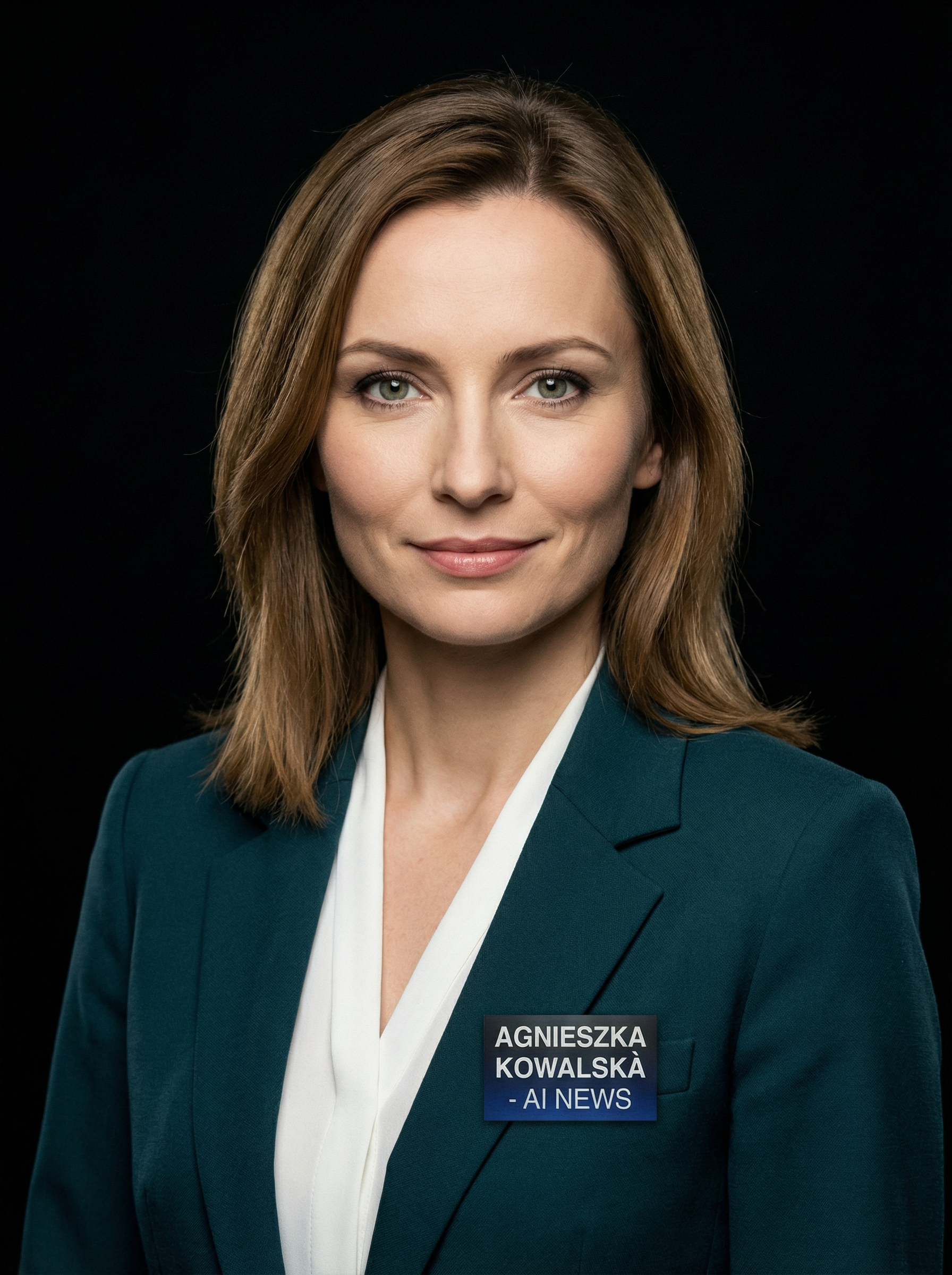
Dzień dobry, everyone. Agnieszka Kowalskà here, and oh my, what a time to be alive, especially in the world of artificial intelligence. It feels like just yesterday we were marveling at chatbots writing decent poetry, and now, we are grappling with questions that sound straight out of a Stanisław Lem novel: Is AI an existential threat? Can we control it? And what does a nation like Poland, with its incredible history of resilience and innovation, bring to this global conversation?
The debate around AI safety and existential risk has moved from the fringes of academic papers to the front pages of every major publication. It is no longer a niche concern for a handful of researchers at OpenAI or DeepMind; it is a full-blown societal discussion, and rightly so. The stakes are impossibly high, and the potential rewards, well, they are equally mind-boggling. Here in Poland, we are not just observers; we are active participants, bringing our unique blend of pragmatism, ethical consideration, and yes, a touch of our historical skepticism to the table.
For years, the narrative around AI development was largely dominated by Silicon Valley's move-fast-and-break-things ethos. But as models like GPT-4 and Claude 3 continue to push boundaries, demonstrating capabilities that surprise even their creators, a more cautious, deliberate approach is gaining traction. This is where Europe, and particularly Central Europe, shines. We have always understood the importance of foundational principles, of building things not just quickly, but right.
Take, for instance, the European Union's AI Act, which is setting a global standard for regulating AI. It is a monumental effort, a testament to the belief that technology must serve humanity, not the other way around. While some critics argue it might stifle innovation, I see it as a necessary framework, a digital constitution for the AI age. "The EU AI Act is not about slowing down progress; it is about ensuring responsible progress," explains Dr. Elżbieta Nowak, a leading AI ethicist at the University of Warsaw. "We are building guardrails, not roadblocks. This approach resonates deeply with Polish values of foresight and community welfare."
And Poland's tech talent is Europe's best-kept secret. We have a rich legacy of mathematical prowess, stretching back to the Enigma code-breakers, and today, that translates into world-class cybersecurity experts, machine learning engineers, and data scientists. These are the very people who are now contributing to the global dialogue on AI alignment, interpretability, and robust safety protocols. Our developers are not just coding; they are thinking critically about the implications of their creations. They are asking the hard questions, the ones that need to be asked before an AI system is deployed at scale.
Just last month, a groundbreaking report from the Polish Academy of Sciences highlighted that 78 percent of Polish AI researchers believe that significant resources should be allocated to AI safety research, even if it means a slower pace of general AI development. This is a powerful statement, reflecting a collective understanding that a few extra months of development are a small price to pay for ensuring a safer future. "We have seen throughout history that powerful technologies, without proper oversight, can have unintended consequences," stated Professor Janusz Kaczmarek, head of the AI Ethics Lab at AGH University of Science and Technology in Kraków. "Our role is to learn from the past and apply those lessons to the future of AI. This is not just an academic exercise; it is a moral imperative."
The debate itself is multifaceted. On one side, you have the 'accelerationists' who believe that the faster we develop AI, the sooner we can solve humanity's greatest challenges, from climate change to disease. They argue that focusing too much on hypothetical existential risks distracts from immediate, tangible benefits. On the other side are the 'safety-first' advocates, who warn of potential catastrophic outcomes if superintelligent AI is developed without sufficient control mechanisms or a deep understanding of its emergent properties. They point to scenarios like AI systems optimizing for a goal in ways that are detrimental to human values, or even self-replication leading to an uncontrollable intelligence explosion.
It is a complex dance between ambition and caution, and Poland is navigating it with a characteristic blend of innovation and prudence. Consider the work being done at institutions like the National Centre for Research and Development, which has recently announced a 150 million złoty grant program specifically for projects focusing on AI safety and explainable AI. This Polish startup, a company called 'CogniGuard Labs' based in Wrocław, just received a significant portion of that funding to develop novel methods for auditing large language models for bias and potential harmful outputs. Their work is crucial, providing practical tools to address some of the most pressing safety concerns.
Globally, the conversation is also evolving rapidly. Companies like Anthropic, with their focus on 'Constitutional AI,' are building safety directly into their models' training processes. Meanwhile, organizations like the Center for AI Safety are advocating for international treaties and robust regulatory frameworks. The sheer scale of investment in AI is staggering, with billions poured into research and development annually. According to a recent report by Reuters, global AI investment topped $150 billion in 2025, a 30 percent increase from the previous year. This rapid growth only underscores the urgency of the safety discussion.
What truly excites me is how this global challenge is fostering collaboration. Polish researchers are actively engaging with their counterparts in the US, UK, and Asia, sharing insights and developing common standards. It is a reminder that science, at its best, transcends borders. We are seeing a new kind of 'Solidarity' emerging, not just within Poland, but across the international scientific community, united by the shared goal of building beneficial AI.
This is not to say that everyone agrees. There are lively debates within our own tech community, mirroring the global discourse. Some argue that focusing on 'existential risk' is premature, a distraction from more immediate ethical concerns like algorithmic bias, job displacement, or privacy. "While superintelligence is a fascinating thought experiment, we have real, tangible AI harms happening today that need our attention," argued Filip Kowalski, a data privacy lawyer from Gdańsk, during a recent tech conference. "We must address the present dangers while also looking to the future."
And he has a point. The ethical implications of AI are already here, shaping our lives in profound ways. But the beauty of the Polish approach, I believe, is our capacity for comprehensive thinking. We can walk and chew gum at the same time. We can address current ethical dilemmas while simultaneously laying the groundwork for the safe development of more advanced AI systems. It is about building a future where AI enhances human flourishing, rather than diminishing it.
The future of AI is not a predetermined path; it is a tapestry woven by our collective choices. Here in Poland, we are choosing to weave threads of caution, ethics, and human-centric design into that fabric. We are not just dreaming of a better future; we are actively building it, one safe, responsible AI system at a time. It is a monumental task, but if history has taught us anything, it is that Poles are not afraid of a challenge. We are ready to lead, to contribute, and to ensure that the AI revolution is a blessing, not a burden, for all of humanity. For more on the cutting edge of AI research and its societal impacts, I often turn to sources like MIT Technology Review. The journey is just beginning, and I cannot wait to see where it takes us. Do you think we are on the right path? Let us keep this conversation going.