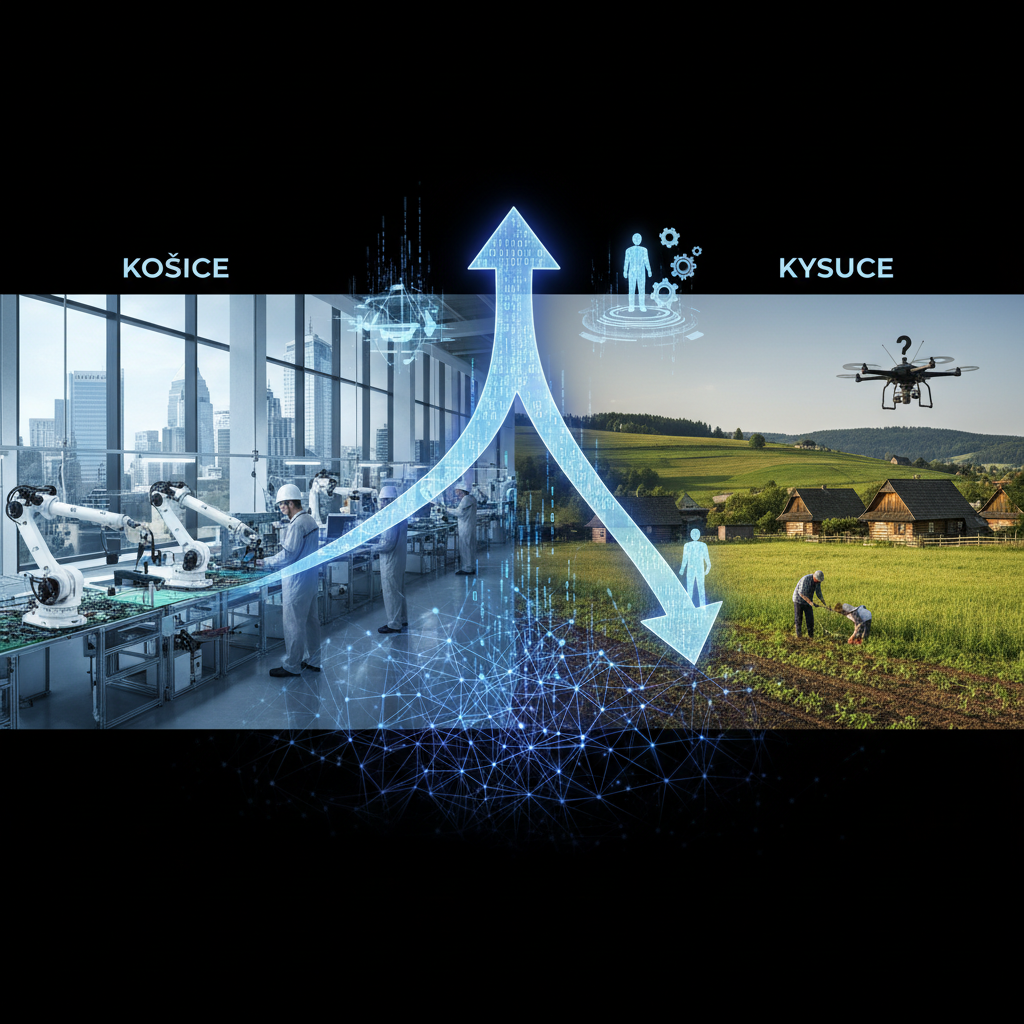
Dobrý deň, everyone! Katarína Novákovà here, and oh, do I have a story that’s buzzing through every café in Bratislava and every factory floor from Košice to Kysuce. The air is thick with anticipation, and a tiny bit of trepidation, about the future of work. We’re talking about AI, of course, and its relentless, fascinating march into automation. Is it a job destroyer, or the ultimate job creator? My heart tells me it’s the latter, but we must be smart about it.
For years, the narrative has been clear: robots on assembly lines, AI handling customer service. But now, it’s different, isn't it? The algorithms are not just doing repetitive tasks; they are learning, adapting, and even creating. This isn't just about manufacturing anymore, it’s about everything. From the legal offices in Staré Mesto to the software development hubs blossoming in Žilina, the question is no longer if AI will change our jobs, but how and when.
Just last month, a report from the European Centre for the Development of Vocational Training, Cedefop, indicated that up to 30% of jobs in the EU could be significantly altered or partially automated by AI within the next decade. For Slovakia, with our strong automotive and manufacturing sectors, this figure could be even higher. We are a nation built on skilled hands and meticulous craftsmanship, and this transformation feels particularly poignant here. We’ve seen incredible growth, fueled by foreign investment and our own ingenuity, but now we face a new kind of challenge, one that demands foresight and courage.
I recently spoke with Dr. Elena Kováčová, a leading economist at the Slovak Academy of Sciences. She told me, “Slovakia’s hidden tech talent is our greatest asset, but we must invest heavily in reskilling and upskilling programs now. Our traditional industries are ripe for AI integration, which can boost productivity and create new, higher-value roles. However, without proactive government and corporate strategies, we risk a significant social disruption.” Her words echo what many are feeling: a mix of excitement for the potential and a clear-eyed understanding of the work ahead.
Think about our automotive industry, a true powerhouse. Volkswagen, Kia, Stellantis, and Jaguar Land Rover all have major plants here. These aren't just assembly lines anymore; they are becoming smart factories, leveraging AI for predictive maintenance, quality control, and even design optimization. NVIDIA, for instance, is pushing its AI platforms into manufacturing at an incredible pace, enabling factories to run simulations and optimize processes in ways we could only dream of a few years ago. This means fewer people performing manual checks, yes, but also a demand for AI specialists, data analysts, and robotics engineers to manage these sophisticated systems.
And it's not just the big players. Our own vibrant startup scene is bubbling with innovation. I visited a small company in Trenčín last week, 'RoboCraft Solutions,' which is developing AI-powered vision systems for quality inspection in small and medium-sized enterprises. Their CEO, Michal Novotný, a brilliant young engineer who studied at the Slovak University of Technology, shared his vision with me. “We’re not replacing workers; we’re empowering them. Our AI takes over the monotonous, error-prone tasks, freeing up human operators to focus on problem-solving, innovation, and more complex decision-making. It’s about augmentation, not just displacement.” This kind of thinking, this optimistic pragmatism, is what will carry us through.
But let's be honest, the fear is real. When you hear about companies like Google and Meta integrating advanced AI models into their operations, making roles like content moderation, data entry, and even some aspects of software testing more efficient, it's natural to wonder about the ripple effect. The Verge regularly reports on these developments, and the scale of change is truly unprecedented.
What does this mean for our beloved Slovakia? It means we need to double down on education. Our universities, like Comenius University in Bratislava and the Technical University of Košice, are already adapting their curricula, but we need to accelerate this. We need more programs focused on AI ethics, prompt engineering, data science, and human-AI collaboration. The EU cohesion funds, which have been instrumental in our development, must now prioritize these future-proof skills. We have a chance to not just react to this wave, but to ride it, to become a hub for AI innovation in Central Europe.
I had a fascinating chat with Minister of Labour, Social Affairs and Family, Ján Kováč, just a few days ago. He acknowledged the challenge but stressed the opportunity. “We are actively exploring new social safety nets and retraining initiatives. The goal is to ensure a just transition for all. We cannot leave anyone behind as we embrace this technological leap. Bratislava is having its moment, attracting global tech firms, and we must ensure our workforce is ready to meet that demand.” His commitment to a fair transition is crucial.
This isn't just about jobs, it's about our national identity, our ability to thrive in a rapidly changing world. We've shown incredible resilience and adaptability throughout our history. From building our own industries after the Velvet Revolution to becoming a key player in European manufacturing, we have always found a way to innovate and adapt. This AI revolution is no different. It demands a collective effort from government, industry, academia, and every single one of us.
The future of work is not a dystopian nightmare where robots rule. It’s a dynamic, evolving landscape where human ingenuity, creativity, and critical thinking become even more valuable. AI will handle the calculations, the repetitive tasks, the data crunching. Humans will provide the vision, the empathy, and the complex problem-solving that machines simply cannot replicate. We have an incredible opportunity to redefine what it means to work, to create more fulfilling and impactful careers for our people.
So, as the algorithms learn and the robots whir, let’s not shrink from the challenge. Let’s embrace it with the same spirit that built our beautiful castles and fueled our industrial might. Let’s prepare our workforce, foster our innovators, and ensure that Slovakia doesn’t just survive this AI wave, but truly flourishes. The future is bright, my friends, if we dare to build it together. Will we seize this moment to lead, or will we merely follow?