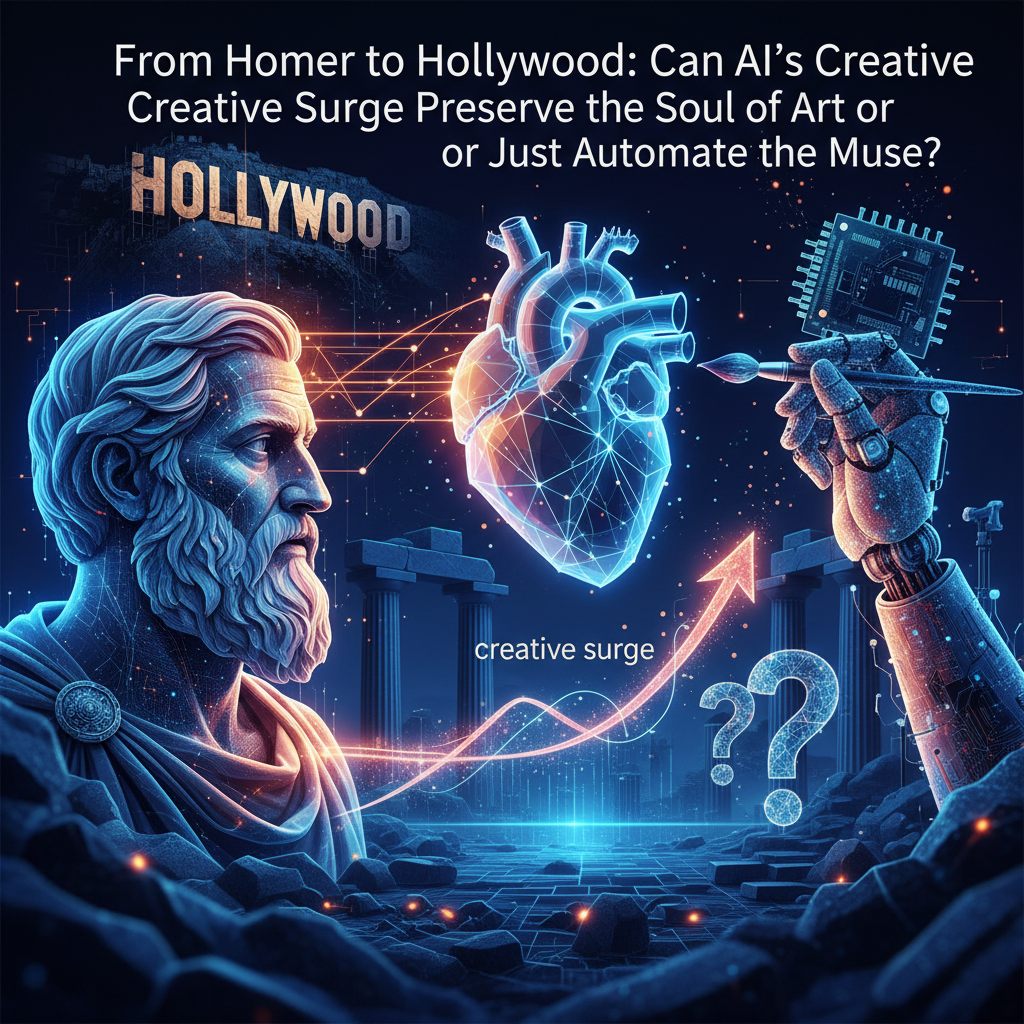

Is the soul of creation for sale, or is it merely being digitized for wider consumption? This is the question that haunts me as I observe the relentless march of artificial intelligence into the very heart of the creator economy. From the solitary artist in a Plaka studio to the global content behemoths, everyone is grappling with the same unsettling truth: AI is here, and it is changing everything. Is this a fleeting trend, a technological curiosity, or the new, irreversible normal? My instincts, honed by decades of watching cycles unfold, tell me it is the latter, and the implications are profound, stretching far beyond quarterly earnings reports. We are talking about the very nature of human expression.
For millennia, the act of creation, whether a sculpted marble figure or an epic poem, was inextricably linked to human ingenuity, struggle, and inspiration. The techne of the ancient Greeks, a skill born of practice and intellect, was revered. Fast forward to today, and we have algorithms generating symphonies, crafting narratives, and even designing entire virtual worlds. The tools are no longer just extensions of the hand, but extensions, or perhaps replacements, of the mind itself.
Consider the historical context. The printing press democratized literacy, photography democratized visual representation, and the internet democratized distribution. Each wave brought both liberation and disruption. Artists and artisans adapted, found new niches, and often, their craft evolved into something richer. But AI feels different. It does not merely amplify human capability; it can simulate it, often with astonishing fidelity.
Today, the creator economy is a sprawling ecosystem, reportedly valued at over $250 billion globally, encompassing everything from YouTube vloggers to independent game developers, musicians, writers, and digital artists. Platforms like Patreon, Substack, and Twitch have empowered millions to monetize their passions directly. Now, enter the AI. Tools like OpenAI's Dall-e 3 and Midjourney generate images from text prompts, while Google's Gemini and Anthropic's Claude 3 assist with writing, coding, and even composing music. Adobe has integrated generative AI features into its Creative Cloud suite, promising to accelerate workflows for designers and video editors.
On the surface, this looks like empowerment. A single creator can now produce content that once required a team of specialists. A small indie game studio in Thessaloniki can leverage AI for asset generation, reducing development costs and accelerating time to market. A Greek musician can use AI to generate backing tracks or explore new melodic structures without hiring session musicians. This is the promise: democratized creativity, lower barriers to entry, and unprecedented efficiency.
However, beneath this gleaming surface lies a deep chasm of concern. The very data used to train these powerful AI models often comes from the works of human creators, frequently without their explicit consent or compensation. This has sparked a wave of legal challenges, most notably from artists and writers. The Authors Guild, for instance, has been vocal in its concerns, stating that large language models are