
¡Hola, amigos! Alejandroó Riveràs here, and let me tell you, the energy in the air right now, it feels like a mariachi band playing a symphony of silicon and pixels. We are living through a moment, a true revolución, where creativity is being unleashed in ways we could only dream of just a few years ago. And at the heart of it all, for me, is the incredible explosion of AI-generated video, with Pika Labs leading the charge, pushing us towards what many are calling the YouTube of AI.
Think about it: just a short while ago, creating high-quality video content was a monumental task. You needed expensive equipment, a whole crew, and weeks, sometimes months, of production. Now, with a few text prompts, a vision, and a little bit of AI magic, anyone can be a director, a storyteller, a visual artist. It is absolutely mind-blowing, and companies like Pika Labs are making it accessible to everyone. They are not just building tools; they are building dreams, empowering a new generation of creators globally, and yes, right here in Mexico too.
I have been following Pika Labs since their early days, and their journey is a testament to what a small, dedicated team can achieve. They burst onto the scene with a mission to democratize video creation, and they are doing it with an infectious enthusiasm. Their platform, alongside others like RunwayML and even offerings from giants like Google DeepMind and Meta AI, is transforming how we think about content. It is no longer about if you can create, but what incredible stories you will tell.
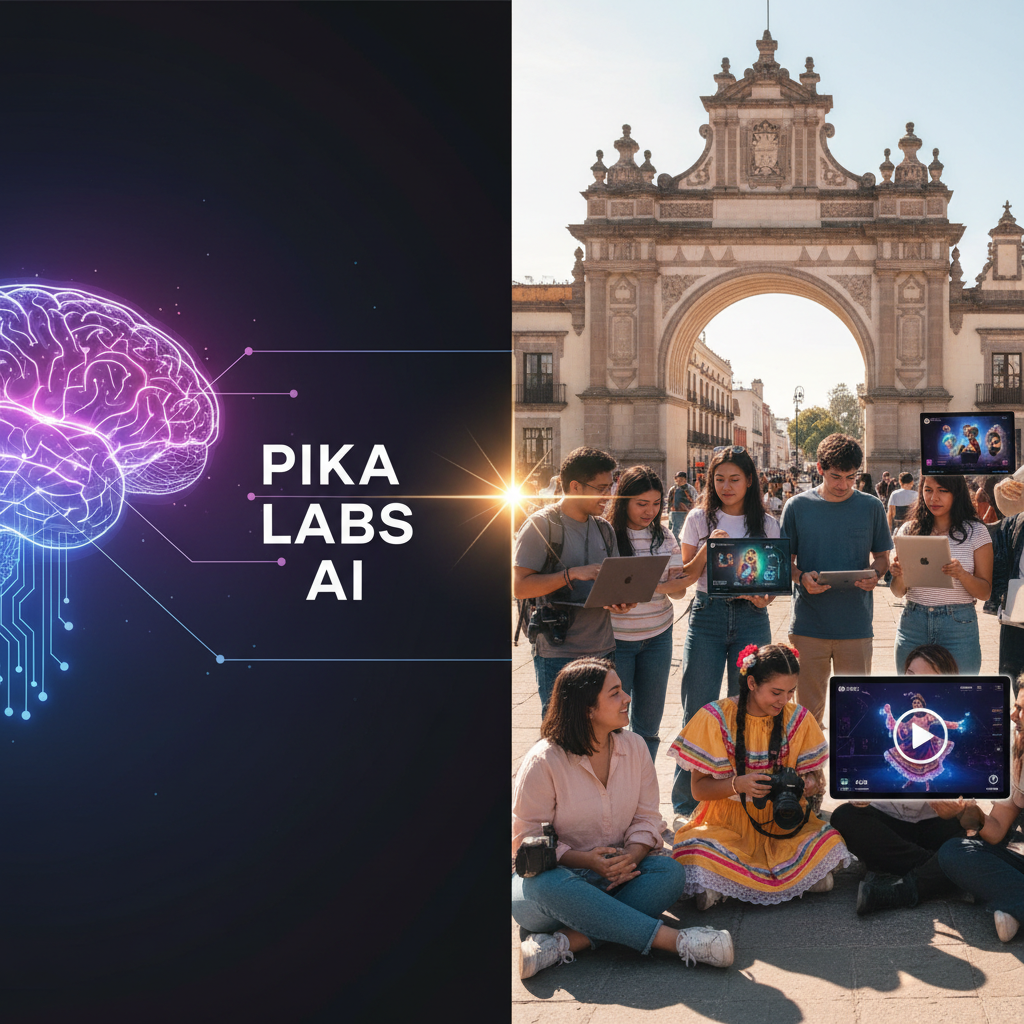
This is not just a Silicon Valley phenomenon, my friends. The nearshoring revolution is real, and it is bringing this technological wave right to our doorstep. Mexico City is on fire, in the best way, with creative hubs and tech talent eager to dive into these new possibilities. I recently spoke with Sofia Ramirez, a brilliant young animator from Guadalajara who is experimenting with Pika Labs. "Before, I needed a huge budget and a team to bring my fantastical worlds to life," she told me, her eyes sparkling with excitement. "Now, I can iterate on ideas in minutes, creating incredible scenes that would have taken days of rendering. It is like having a whole studio in my laptop." That is the power we are talking about, the true democratization of art.
The competition in this space is fierce, which is fantastic for us, the users. OpenAI, with its Sora model, showed us what is possible, generating incredibly realistic and complex scenes from simple text. Then Google, with its ongoing research in video generation, and Meta AI, constantly pushing boundaries with its open source models, are all vying for supremacy. Each new announcement feels like a new chapter in a thrilling novel. Pika Labs, however, has carved out a unique niche by focusing on user-friendliness and iterative creation, allowing artists to refine their visions with unprecedented ease. They are building a community, not just a product.
What does this mean for the future of content, especially here in Latin America? It means opportunity, muchísima oportunidad. Our rich cultural heritage, our vibrant storytelling traditions, our unique perspectives, they are all about to find a new, powerful medium. Imagine independent filmmakers in Oaxaca creating animated shorts with production values that rival major studios, all from their laptops. Think of educators in Monterrey developing engaging, personalized learning videos for their students without needing a massive budget. This Mexican startup just might be the next big thing, leveraging these tools to tell our stories to the world.
And the numbers back this up. While exact figures for AI-generated video adoption are still emerging, industry analysts are projecting explosive growth. A recent report from Reuters highlighted that the market for AI in media and entertainment is expected to reach tens of billions of dollars within the next five years. This is not just a trend; it is a seismic shift. Companies are investing heavily, and the talent pool is growing exponentially. Universities across Mexico are seeing increased enrollment in AI and creative technology programs, preparing the next generation to harness these tools.
Of course, with great power comes great responsibility. The ethical considerations around deepfakes and misinformation are very real, and platforms like Pika Labs are working tirelessly to implement safeguards and watermarking technologies. "Our commitment is to empower creativity responsibly," stated Dr. Chengyu Wang, a co-founder of Pika Labs, in a recent interview with TechCrunch. "We are building tools that inspire, not deceive. Transparency and user education are paramount for us." This is a critical point, and one that all players in this space must address head-on to maintain trust and ensure a positive impact.
The potential for new business models is also immense. We are going to see entirely new categories of content creators, agencies specializing in AI video production, and platforms dedicated to showcasing these incredible works. The traditional barriers to entry are crumbling, allowing diverse voices to emerge and contribute to the global creative tapestry. This is particularly exciting for regions like ours, where talent often exists in abundance but resources can be scarce. AI levels the playing field in a truly profound way.
I believe we are on the cusp of a golden age of digital storytelling. The tools are here, the talent is here, and the hunger for new, engaging content is insatiable. Pika Labs, with its innovative approach, is not just participating in this race; they are helping define the finish line. And honestly, watching it all unfold from my favorite café in Roma Norte, seeing our local creators embrace these technologies, it makes my heart sing. The future is not just coming; it is being created, pixel by pixel, right now, by all of us. And it looks absolutely spectacular. Stay tuned, because the best is yet to come. This is Alejandroó Riveràs, signing off, ready for the next big story! You can read more about the broader impact of AI on creative industries in this MIT Technology Review piece.