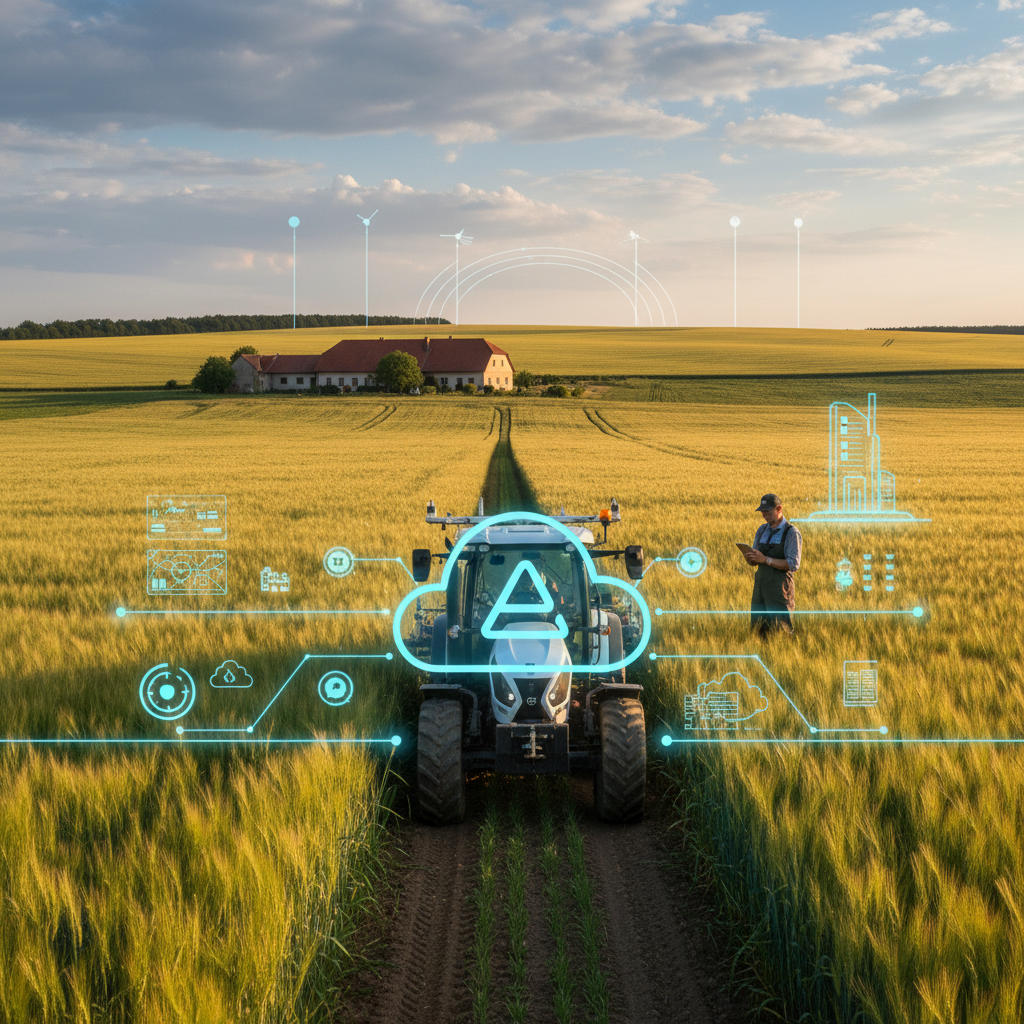

The scent of freshly tilled earth, a familiar aroma across the Czech countryside, once heralded a season of uncertain bounty. Farmers, for generations, have relied on intuition, experience, and the capricious whims of nature. Today, however, a new force is tilling the digital soil: artificial intelligence. This is not the speculative future of science fiction, but the tangible present, reshaping agriculture from the ground up, particularly here in the heart of Europe. The promise of AI in agriculture is not merely about incremental improvements, it is about a fundamental paradigm shift, a move from reactive farming to predictive, proactive cultivation.
Prague's engineering tradition meets modern AI in a confluence that is both logical and impactful. Our region, with its rich agricultural heritage and robust technical expertise, is uniquely positioned to embrace these advancements. The Czech approach is methodical and effective, focusing on practical applications that deliver measurable results for farmers. We are witnessing a quiet revolution, driven not by flashy headlines, but by consistent, data-driven innovation.
Consider the intricate dance of precision farming. Historically, fertilizer and pesticide application has been largely uniform, a broad stroke across an entire field. This often leads to overuse in some areas and under-application in others, resulting in wasted resources, environmental strain, and suboptimal yields. Enter AI. Sophisticated algorithms, often running on cloud platforms like Microsoft Azure, analyze vast datasets comprising satellite imagery, drone footage, soil sensor data, weather patterns, and historical yield records. These systems can pinpoint, with remarkable accuracy, which specific areas of a field require more nitrogen, less water, or targeted pest control. This hyper-localized approach is a game-changer.
One of the most compelling examples of this transformation comes from the realm of crop monitoring. Imagine a farmer overseeing hundreds of hectares. Manually inspecting each plant for signs of disease, nutrient deficiency, or pest infestation is an impossible task. Here, AI-powered computer vision systems, deployed on drones or autonomous ground vehicles, become the farmer's tireless eyes. These systems can identify subtle changes in plant coloration, leaf structure, or growth patterns that are invisible to the human eye, often detecting problems days or even weeks before they become widespread. Early detection means early intervention, saving entire harvests from potential ruin.
Dr. Jan Novotný, a leading agronomist at Mendel University in Brno, articulated this shift succinctly during a recent agricultural tech conference. "The integration of AI, particularly machine learning models, allows us to move beyond mere observation to genuine foresight," he stated. "We are no longer just reacting to crop stress, we are predicting it, understanding its root causes, and implementing preventative measures. This is not just about efficiency, it is about resilience in the face of climate change and increasing global food demand." His words resonate deeply within the scientific and farming communities alike.
Yield optimization, the ultimate goal for any farmer, is where AI truly shines. By correlating all the gathered data, from soil composition to historical weather anomalies and market prices, AI models can provide highly accurate yield predictions. This enables farmers to make informed decisions about planting schedules, irrigation strategies, and harvesting times. Furthermore, these models can suggest optimal crop varieties for specific microclimates and soil types, maximizing the potential output of every square meter of land. The economic impact is substantial, directly translating to increased profitability for farmers and more stable food supplies for consumers.
Companies like Microsoft are not just providing the underlying infrastructure, they are actively developing AI solutions tailored for agriculture. Their Azure FarmBeats platform, for instance, is designed to aggregate agricultural data from various sources, normalize it, and apply AI and machine learning models to generate actionable insights. This allows farmers, even those without deep technical expertise, to leverage the power of advanced analytics. It is a testament to the democratizing potential of cloud-based AI.
However, the adoption of these technologies is not without its challenges. The initial investment in sensors, drones, and data infrastructure can be significant for smaller farms. There is also the crucial need for robust connectivity in rural areas, a challenge that many European nations, including parts of the Czech Republic, are still addressing. Data privacy and ownership are also paramount concerns, requiring clear regulatory frameworks to build trust among farmers. The European Union's General Data Protection Regulation, or GDPR, provides a strong foundation for these discussions, ensuring that data collected from farms is handled responsibly and ethically.
Despite these hurdles, the momentum is undeniable. Startups across Europe are innovating rapidly. Consider the work being done by companies like Plantix, which uses smartphone cameras and AI to diagnose plant diseases, or Taranis, which employs high-resolution aerial imagery and AI for precision scouting. These innovations are not confined to large industrial farms, they are increasingly accessible to smaller, family-run operations, fostering a more sustainable and efficient agricultural ecosystem across the continent.
Let me walk you through the architecture of a typical AI-driven precision farming system. At the base, we have a network of sensors deployed in the field, measuring everything from soil moisture and temperature to pH levels. Drones equipped with multispectral cameras fly overhead, capturing detailed images of crop health. Weather stations provide hyper-local forecasts. All this raw data is then streamed to a central cloud platform, such as Microsoft Azure. Here, sophisticated machine learning algorithms process and analyze the information. For example, a convolutional neural network might analyze drone imagery to identify areas affected by blight. A predictive model, trained on years of historical data, might forecast the optimal time for irrigation based on current soil moisture and upcoming weather. The output is then translated into actionable recommendations, delivered directly to the farmer's mobile device or integrated into automated farm machinery, such as variable-rate sprayers or autonomous tractors.
The implications extend beyond mere efficiency. Enhanced precision farming reduces the environmental footprint of agriculture by minimizing the use of water, fertilizers, and pesticides. This aligns perfectly with the European Green Deal objectives, pushing for more sustainable food systems. The ability to grow more food with fewer resources is not just an economic imperative, it is an ecological necessity.
As we look ahead, the integration of AI with robotics promises even greater autonomy in farming. Imagine fields tended by fleets of autonomous robots, guided by AI, performing tasks from planting and weeding to harvesting with unprecedented precision. While this vision might still seem futuristic, the foundational technologies are already in place, evolving at an accelerating pace. The collaborative efforts between academic institutions, technology companies, and agricultural stakeholders are crucial for realizing this future. According to MIT Technology Review, the convergence of these technologies is set to redefine global food production.
The transformation of agriculture through AI is a testament to human ingenuity. It demonstrates how complex algorithms and vast datasets can be harnessed to solve some of humanity's most pressing challenges, from food security to environmental sustainability. The fields of Europe, once solely reliant on human hands and traditional wisdom, are now becoming laboratories of digital innovation, promising a future where bounty is not just hoped for, but intelligently cultivated. For more insights into the broader impact of AI on various industries, one might consult resources such as TechCrunch. The future of farming is not just about bigger tractors, it is about smarter algorithms, and Europe is playing a pivotal role in this intelligent evolution. For further technical deep dives into AI applications, resources like arXiv offer a wealth of academic papers.