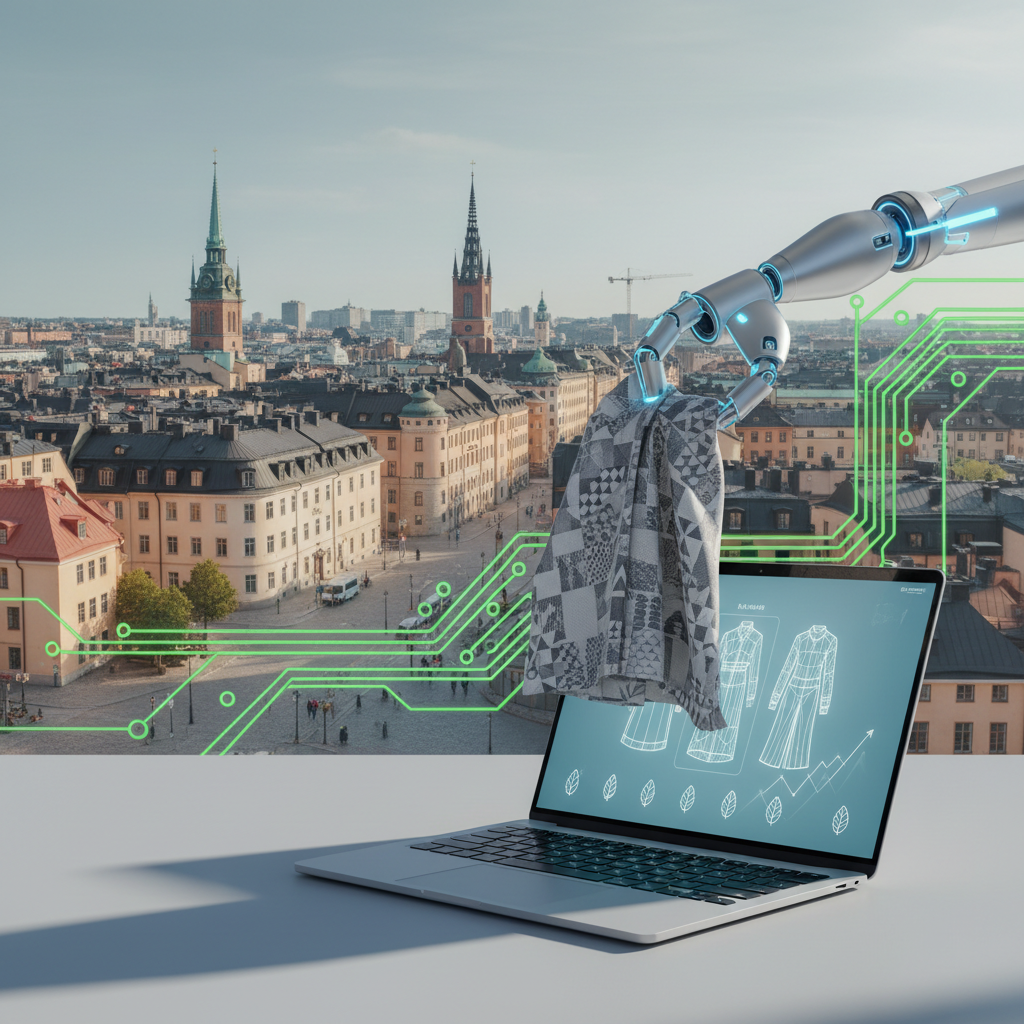
The hum of servers and the quiet click of keyboards are the usual soundtrack to a Monday morning at a bustling tech firm in Bratislava. But lately, there's a new sound, a subtle shift in the rhythm. It's the almost imperceptible whisper of a personal AI assistant, a digital companion like Inflection AI's Pi, guiding, suggesting, and anticipating the needs of its human counterpart. This isn't science fiction anymore, my friends, this is the vibrant reality unfolding right here in Slovakia, and it is absolutely exhilarating!
I visited a mid-sized software development company, 'Innovatech Solutions', nestled in the heart of Bratislava's blossoming tech district. Just a year ago, the idea of every employee having a dedicated AI assistant felt like a distant dream. Today, it is their competitive edge. "Pi has transformed how our teams collaborate and innovate," shared Marek Kováč, Innovatech's CEO, his eyes gleaming with enthusiasm. "Our developers use it for instant code reviews, our marketing team for drafting campaigns, and even our HR department for synthesizing feedback. It is like having an extra brain, tailored just for you, available 24/7. We are seeing a 20% increase in project completion speed and a noticeable uplift in employee satisfaction." This is not just a local phenomenon, it is a global wave, and Slovakia's hidden tech talent is riding it with gusto.
The race to build the ultimate personal AI assistant is one of the most compelling narratives in technology today. While OpenAI's ChatGPT and Google's Gemini have captured public imagination with their broad capabilities, Inflection AI's Pi carved out a unique niche by focusing on empathetic, personalized conversation. Its creators, including Mustafa Suleyman, envisioned an AI that understands you, learns from you, and acts as a true personal intelligence. This focus on emotional intelligence and personalized interaction has made it particularly appealing for enterprise adoption, especially in roles requiring nuanced communication or complex decision-making support. TechCrunch has been tracking this trend closely, noting the rapid enterprise integration of such models.
Globally, major players are pouring resources into this domain. Microsoft is deeply integrating its Copilot across its entire suite of products, aiming to make AI assistance ubiquitous for its enterprise users. Google is pushing Gemini's capabilities into Workspace, promising a future where your AI assistant can manage your calendar, draft emails, and even summarize meetings. Amazon's Alexa, once a smart speaker, is evolving into a more proactive, personalized assistant for home and potentially work. The market is projected to grow exponentially, with some analysts estimating the personal AI assistant market to exceed $100 billion by 2030, driven by enterprise adoption and increasing consumer demand for intelligent automation.
So, what does this mean for the workers here in Central Europe? For many, it is a revelation. "Initially, I was worried," admitted Zuzana Horváthová, a project manager at Innovatech Solutions, during our chat over káva. "Would it replace me? Would I become redundant? But Pi is not a replacement, it is an augmentation. It handles the tedious, repetitive tasks, freeing me up to focus on strategy, creativity, and human connection. I can brainstorm ideas, get quick summaries of lengthy documents, and even practice presentations with it. It is like having a super-efficient intern who never sleeps." This sentiment echoes findings from a recent McKinsey report, which indicated that workers using AI tools reported higher job satisfaction and felt more empowered in their roles.
However, it is not all sunshine and rainbows. The rapid integration of personal AI assistants also brings challenges. Data privacy is a significant concern. How is personal and proprietary company data being used to train and personalize these models? Companies like Inflection AI emphasize their commitment to privacy and ethical AI development, but the questions remain pertinent. "We must ensure that as these powerful tools become more ingrained in our daily work, we do not compromise the privacy of individuals or the security of our intellectual property," stated Professor Eva Nováková, a leading AI ethics researcher at Comenius University in Bratislava. "The EU's AI Act, while still evolving, provides a crucial framework, but companies must also implement robust internal policies." This is a conversation we are having across Europe, a vital one as Central Europe's quiet revolution gains momentum.
Another challenge is the potential for a new digital divide. While larger, well-funded companies like Innovatech can invest in these advanced tools and provide training, smaller businesses might struggle to keep up. Government initiatives and EU cohesion funds could play a crucial role here, ensuring that the benefits of personal AI are accessible to all enterprises, fostering a more equitable technological landscape. Imagine a small family business in Košice using Pi to optimize their logistics or manage customer inquiries; the potential is truly boundless.
Looking ahead, the evolution of personal AI assistants promises even more profound changes. We are moving towards a future where these AIs will not just assist, but anticipate. They will learn our preferences, predict our needs, and proactively offer solutions before we even realize we have a problem. Imagine an AI that not only schedules your meetings but also prepares a briefing document based on your past interactions and the participants' profiles. Or an AI that helps you navigate complex regulatory landscapes, instantly providing relevant information tailored to Slovakia's specific laws and EU directives. The integration of multimodal capabilities, allowing these AIs to understand and generate not just text but also images, audio, and video, will unlock entirely new possibilities for creativity and productivity.
The competition is fierce, and the stakes are incredibly high. Companies like Inflection AI, Anthropic with Claude, and the giants like Google and Microsoft are all vying for supremacy in this burgeoning market. The winners will be those who can build not just the smartest AI, but the most trusted, the most intuitive, and the most genuinely helpful companion. For us here in Slovakia, and indeed across the globe, the prospect of having an intelligent, personalized assistant at our fingertips is not just exciting, it is a game-changer for how we work, live, and innovate. The future is personal, and it is arriving faster than we ever imagined. You can read more about the broader implications of AI on our lives at Wired.