
Ahoj, priatelia! Katarína Novákovà here, bursting with excitement as always, because today we are diving headfirst into a topic that is not just crucial, but utterly exhilarating: cybersecurity. Forget dusty textbooks and boring lectures, we are talking about the digital frontier, where the battles for our data, our privacy, and even our nations are being fought right now. And guess what? AI, that incredible force for good, is also being weaponized by the bad guys. But we, the innovators, the dreamers, the guardians of the digital realm, we are going to use AI to fight back even smarter, even faster.
This isn't just about protecting your personal photos, though that is important. This is about safeguarding critical infrastructure, defending against state-sponsored espionage, and stopping ransomware gangs from crippling hospitals and businesses. It is a high-stakes game, and the demand for skilled cybersecurity professionals is exploding. Here in Slovakia, and across Central Europe, we have a unique opportunity to build a formidable defense, to nurture Slovakia's hidden tech talent, and to show the world what we are made of. This learning path is your personal roadmap to becoming a cybersecurity hero, from zero to expert.
Who This Is For: The Digital Defenders of Tomorrow
This learning path is for anyone with a burning curiosity and a desire to protect the digital world. Whether you are a student, a career changer, or just someone who wants to understand the threats lurking online, you are welcome here. No prior cybersecurity experience is needed, but a basic understanding of computer systems, networks, and perhaps a little programming logic will give you a head start. If you are comfortable with concepts like operating systems, IP addresses, and how the internet generally works, you are golden. If not, do not worry, we will touch on the fundamentals.
The Big Picture: Your Journey to Cybersecurity Mastery
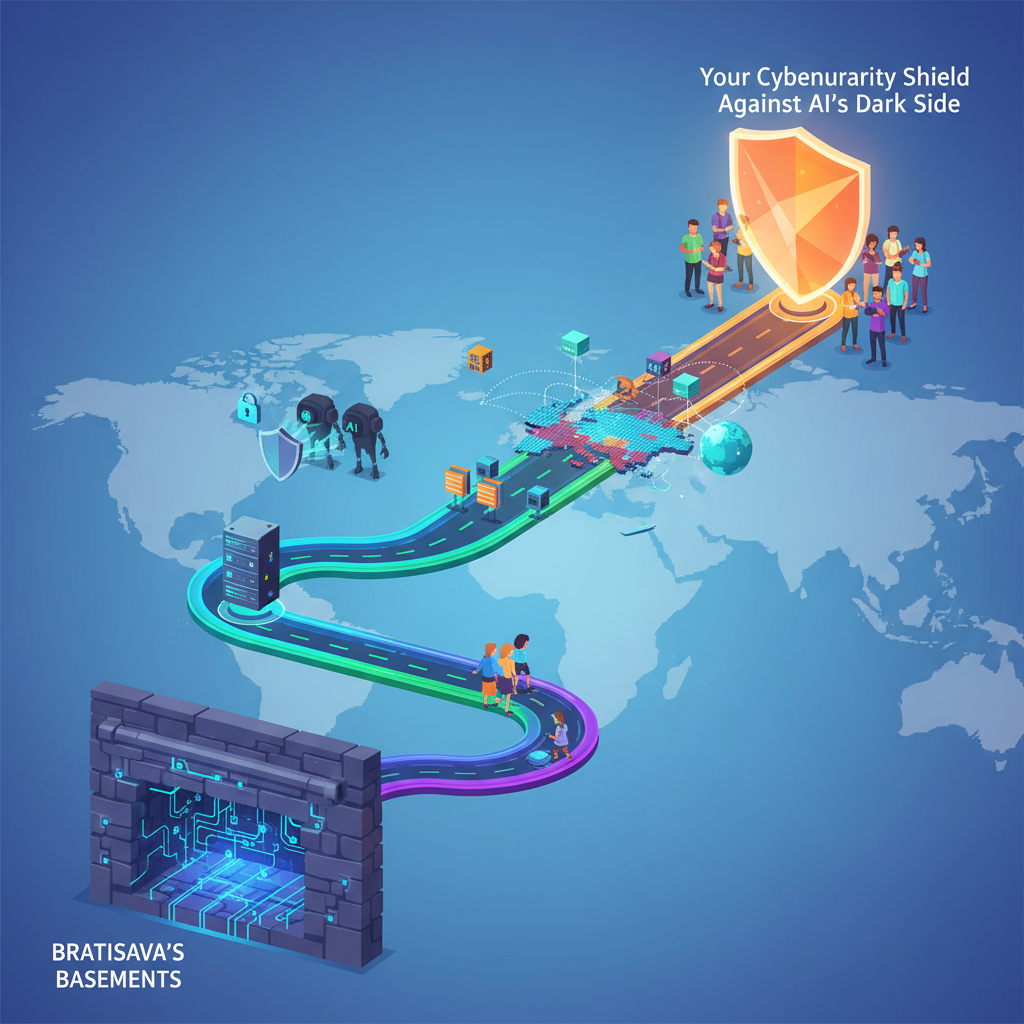
Imagine a journey from a quiet village to a bustling, high-tech city. That is what we are embarking on. We will start with the very foundations, understanding the language of security, then build up to hands-on skills, real-world applications, and finally, specialization in areas like AI-powered defense. Think of it as building your own digital castle, brick by brick, against the rising tide of cyber threats.
Stage 1: Foundations, The Digital Groundwork (2-4 weeks)
This is where we lay the bedrock. We need to speak the language of cybersecurity before we can defend anything. This stage focuses on core concepts, terminology, and the basic principles that underpin all digital security.
Key Concepts:
- Cybersecurity Fundamentals: CIA Triad (Confidentiality, Integrity, Availability), threat actors, attack vectors, vulnerabilities, exploits.
- Networking Basics: Tcp/ip, common protocols (http, DNS, SSH), firewalls, VPNs.
- Operating Systems: Linux command line essentials, Windows security features.
- Introduction to Cryptography: Hashing, encryption (symmetric/asymmetric), digital signatures.
- Legal and Ethical Considerations: Data privacy laws (GDPR is crucial here in Europe!), ethical hacking principles.
Resources:
- Free: CompTIA Security+ study guides (many free resources online), Cybrary's introductory courses, freeCodeCamp's network security modules.
- Paid: CompTIA Security+ certification course (highly recommended for foundational knowledge), Sans Cyber Aces Online.
Milestones:
- Understand the CIA Triad and identify its application in real-world scenarios.
- Navigate a Linux terminal comfortably, perform basic file operations, and understand network commands.
- Explain the difference between symmetric and asymmetric encryption.
Stage 2: Core Skills, Hands-On Defense (4-6 weeks)
Time to get your hands dirty! This stage moves from theoretical knowledge to practical application. We will explore common tools and techniques used by both defenders and attackers.
Key Concepts:
- Vulnerability Assessment: Port scanning (Nmap), vulnerability scanners (OpenVAS, Nessus).
- Penetration Testing Basics: Reconnaissance, scanning, exploitation, post-exploitation.
- Secure Coding Principles: Input validation, secure authentication, common web vulnerabilities (owasp Top 10).
- Incident Response Fundamentals: Detection, analysis, containment, eradication, recovery.
- Security Information and Event Management (siem) Introduction: Log analysis, alert correlation.
Resources:
- Free: TryHackMe, Hack The Box (starting modules), Owasp Top 10 documentation, Wireshark tutorials.
- Paid: eLearnSecurity Junior Penetration Tester (eJPT) certification, Practical Ethical Hacking by TCM Security.
Hands-on Projects:
- Set up a small home lab with a virtual machine (Kali Linux, Metasploitable) and practice basic penetration testing steps.
- Analyze network traffic using Wireshark to identify suspicious activity.
- Perform a vulnerability scan on a target system and interpret the results.
Stage 3: Intermediate Applications, Real-World Scenarios (4-8 weeks)
Now we are getting into the complex challenges. This stage focuses on understanding advanced threats, including state-sponsored activities and ransomware, and how to defend against them.
Key Concepts:
- Advanced Persistent Threats (APTs): Understanding their motives, tactics, techniques, and procedures (TTPs), often associated with state-sponsored hacking.
- Ransomware Deep Dive: Attack vectors, encryption methods, mitigation strategies, incident response for ransomware.
- Digital Forensics: Evidence collection, chain of custody, memory forensics, disk forensics.
- Cloud Security: AWS, Azure, Google Cloud security models, common misconfigurations.
- Threat Intelligence: Sources, analysis, integration into defense strategies.
Resources:
- Free: Mitre Att&ck framework, Nist Cybersecurity Framework, various blogs from security vendors (e.g., CrowdStrike, Mandiant).
- Paid: Certified Ethical Hacker (CEH) or Offensive Security Certified Professional (oscp) for offensive skills, Giac Certified Incident Handler (gcih) for defensive skills.
Real-world Projects:
- Simulate a ransomware attack in a controlled environment and practice incident response steps.
- Analyze a forensic image to uncover hidden data or attacker activity.
- Develop a threat intelligence report on a specific APT group or ransomware variant.
Stage 4: Advanced Topics, Specialization and AI-Powered Defense (Ongoing)
This is where you become a true specialist, and where the future of cybersecurity truly sparkles. AI is not just a threat, it is our most powerful ally. This stage is about continuous learning and focusing on specific areas.
Key Concepts:
- AI in Cybersecurity: Machine learning for anomaly detection, threat prediction, automated response, natural language processing for threat intelligence.
- AI-Driven Attack Techniques: Adversarial AI, deepfakes for social engineering, AI-generated malware.
- DevSecOps: Integrating security into the software development lifecycle.
- Industrial Control System (ICS)/Operational Technology (OT) Security: Protecting critical infrastructure.
- Reverse Engineering Malware: Analyzing malicious code.
- Quantum Cryptography and Post-Quantum Cryptography: Preparing for the future of encryption.
Resources:
- Free: Academic papers on AI in cybersecurity (e.g., arXiv.org), specialized blogs, open-source AI security tools.
- Paid: Advanced certifications like Giac Reverse Engineering Malware (grem), specific cloud security certifications, university courses on AI and security.
Specialization Areas:
- Security Operations Center (SOC) Analyst: Monitoring, detection, response.
- Penetration Tester/Ethical Hacker: Proactively finding vulnerabilities.
- Security Architect: Designing secure systems.
- Forensics Investigator: Post-incident analysis.
- AI Security Researcher: Developing and defending AI systems.
Milestone Projects: Build Your Portfolio
To truly shine, you need a portfolio that screams 'expert'.
- Beginner: Create a secure Linux server hardening guide, including firewall rules, user management, and SSH configuration. Document your steps and reasoning.
- Intermediate: Conduct a full penetration test simulation on a vulnerable web application (e.g., Owasp Juice Shop), documenting findings and providing remediation recommendations.
- Advanced: Develop a simple machine learning model to detect network anomalies or classify malware samples. Explain your dataset, model choice, and results. This will truly showcase your understanding of AI-powered defense.
Recommended Resources: Your Digital Library
- Books: The Hacker Playbook series by Peter Kim, Applied Cryptography by Bruce Schneier, Blue Team Field Guide by Alan J. White.
- Courses: Coursera, edX, Udemy, Cybrary, Sans Institute, Offensive Security.
- Communities: Local cybersecurity meetups (Bratislava is having its moment with these!), Reddit communities (r/cybersecurity, r/netsec), LinkedIn groups, Discord servers for ethical hacking.
- Tools: Kali Linux, Wireshark, Nmap, Metasploit, Burp Suite, Splunk (for Siem), various open-source Ai/ml libraries.
Career Paths: Where This Knowledge Leads
The world is your oyster! With these skills, you could become a Security Analyst, Penetration Tester, Incident Responder, Security Engineer, Cloud Security Specialist, or even an AI Security Researcher. The demand is global, and Central Europe's quiet revolution in tech means opportunities are abundant right here at home.
Tips for Staying on Track: My Personal Advice
This journey requires dedication, but it is incredibly rewarding. Here are my tips:
- Stay Curious: The threat landscape changes daily. Keep reading, keep learning. Follow news from Wired and TechCrunch to stay updated.
- Practice, Practice, Practice: Theory is great, but hands-on experience is gold. Set up labs, solve challenges.
- Network: Connect with other cybersecurity enthusiasts. Share knowledge, ask questions. The community is incredibly supportive.
- Specialize: Once you have the foundations, find what truly excites you and dive deep. Do you love analyzing malware? Or perhaps securing cloud environments?
- Ethical Hacking is Key: Always remember, your skills are for good. Use them responsibly and ethically. Learn more about the ethical implications of AI and cybersecurity from sources like MIT Technology Review.
This is not just a learning path, my friends, it is an invitation to be part of something truly vital. The digital world needs its heroes, and with this roadmap, you are well on your way to becoming one. Let us build a safer, more secure digital future, together!