A few years ago, if you told someone in Bratislava that humanoid robots would soon be serving coffee or assembling car parts alongside people, they might have offered you a shot of Slivovica and a knowing smile. But here we are, in April 2026, and the future is not just knocking, it is already brewing espresso and tightening bolts in our very own backyard. The energy, the sheer kinetic potential of what is happening, it is absolutely electrifying!
I have always believed in the ingenuity of our people, in Slovakia's hidden tech talent, and now, the world is starting to see it too. We are not just adopting technology, we are shaping its application in ways that are uniquely Central European. This is not just about shiny new gadgets; it is about a fundamental shift in how we work, live, and interact with the world around us. And let me tell you, it is far more exciting than any Hollywood blockbuster.
Just last month, I visited a leading automotive supplier near Trnava, one of the giants that forms the backbone of our economy. What I saw there was truly inspiring. Instead of the traditional, caged industrial robots, I witnessed Figure AI's humanoid bots, the Figure 01, working seamlessly on the assembly line. They were not replacing humans, they were augmenting them, handling repetitive, ergonomically challenging tasks with precision and tireless efficiency. "These robots are a game changer for worker safety and productivity," explained Ing. Milan Horváth, Production Director at AutoTech Slovakia. "Our human employees are now free to focus on more complex problem solving, quality control, and innovation. It is a win-win for everyone, boosting our output by nearly 15 percent in key areas without a single layoff." This is the kind of progress that makes my journalist's heart sing!
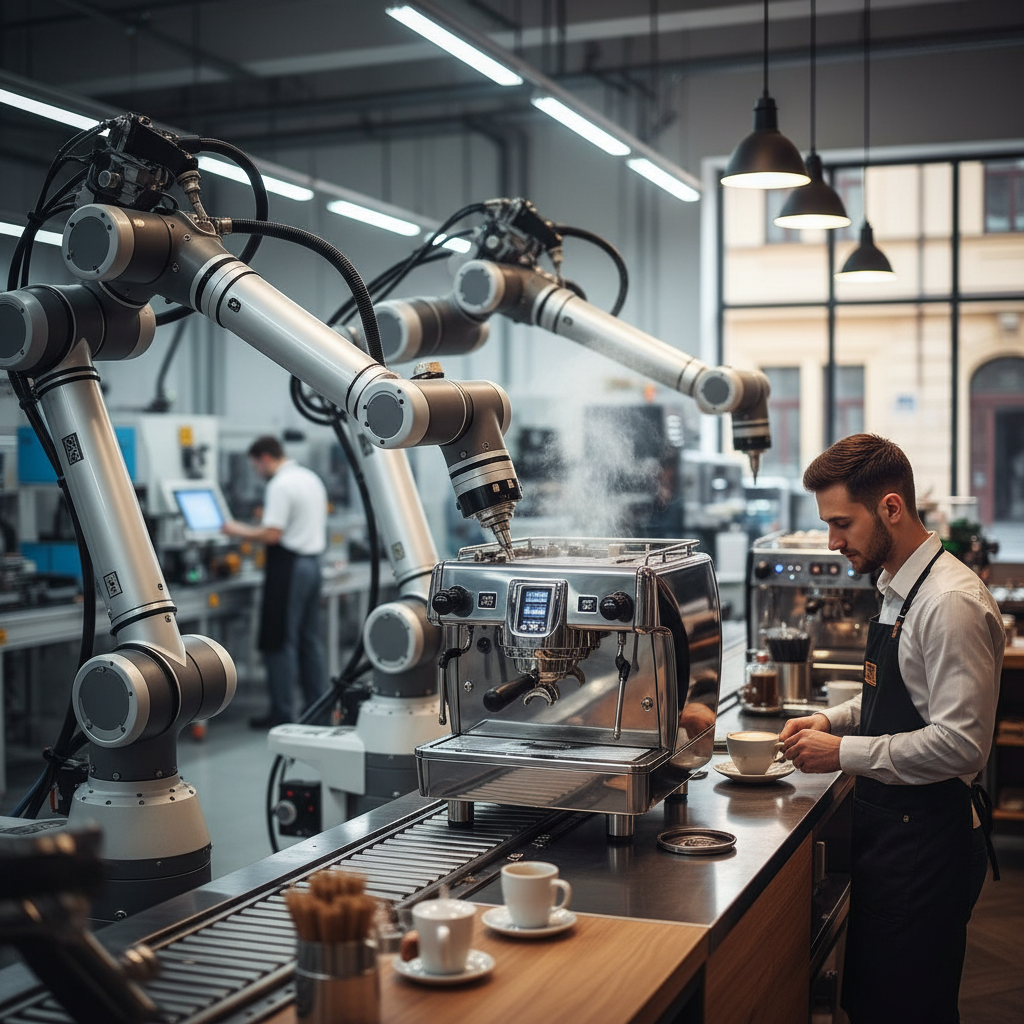
And it is not just the factories. Imagine walking into your favorite café in the Old Town of Bratislava and being greeted by a polite, efficient humanoid robot preparing your order. This is no longer a distant dream. Companies like Boston Dynamics, with their Atlas, and newer startups like Agility Robotics, with Digit, are pushing the boundaries of what is possible. I recently spoke with Eva Kováčová, owner of 'Kaviareň U Anjelov' in Košice, who is piloting a new robotic barista system. "We struggled to find staff willing to work late shifts or weekends consistently," she told me, a hint of relief in her voice. "This little robot, we call him 'Robo-Barista Ján', he is always on time, never complains, and makes a perfect cappuccino every single time. Our customers love the novelty, and my human staff can focus on creating a warmer, more engaging atmosphere." This is innovation that truly serves people, freeing them from the mundane to embrace the meaningful.
The global numbers are staggering, reflecting this rapid integration. A recent report from TechCrunch indicated that the humanoid robot market is projected to reach over $10 billion by 2030, with a significant portion of that growth coming from manufacturing and logistics. Tesla's Optimus, for instance, is making waves with its potential for general purpose tasks, and the sheer computational power behind these machines, often powered by NVIDIA's advanced GPUs, is breathtaking. We are talking about AI models like Google's Gemini and OpenAI's GPT-4 providing the 'brains' for these mechanical bodies, allowing them to perceive, understand, and adapt to their environments with unprecedented sophistication. It is a symphony of hardware and software, playing out in real time.
Of course, there are always questions, and rightly so. What about jobs? Will robots take over? This is a concern I hear often, especially from our older generation who remember the industrial shifts of the past. But the narrative is evolving. The World Economic Forum's latest report suggests that while some jobs will be displaced, many more will be created, requiring new skills and fostering a more creative, human-centric workforce. It is about reskilling, upskilling, and embracing lifelong learning. Our government, through initiatives supported by EU cohesion funds, is already investing heavily in vocational training programs to prepare our workforce for this new era. This foresight is crucial, ensuring that Slovakia, and indeed all of Central Europe, remains competitive and inclusive.
Consider the retail sector, another area ripe for transformation. Imagine a department store where a humanoid robot can guide you to the perfect dress, check inventory, or even assist with heavy lifting. I saw a demonstration of this at a tech fair in Brno, where a prototype from a Czech startup, 'RoboRetail Solutions', showcased a bot that could not only navigate complex store layouts but also engage in basic customer service. It was not perfect, but the potential was undeniable. The robot could answer questions about product features, locate items, and even offer personalized recommendations based on past purchases, all powered by advanced natural language processing from companies like Anthropic.
This is where the magic happens, where the digital meets the physical in a dance of efficiency and innovation. It is about making our lives easier, safer, and more productive. It is about leveraging technology to solve real-world problems, from labor shortages in key industries to improving the quality of service in our bustling cities. Bratislava is having its moment, becoming a beacon for this kind of practical, impactful technological integration. We are not just talking about the future here, my friends, we are building it, brick by robotic brick.
This Central Europe's quiet revolution is not just about adopting the latest tech; it is about adapting it to our unique needs, our culture, and our values. It is about ensuring that as these incredible machines become more commonplace, they serve humanity, enhancing our capabilities rather than diminishing them. As we look ahead, the prospect of a world where humans and humanoids collaborate, creating a more prosperous and dynamic society, is not just exciting, it is within our grasp. And honestly, I cannot wait to see what amazing things we will achieve together. The future, my friends, is bright, and it is being built right here, right now.