
The scent of freshly brewed Turkish coffee still lingers in the air as I reflect on my conversation with Dr. Elif Şahin, a brilliant AI ethicist from Boğaziçi University. We spoke for hours, the gentle lapping of the Bosphorus against the shore outside her office window a constant, rhythmic backdrop. Istanbul bridges two worlds and so does its AI scene, I thought, as she articulated the complexities of Turkey's position in what many are now calling the AI technology cold war.
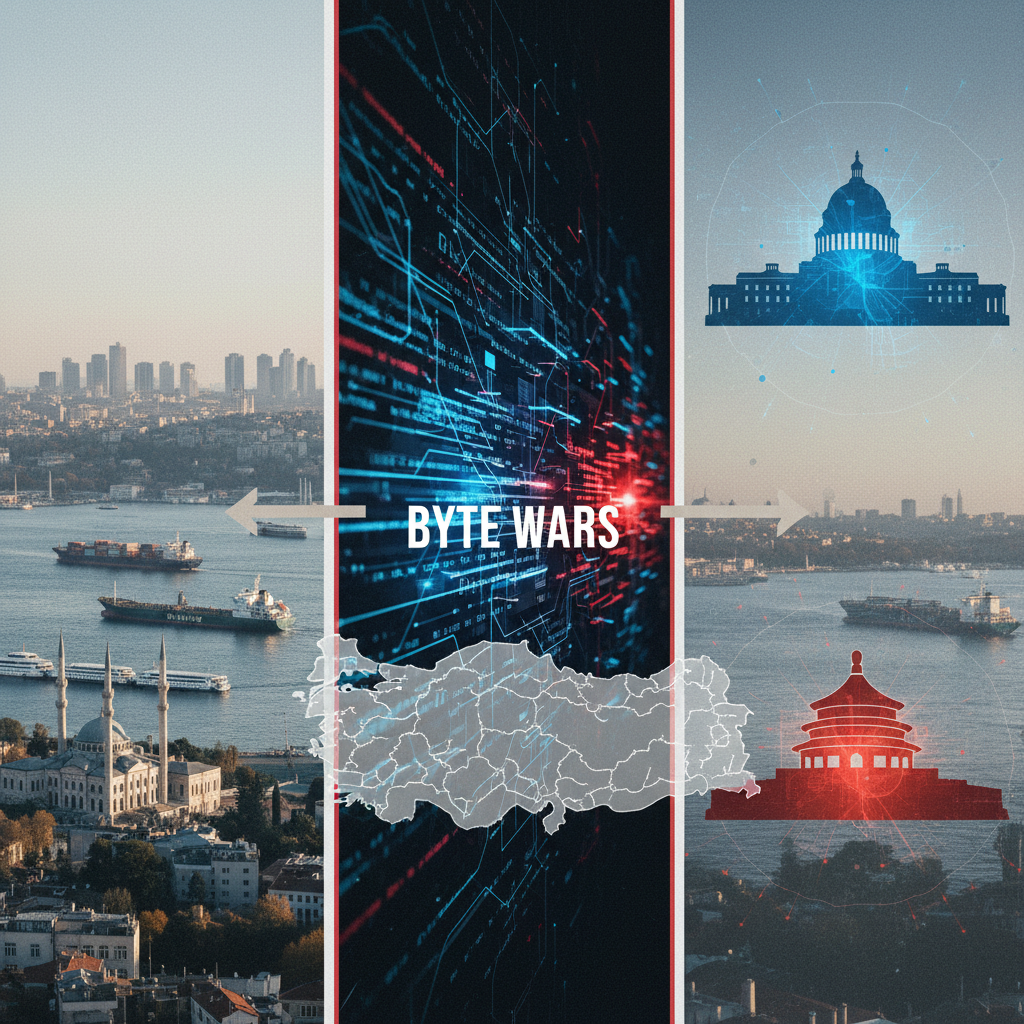
The global stage is set for a dramatic technological showdown, with artificial intelligence at its very core. It is no longer just about who builds the fastest chip or the smartest algorithm, but who controls the data, the infrastructure, and ultimately, the narrative of the future. The United States, with its Silicon Valley giants like OpenAI and Google, and China, with its rapidly advancing tech ecosystems led by Baidu and Tencent, are locked in an intense competition. This rivalry is not confined to boardrooms and research labs; it spills over into trade policies, export controls, and even academic collaborations, creating a complex web of challenges for nations like Turkey.
For Turkey, a country with a young, dynamic population and a burgeoning tech sector, this geopolitical tension presents both immense opportunities and significant risks. We are not merely observers in this global chess game; we are players, albeit ones navigating a delicate balance. Our engineers and researchers are eager to contribute, to innovate, and to carve out Turkey's place in the AI future. But the path is fraught with strategic decisions.
Consider the semiconductor industry, the very foundation of advanced AI. The US has been increasingly stringent with its export controls, particularly targeting China's access to high-end chips and chipmaking equipment. This strategy aims to slow China's AI progress, but it also creates ripples across the global supply chain. For Turkish startups relying on cutting-edge hardware, these restrictions can complicate procurement and raise costs. "The global semiconductor supply chain is incredibly fragile and highly politicized," Dr. Şahin explained, sipping her tea. "Any disruption, whether from trade wars or natural disasters, can have a magnified impact on developing tech hubs, forcing them to seek alternative solutions or develop indigenous capabilities. This is a significant challenge for our hardware-dependent AI initiatives."
On the other hand, Chinese tech companies often offer more accessible and sometimes more affordable solutions, particularly in areas like surveillance technology and smart city infrastructure. This creates a tempting proposition for developing nations looking to rapidly modernize. However, adopting such systems can come with its own set of concerns, including data privacy and potential geopolitical entanglements. It is a tightrope walk for policymakers and entrepreneurs alike.
I recently visited a startup in İzmir, a vibrant coastal city, that is developing AI solutions for precision agriculture. The founder, Ayşe Demir, a young woman with an infectious enthusiasm for technology, showed me how their AI models analyze satellite imagery and soil data to optimize crop yields. She told me her story over Turkish tea, explaining that they initially considered using a specific type of GPU server manufactured by a Chinese company due to its cost-effectiveness. However, after discussions with their legal team and potential investors, they opted for a more expensive, US-made alternative to mitigate future risks associated with export restrictions or potential blacklisting. "We have to think long-term, beyond just the immediate cost," Ayşe told me, her eyes bright with determination. "Our intellectual property, our data, and our ability to export our solutions globally depend on navigating these waters carefully."
This sentiment is echoed across the Turkish tech landscape. The drive for digital sovereignty is growing stronger. The Turkish government, through initiatives like the National Artificial Intelligence Strategy, aims to foster local talent and develop indigenous AI capabilities. The Scientific and Technological Research Council of Turkey (tübi̇tak) is investing in AI research centers and providing grants for startups focused on critical areas like natural language processing for Turkish, computer vision, and cybersecurity. The goal is to reduce reliance on foreign technologies and build a resilient, self-sufficient AI ecosystem.
However, true self-sufficiency in AI is a monumental task, even for economic superpowers. The sheer scale of investment required for foundational models, advanced chip manufacturing, and vast data infrastructure is staggering. OpenAI, for instance, reportedly sought to raise billions of dollars for its next generation of models, a figure that dwarfs the annual R&D budgets of many nations. This highlights the asymmetry of the AI race. "We cannot simply replicate Silicon Valley or Shenzhen," remarked Professor Cemil Yılmaz, an expert in international relations at Ankara University. "Our strategy must be about smart specialization, identifying niches where Turkey can excel, and building strong international partnerships that align with our national interests and values." This perspective is crucial, as blindly chasing every AI trend risks dissipating limited resources.
The EU's approach to AI regulation, particularly with the EU AI Act, also plays a significant role. As a candidate country for EU membership and a major trading partner, Turkey often aligns its regulatory frameworks with European standards. The EU's emphasis on ethical AI, transparency, and human oversight provides a potential third path, distinct from the more laissez-faire approach of the US and the state-centric model of China. This could allow Turkey to position itself as a hub for responsible AI development, attracting companies and talent that prioritize ethical considerations.
The competition extends beyond hardware and algorithms to the very talent pool itself. The global demand for AI engineers, data scientists, and machine learning researchers is insatiable. Both US and Chinese tech giants are actively recruiting top talent from around the world, often offering salaries and benefits that are difficult for local companies to match. This brain drain is a constant concern for Turkey, which invests heavily in educating its youth in Stem fields. Universities like Middle East Technical University (ODTÜ) and Istanbul Technical University (İTÜ) are producing world-class graduates, but retaining them in the face of global competition requires concerted effort.
Yet, there is a unique strength in Turkey's position. Our cultural heritage, our historical role as a bridge between East and West, imbues our approach to technology with a distinct perspective. We understand the nuances of diverse markets and the importance of human-centric design. This cultural intelligence can be a significant differentiator in developing AI solutions that resonate globally. At the crossroads of innovation, Turkey has the potential to offer a unique blend of technological prowess and cultural sensitivity.
As the AI technology cold war intensifies, Turkey's journey will be one of strategic navigation. It will require astute diplomacy, sustained investment in education and research, and a clear vision for how AI can serve the nation's people and economy. The future of AI is not just about technological might; it is about sovereignty, ethics, and the human spirit's enduring quest for progress. And from the shores of the Bosphorus, we watch, we learn, and we build. For more insights into the broader impact of AI on global economies, you might find this Bloomberg Technology section insightful.