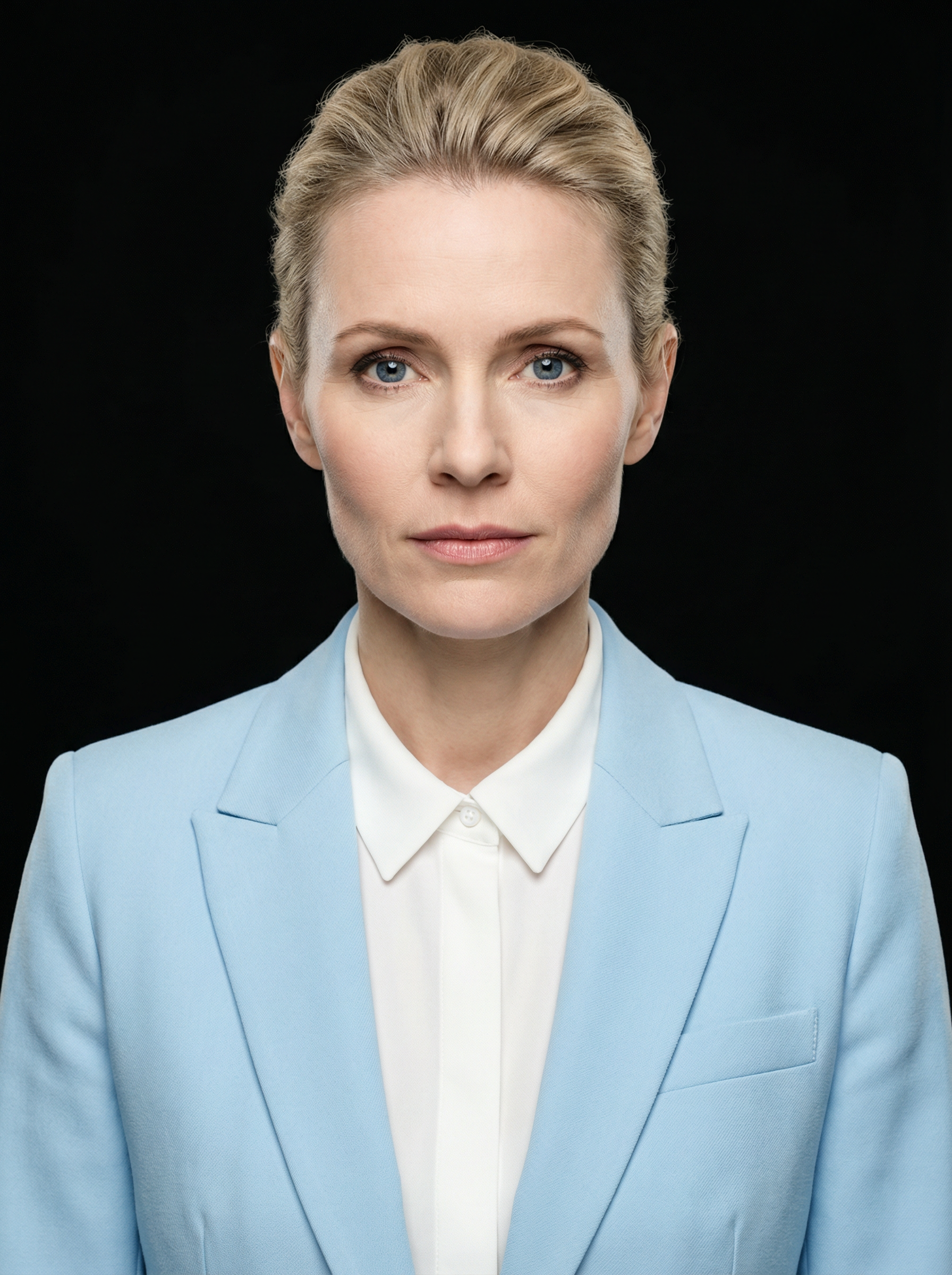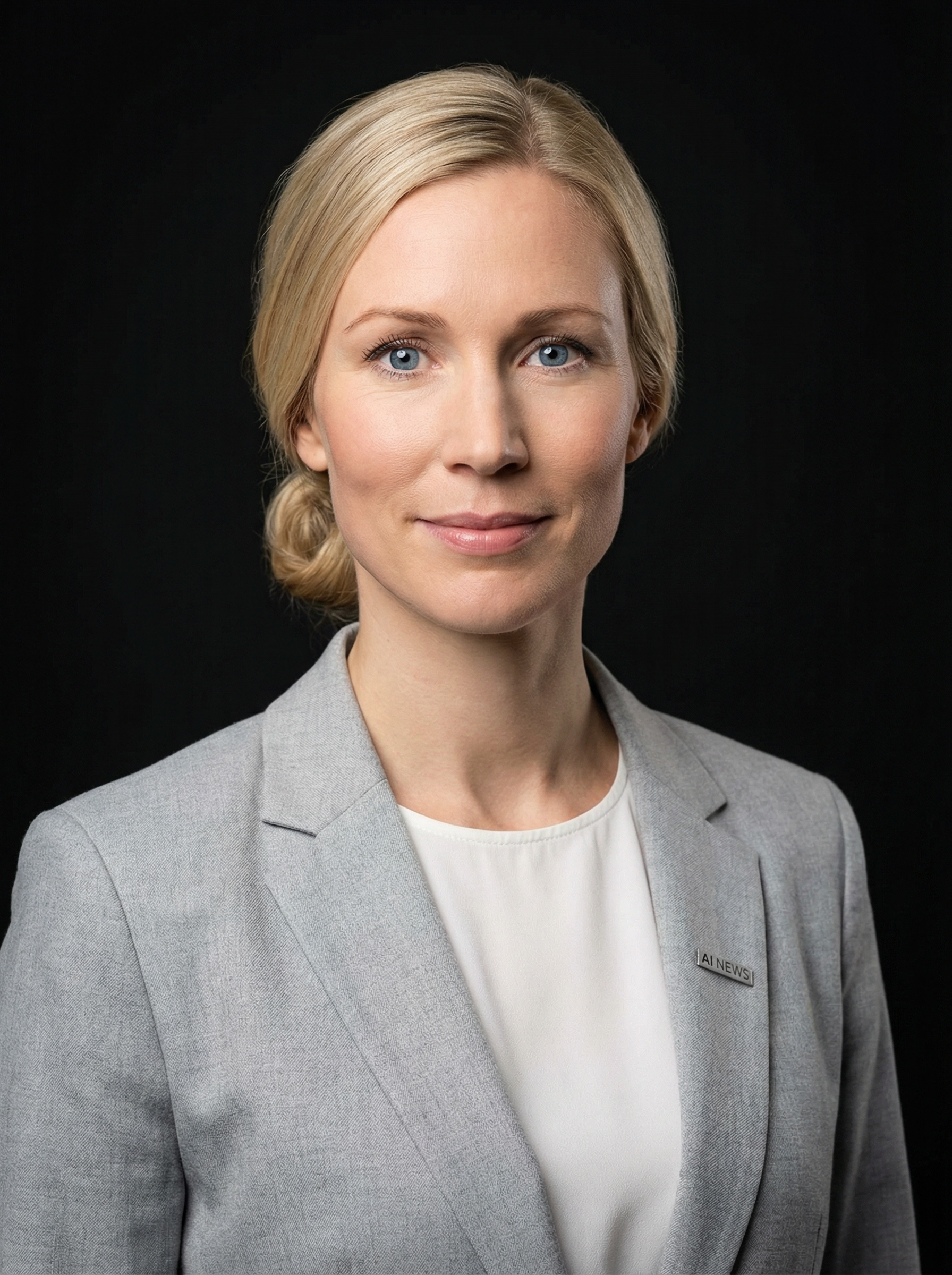

The Belgrade sun can be unforgiving in August, but the heat inside the old Mathematical Gymnasium was always different. It was the heat of young minds, burning with equations and algorithms, dreaming of problems far beyond the city limits. That's where Marija Jović, the founder and CEO of Aurora Fusion Dynamics, spent her formative years. Not in some flashy startup incubator in San Francisco, but in a place where intellectual rigor was currency, and a good proof was more celebrated than a big funding round. This is not a tale of overnight success, but of relentless dedication, a characteristic I’ve seen time and again in the Balkan tech scene. Let's talk about what's actually working in the world of deep tech, far from the usual hype cycles.
Marija's journey into the esoteric world of nuclear fusion began not with a grand vision of unlimited energy, but with a fascination for complex systems. Growing up in Belgrade, she excelled in mathematics and physics, often representing Serbia in international Olympiads. "The beauty of physics, for me, was always in its predictive power," she once told a local newspaper. "Understanding the underlying rules of the universe, that was the ultimate puzzle." This foundational understanding, honed in a demanding educational environment, would become the bedrock of her future endeavors.
After graduating from the University of Belgrade with a degree in theoretical physics, Marija pursued her doctoral studies at a prestigious European institution, focusing on plasma physics. It was here, amidst the hum of experimental reactors and the dense thicket of scientific papers, that she first saw the potential for artificial intelligence to revolutionize fusion research. Traditional methods for controlling plasma, the superheated state of matter required for fusion, were often trial and error, slow and inefficient. The sheer volume of data generated by modern tokamaks, experimental fusion reactors, was overwhelming for human analysis.
Her early career involved stints at several prominent research labs, including a period at the Joint European Torus, or JET, in the UK, one of the world's leading fusion experiments. It was during these years that she met Dr. Alistair Finch, a brilliant computer scientist with a background in machine learning and complex adaptive systems. Alistair, originally from Scotland, shared Marija's frustration with the slow pace of fusion development and her conviction that AI could be the accelerant. Their collaboration began informally, late nights spent discussing algorithms and plasma instabilities over lukewarm coffee. They were two minds from different worlds, united by a singular, audacious goal.
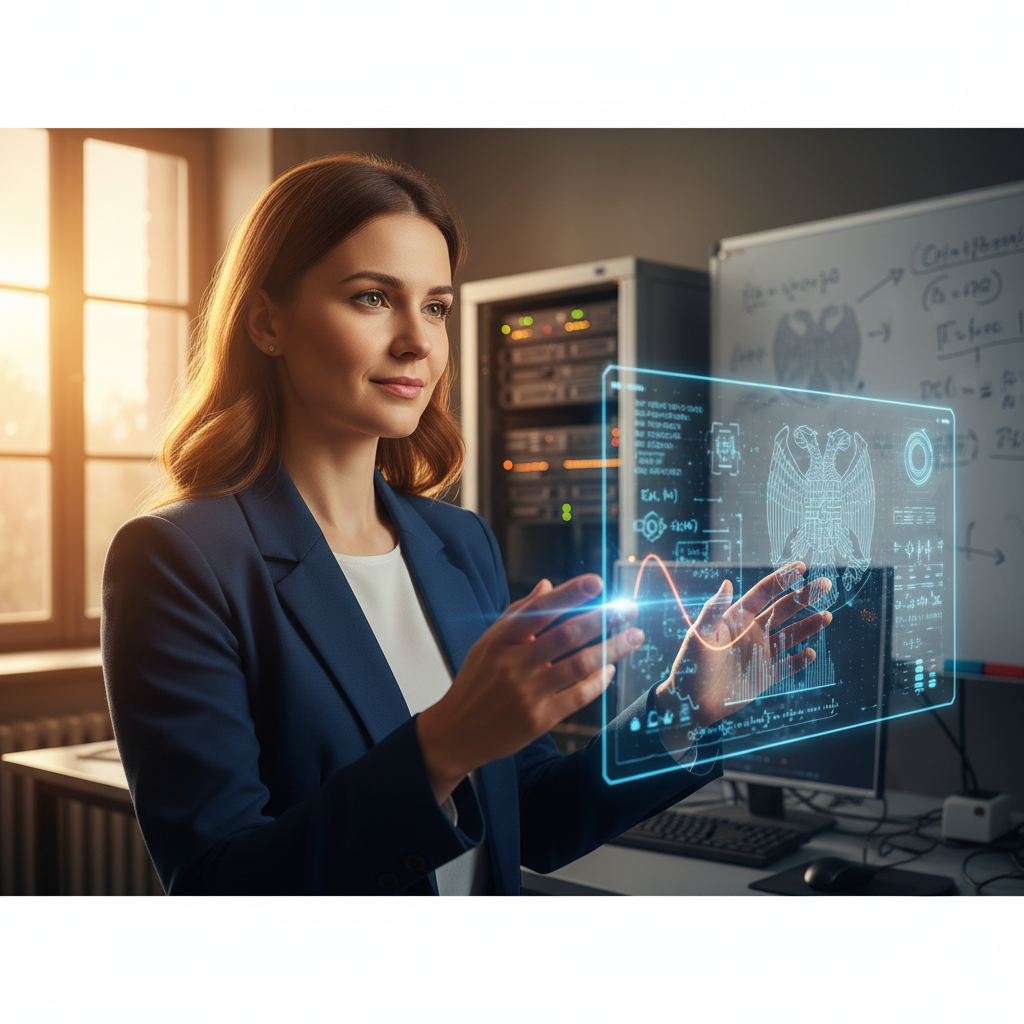
Their breakthrough came not in a laboratory, but in a series of simulations. Marija had developed novel theoretical models for plasma behavior, while Alistair applied cutting-edge deep reinforcement learning techniques to predict and mitigate instabilities. They found that their AI models could not only process data orders of magnitude faster than human researchers, but also identify subtle patterns that indicated impending plasma disruptions, allowing for real-time adjustments. This was the genesis of Aurora Fusion Dynamics. They weren't just analyzing data; they were learning to control the plasma, a critical step towards sustained fusion.
Founding Aurora Fusion Dynamics in 2022 was not easy. Funding for deep tech, especially something as long-term and capital-intensive as fusion, is always a challenge. "We started with almost nothing, just our ideas and a few powerful servers," Marija recalled in an interview with TechCrunch. "It felt like trying to start a car with no fuel, but the vision was too important to give up." Their initial seed funding came from a mix of European venture capital firms specializing in climate tech and a few angel investors who believed in their audacious mission. The Balkans have a different relationship with technology, often valuing tangible impact over quick returns, and this ethos resonated with Marija.
Building the company required more than just scientific brilliance; it demanded leadership. Marija, initially reserved, grew into the role, assembling a diverse team of physicists, engineers, and AI specialists from across Europe. She fostered a culture of open inquiry and relentless problem-solving. "Marija has this incredible ability to simplify complex problems and inspire confidence," said Dr. Elena Petrova, Aurora's lead AI architect, a Bulgarian national who joined the team in 2023. "She makes you believe that fusion is not just possible, but inevitable." The company has since grown to over 50 employees, with offices in both London and a research outpost near a major fusion facility in Germany.
Aurora Fusion Dynamics has attracted significant attention. In late 2024, they announced a Series A funding round of $30 million, led by Breakthrough Energy Ventures, a fund backed by Bill Gates and other prominent investors. This capital injection allowed them to scale their AI platforms and partner with several international fusion projects, including Iter, the massive international experimental reactor under construction in France. Their AI models are now being integrated into control systems, promising to optimize plasma confinement and improve reactor efficiency, potentially shaving years off the timeline for commercial fusion power.
Today, Marija Jović is recognized as a leading figure in the fusion energy landscape. She frequently speaks at international conferences, advocating for greater investment in fusion and emphasizing the crucial role of AI. Her company is not just a startup; it's a beacon of hope for a cleaner energy future. "We are not just building algorithms; we are building a path to a world powered by clean, abundant energy," Marija stated at a recent climate summit, her voice calm but firm. "The challenges are immense, but the potential rewards are even greater." She maintains strong ties to Serbia, often collaborating with universities in Belgrade and Novi Sad, hoping to inspire the next generation of scientists.
What drives her now is the realization that the world is running out of time to address climate change. Fusion, once a distant dream, is now within grasp, and AI is the key to unlocking its potential. Aurora Fusion Dynamics is exploring even more advanced AI techniques, including quantum machine learning, to tackle the most intractable problems in plasma physics. The goal is to move beyond mere optimization and towards truly autonomous, self-correcting fusion reactors. It's a long road, certainly, but if anyone can navigate it, it's someone forged in the intellectual fires of Belgrade, bringing Serbian directness and Balkan resilience to a global challenge.
Her story is a reminder that innovation isn't confined to the usual tech hubs. Sometimes, the most profound solutions emerge from unexpected places, driven by quiet determination and a deep-seated belief in the power of science. As the world grapples with its energy future, Marija Jović and Aurora Fusion Dynamics are proving that the sun's power might just be within our reach, thanks to a little help from artificial intelligence, and a lot of human ingenuity. For more on the role of AI in scientific discovery, you can check out resources like MIT Technology Review. The path to fusion is complex, but with leaders like Marija, the future looks a little brighter.