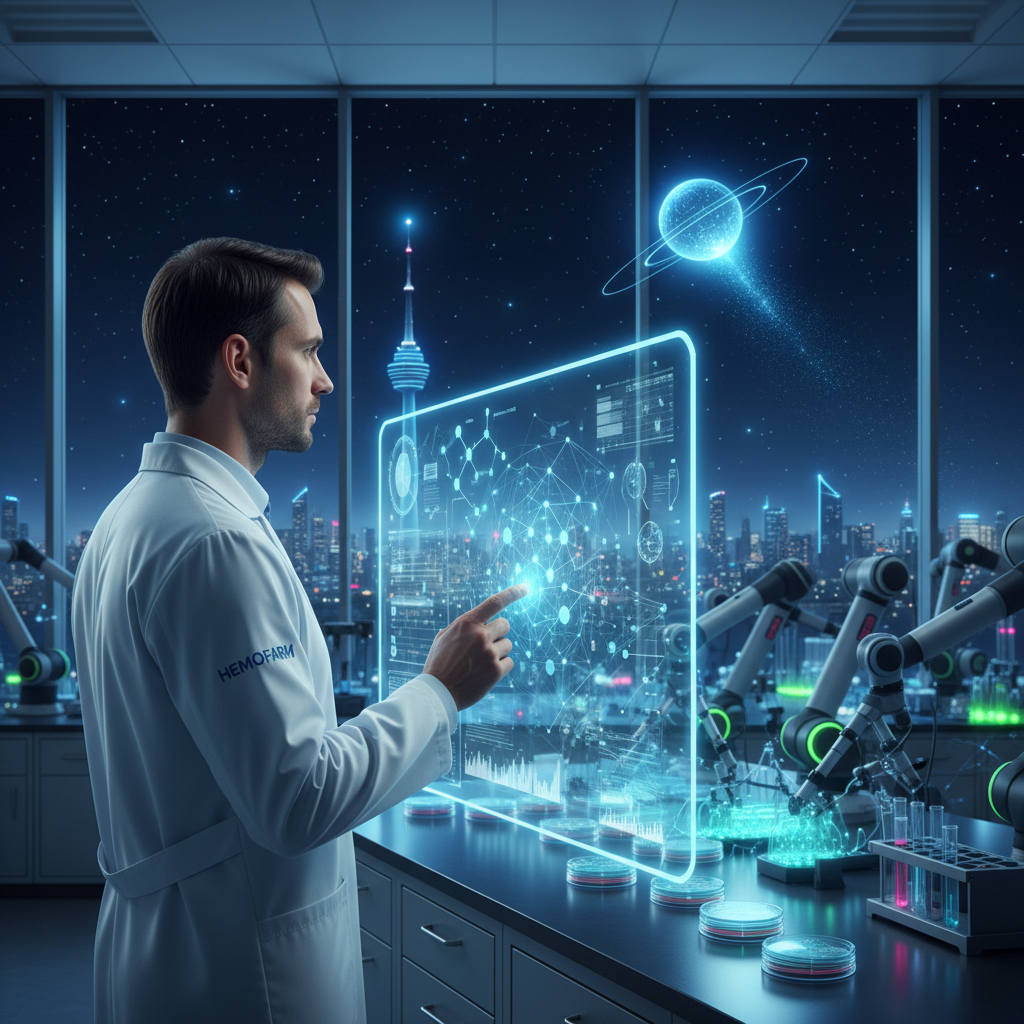

The pharmaceutical industry, bless its heart, has always moved at a glacial pace. Developing a new drug, from initial research to market, traditionally takes over a decade and costs billions of dollars. This is not news to anyone, especially not to those of us who have watched medical advancements unfold slowly, sometimes too slowly, in our own backyard. But now, the whispers are getting louder, turning into shouts: AI is here to change all that, promising to cut the R&D timeline from years to months. As a journalist from Serbia, I always look for the practical implications, the real impact beyond the glossy press releases. Let's talk about what's actually working.
For years, the process has been a grueling marathon of trial and error. Scientists synthesize compounds, test them in labs, run clinical trials, and then hope for the best. The failure rate is astronomical, often exceeding 90 percent for drugs entering clinical trials. This inefficiency is not just an academic problem, it translates to higher healthcare costs and slower access to life-saving medicines. This is where AI, specifically machine learning and deep learning, steps in, not as a magic wand, but as a powerful new tool.
Companies like Google DeepMind, with its groundbreaking AlphaFold, have already demonstrated AI's potential in predicting protein structures with unprecedented accuracy. This is not a small feat; understanding protein structures is fundamental to designing drugs that can interact with specific targets in the body. AlphaFold's impact on structural biology is immense, and its latest iteration, AlphaFold 3, is reportedly even more powerful, capable of predicting interactions between proteins, DNA, RNA, and small molecules. This kind of predictive power significantly narrows down the vast chemical space that researchers traditionally had to explore manually. According to MIT Technology Review, such advancements are fundamentally reshaping early-stage drug discovery.
But it is not just about protein folding. AI is being deployed across the entire drug discovery pipeline. From identifying novel drug targets by analyzing vast genomic and proteomic datasets, to designing new molecular compounds with desired properties, and even predicting toxicity and efficacy before costly lab experiments begin. NVIDIA, for instance, has been heavily investing in AI for drug discovery, offering platforms and computing power that accelerate these complex simulations. Their BioNeMo framework provides pre-trained models for various tasks, allowing researchers to leverage state-of-the-art AI without building everything from scratch. Jensen Huang, NVIDIA's CEO, has often emphasized the transformative potential of accelerated computing in life sciences, stating that “the convergence of AI and biology is creating a new era of discovery.”
Take, for example, the work being done by companies like Insilico Medicine. This Hong Kong based company, which has strong ties to Eastern European scientific talent, used its AI platform, Pharma.AI, to identify a novel target for idiopathic pulmonary fibrosis, design a new molecule, and take it to clinical trials in a remarkably short timeframe. In 2022, they announced their lead candidate, INS018_055, had entered Phase I clinical trials, a process that typically takes years just to get to that stage. This specific molecule was discovered and designed by AI, showcasing a significant acceleration. This is not just theoretical, it is happening now.
What does this mean for Serbia, a country with a significant pharmaceutical manufacturing presence, including companies like Hemofarm and Galenika? The Balkans have a different relationship with technology, often adopting proven solutions rather than chasing every new fad. While we might not be at the forefront of AI drug discovery research, the implications for our pharmaceutical sector are profound. Hemofarm, part of the German Stada Group, is a major player in generic drug production and also invests in R&D. If AI can streamline the process of identifying viable drug candidates and accelerating their development, it could significantly impact their future strategies, potentially allowing them to bring new, innovative treatments to market faster, or at least to adapt to a rapidly changing global landscape.
I spoke with Dr. Jelena Petrović, a computational chemist at the University of Belgrade's Faculty of Chemistry. She noted, “The data is compelling. We are seeing AI models predict molecular interactions with an accuracy that was unimaginable five years ago. This doesn't replace human scientists, but it empowers them to focus on the most promising avenues, reducing the sheer volume of dead ends.” Her perspective aligns with the broader sentiment: AI is an augmentation, a force multiplier for human ingenuity. The Faculty of Chemistry, along with the Institute of Molecular Genetics and Genetic Engineering, are actively exploring how these new AI tools can be integrated into their research programs, looking for ways to bridge the gap between fundamental science and practical application.
The global investment in this space is staggering. According to a report by Grand View Research, the global AI in drug discovery market size was valued at over $1 billion in 2023 and is projected to grow significantly in the coming years. Major pharmaceutical companies are not sitting idly by; they are forming partnerships with AI biotech firms. For instance, AstraZeneca has collaborated with BenevolentAI, and Pfizer has partnered with Insilico Medicine. These collaborations are not just about prestige, they are about accessing cutting-edge AI capabilities that can give them a competitive edge in a highly competitive market. Reuters regularly reports on these strategic alliances, highlighting the pharmaceutical industry's urgent push towards AI adoption.
However, it is not all smooth sailing. The challenges are real. Data quality and availability remain critical bottlenecks. AI models are only as good as the data they are trained on, and high-quality, diverse biological and chemical data is not always easy to come by. Furthermore, the regulatory landscape for AI-discovered drugs is still evolving. Agencies like the FDA and EMA are grappling with how to assess and approve drugs developed with significant AI input, ensuring safety and efficacy without stifling innovation. This is a complex dance between technological advancement and patient protection.
Despite these hurdles, the momentum is undeniable. The promise of reducing the time and cost associated with drug discovery is too significant to ignore. For a country like Serbia, which has a strong tradition in science and engineering, particularly in mathematics and computer science, this presents both a challenge and an opportunity. Our universities are producing talented graduates who could contribute to this field, either by joining global players or by fostering local innovation. Belgrade's tech scene is real, not hype, and its engineers and data scientists are increasingly sought after globally. We have the intellectual capital, and with strategic investment and collaboration, we could see Serbian talent playing a more prominent role in this global transformation.
The days of purely manual, labor-intensive drug discovery are numbered. AI is not just optimizing existing processes; it is fundamentally reimagining them. The shift from years to months is not a certainty for every drug, but the direction is clear. For patients waiting for new treatments, for healthcare systems struggling with costs, and for pharmaceutical companies looking for efficiency, this is perhaps the most exciting development in medicine in decades. The question for us in Serbia, and indeed for everyone, is how we adapt and contribute to this new reality, ensuring that these powerful tools serve humanity's best interests. The data tells us the revolution is already underway, and it is time to pay close attention.