Alright, let's talk about news. Not the stuff you see scrolling on your phone from some faceless wire service, but the real, gritty, local news that tells you about the new diner opening on Main Street or the high school football team's championship run. For years, we've heard the death knell for local journalism, a slow, painful fade as ad revenues dried up and newsrooms shrank. But I'm telling you, from where I'm sitting here in the USA, something new is brewing, and it's got AI written all over it.
See, most folks think of AI in journalism as some fancy tool for the big guys, churning out financial reports or sports recaps for Reuters or The Associated Press. And sure, that's happening. Automated reporting has been a quiet force for a while, taking structured data and spitting out coherent narratives faster than any human ever could. But that's just the tip of the iceberg, a little ripple in what's about to become a tidal wave, especially for the communities that need it most.
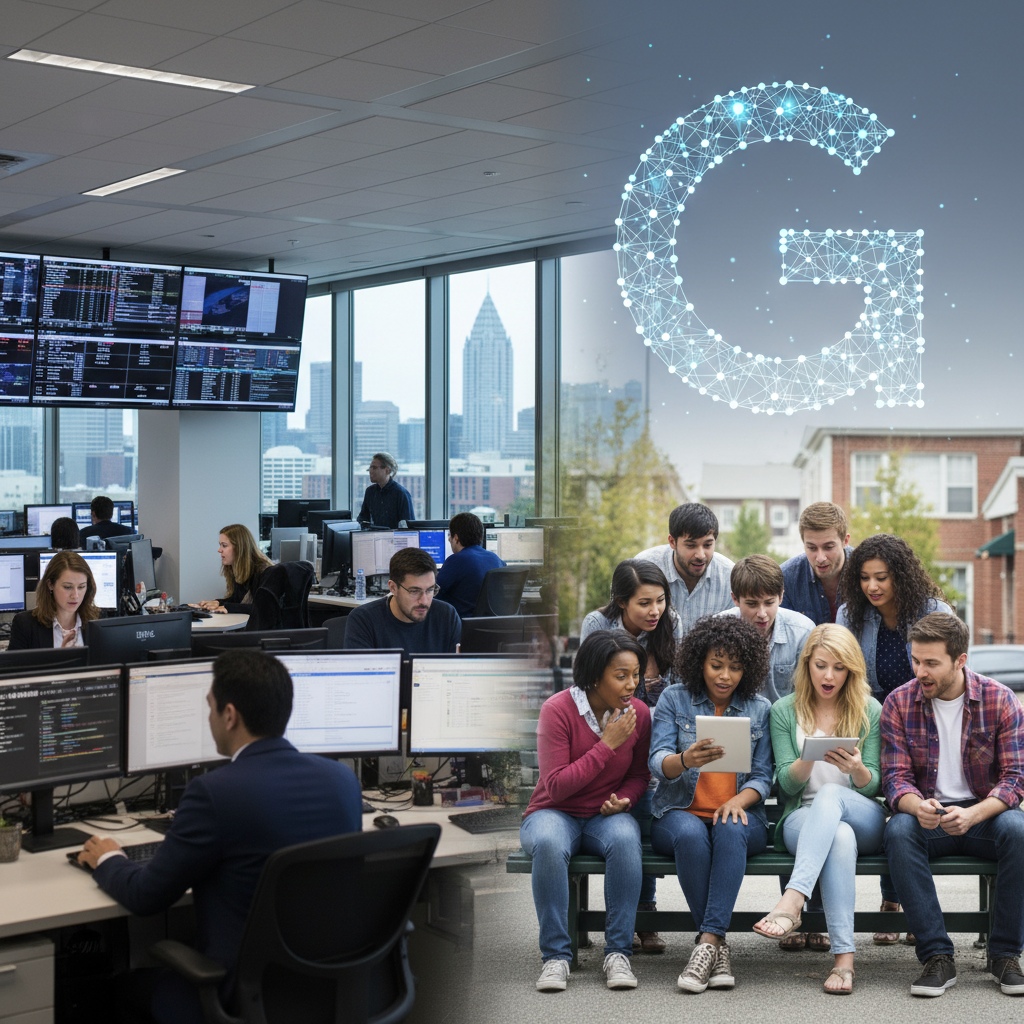
My take? The future of AI is being built in places you'd never expect. Forget the Valley, look at Atlanta, Detroit, Houston. These are the cities, the communities, where the real transformation is taking root, not just in tech, but in how we inform ourselves. And Google, with its deep pockets and even deeper AI research labs, is quietly making moves that could either save or completely redefine local news as we know it.
Just last month, Google announced a new initiative, reportedly pouring tens of millions into partnerships with regional news organizations across the US. This isn't just about giving them access to Gemini, Google's powerful large language model, for generating quick summaries or social media posts. It's about developing bespoke tools, tailored for the unique challenges of local newsrooms. Imagine a small paper in, say, Birmingham, Alabama, with a staff of five, suddenly having an AI assistant that can sift through public records, identify trends in city council meetings, or even draft initial reports on crime statistics. That's not replacing journalists, that's supercharging them.
I had a chat recently with Maria Rodriguez, editor-in-chief of a community newspaper in South Florida. She told me, and I quote, "For years, we've been stretched thin, trying to cover everything with limited resources. If AI can help us automate the mundane tasks, like transcribing interviews or cross-referencing public statements, it frees up our reporters to do what they do best: investigate, build relationships, and tell the human stories that truly matter to our readers." Her optimism, honestly, was infectious. She sees it not as a threat, but as a lifeline.
This is the real AI revolution. It's not just about creating content, it's about amplifying human potential. Think about fact-checking, a critical but often laborious part of journalism. AI models, trained on vast datasets, can quickly verify claims, cross-reference sources, and flag potential misinformation. Organizations like the International Fact-Checking Network, a global alliance of fact-checkers, are already exploring how AI tools can enhance their work, making the process faster and more scalable. This is especially vital in an age where disinformation spreads like wildfire on social media.
But let's be real, it's not all sunshine and rainbows. There are legitimate concerns. The specter of AI-generated content flooding the zone, indistinguishable from human-written articles, is a real one. The potential for bias, inherited from the training data, to seep into reporting is another. And of course, the big one: job displacement. While many argue AI will augment rather than replace, the economic realities for some newsroom roles are undeniable.
However, the conversation needs to shift. Instead of fearing the robot takeover, we should be asking how we can ethically and effectively integrate these tools to strengthen journalism. How can we ensure transparency, so readers know when AI has been used? How do we train the next generation of journalists to be proficient in prompt engineering and AI-assisted research? These are the questions that keep me up at night, but also the ones that fill me with a strange kind of hope.
Consider the rise of AI-powered personalized news feeds. While often criticized for creating echo chambers, imagine a local news app that, with AI's help, can tailor its delivery to your specific interests within your community. Want to know about school board meetings and local sports? It prioritizes that. Care more about zoning laws and environmental initiatives? It learns. This level of hyper-local, personalized engagement could re-ignite civic participation and make local news indispensable again.
Companies like OpenAI and Anthropic are also in the mix, of course, with their powerful models like GPT-4 and Claude 3. Their APIs are being leveraged by smaller media tech startups to build specialized tools, from automated headline generation to sentiment analysis of public comments. It's a Wild West out there, but a fascinating one. According to a recent report by MIT Technology Review, investment in AI tools for media companies has surged by over 40% in the last year alone, signaling a clear industry shift.
What this means for the average American, for the folks in places like Charleston, South Carolina, or Boise, Idaho, is a potential renaissance for their local paper, their local news station. It means more stories, more depth, and more accountability from their local leaders. It means a better-informed citizenry, which, let's be honest, is something we desperately need right now.
We're not just talking about incremental improvements here. We're talking about a fundamental reshaping of the news ecosystem. The old models are broken, but AI offers a chance to build something stronger, more resilient, and more relevant. It's not about the machines doing all the work; it's about the machines empowering the humans to do better work. And that, my friends, is a future I can get behind. The transformation of journalism, fueled by AI, is not just some tech fantasy. It's happening right now, in our own backyards, and it's going to change everything.