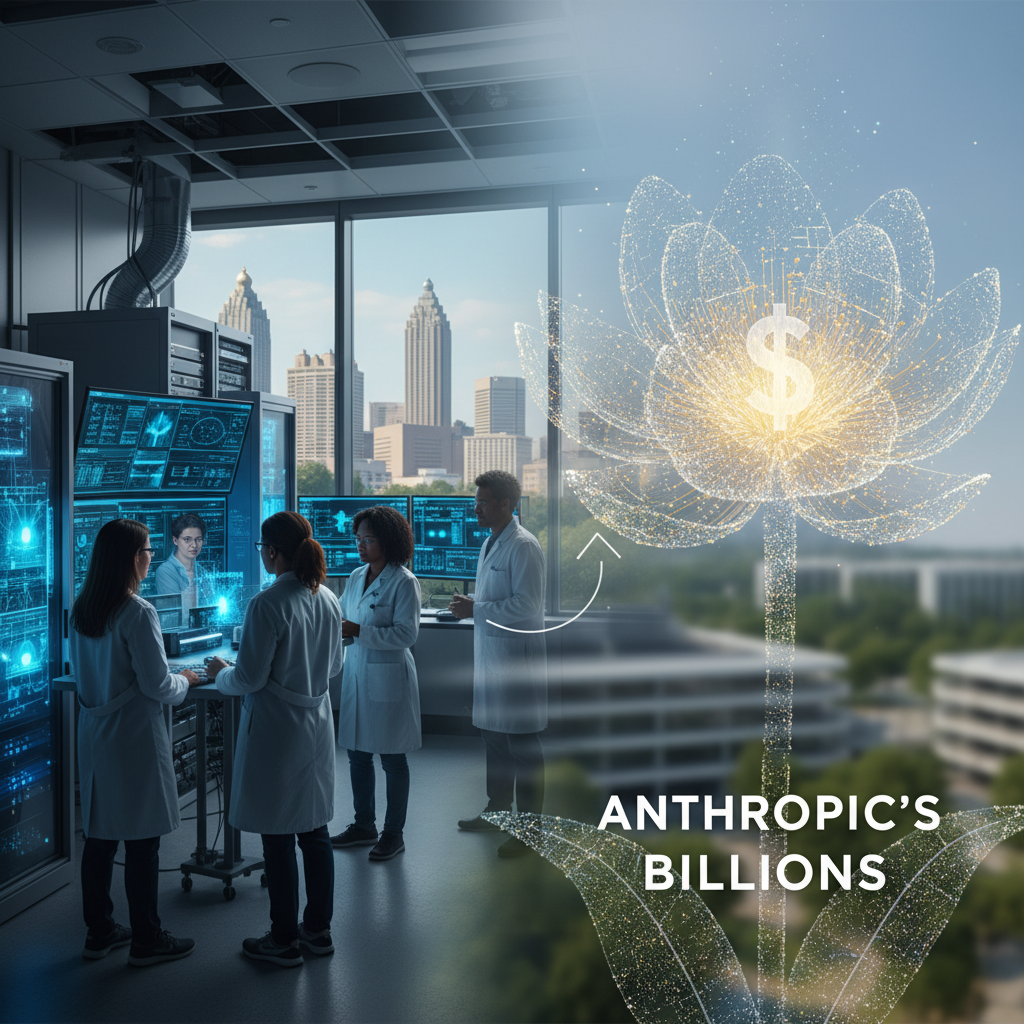
Let's be real, folks. When you hear about billions flowing into AI, your mind probably jumps straight to Silicon Valley, right? You picture the glass towers, the venture capital buzz, the whole scene. But I'm telling you, that's not the whole story, not by a long shot. The future of AI is being built in places you'd never expect, and Anthropic's recent funding bonanza, topping out at over $7 billion from heavy hitters like Amazon and Google, isn't just about a bigger war chest for AGI. It's about a philosophical battle for the soul of AI, and whether that soul will actually reflect all of us.
We're talking about Anthropic, the company founded by former OpenAI researchers who broke away, largely over concerns about AI safety and ethics. They've been on a tear, raking in cash faster than a Georgia thunderstorm rolls in. This isn't just a few million here and there; it's a colossal investment in a vision of AI that prioritizes safety and alignment above all else. They're building Claude, their flagship large language model, with a focus on what they call 'Constitutional AI,' essentially baking ethical principles right into the system's core. It's a noble goal, and frankly, a necessary one.
But here's where my Jamàl Washingtoneè antenna starts twitching. All that money, all that focus on safety, all that talk about AGI, it's still largely coming from the same well-trodden paths, the same intellectual circles. And while Anthropic has made strides in being more transparent and thoughtful, the question remains: whose safety are we really building for? Whose values are being encoded into these foundational models that will shape our world for decades to come?
I've been talking to folks in places like Atlanta, Detroit, and Houston, cities that are quietly becoming innovation hubs, not just for AI applications, but for thinking differently about technology itself. These are communities that have historically been on the receiving end of technological disruption, often without a seat at the design table. They know what it means for technology to be biased, to be exclusionary, to amplify existing inequalities. And they're not waiting for Silicon Valley to fix it.
Take Dr. Nia Jenkins, for instance. She's a professor of AI ethics at Georgia Tech, but more importantly, she runs a community tech lab in West Atlanta.