The hum of servers used to be the soundtrack of innovation, but these days, it's the quiet click of a keyboard, crafting policy and code, that's truly shaping our digital future. I’m talking about the kind of future where your data isn't just a commodity, but a protected asset, especially when it dances with artificial intelligence. And if you think that future is being built solely in Silicon Valley, you haven't been paying attention to what's brewing in places like Atlanta, Georgia.
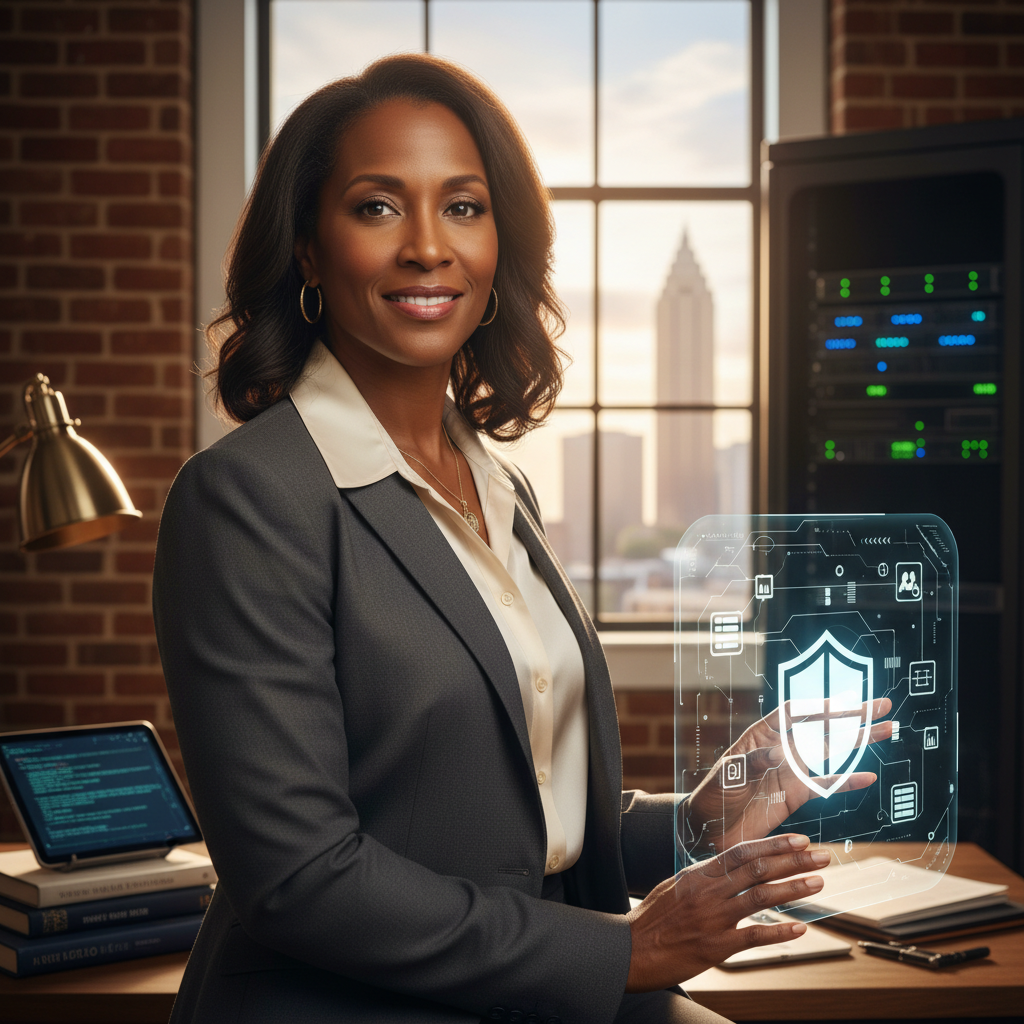
That's where you'll find Dr. Lisa A. S. Miller, a force of nature who’s been navigating the treacherous waters of data privacy long before most folks even knew what a data breach was. She’s not just talking about privacy, she’s building the scaffolding for the AI trust economy, one regulation, one policy, one company at a time. Her company, The Privacy Professor, isn't some flashy startup with a billion-dollar valuation, but it's arguably more vital than many of them. It's the quiet infrastructure, the ethical backbone, that allows the rest of the AI world to even function, especially as global regulations like GDPR and Ccpa tighten their grip.
I first met Dr. Miller at a tech summit in Midtown Atlanta, a place buzzing with innovation that often gets overlooked by the usual suspects in tech journalism. She wasn't on the main stage, dazzling with AI demos. She was in a breakout session, patiently explaining the nuances of data minimization in large language models to a room full of skeptical executives. Her passion was palpable, her knowledge encyclopedic. She spoke with a calm authority, but beneath it, you could feel the fire of someone who genuinely believes in protecting people's digital lives. It was clear then that this is the real AI revolution, happening in the trenches of compliance and ethics.
Dr. Miller’s journey into the labyrinth of data privacy wasn't a straight shot. Growing up in the Midwest, she developed an early fascination with systems and how things work, a curiosity that would later serve her well in dissecting complex legal frameworks and technological architectures. She earned her undergraduate degree in Computer Science, which was a pretty forward-thinking move for a woman at the time, and then dove headfirst into the world of information technology. This wasn't just about coding for her, it was about understanding the flow of information, the vulnerabilities, and the immense power it held.
Her career path saw her working in various corporate roles, witnessing firsthand the growing pains of the digital age. She saw companies grappling with data, often without a clear understanding of its implications. This was before the widespread adoption of the internet, before the term 'big data' was even coined. It was during this period that she recognized a gaping hole: the lack of expertise in bridging the technical aspects of data with the legal and ethical responsibilities. She went on to earn her Ph.D. in computer science, focusing on information security, solidifying her expertise at the intersection of technology and trust.
The genesis of The Privacy Professor wasn't some sudden eureka moment, but a gradual realization of a critical need. After years in corporate America, she saw companies struggling to comply with emerging privacy laws, even nascent ones. They needed guidance, not just from lawyers who understood the law, but from technologists who understood how data actually moved through systems. So, in 2004, she founded The Privacy Professor, a consulting firm dedicated to helping organizations build robust privacy and security programs. This was long before GDPR became a household acronym, long before Ccpa started shaking up California. She was a pioneer, a lone voice in a wilderness of blissful ignorance.
Her approach is unique. She doesn't just hand over a checklist of regulations. She embeds herself, often literally, within an organization, understanding their data flows, their technologies, and their corporate culture. She’s a teacher, a strategist, and a hands-on problem solver. Her firm helps companies navigate the intricacies of data governance, security incident response, and privacy program management, especially as AI systems ingest and process vast amounts of personal information. This is where her computer science background truly shines, allowing her to speak the language of engineers and lawyers alike.
One of the biggest challenges, she often says, is getting companies to understand that privacy isn't just a compliance burden, but a competitive advantage. “In the age of AI, trust is the new currency,” Dr. Miller once told a panel at a cybersecurity conference. “Consumers are becoming increasingly aware of how their data is used. Companies that prioritize privacy will be the ones that win in the long run.” This isn't just rhetoric, it's a strategic imperative. We're seeing it play out with major tech players like Google and Meta investing heavily in privacy-enhancing technologies, not just because they have to, but because they know it builds user loyalty. You can read more about these trends in publications like TechCrunch and Wired.
Her work has become even more critical with the explosion of generative AI. These powerful models are trained on massive datasets, often scraped from the internet, raising profound questions about data provenance, consent, and intellectual property. Companies using AI now face an unprecedented challenge: how to leverage these transformative tools without inadvertently violating privacy laws or eroding public trust. Dr. Miller's firm is on the front lines, helping clients implement privacy-by-design principles into their AI development pipelines, ensuring that data protection is baked in from the start, not bolted on as an afterthought.
“The future of AI is being built in places you’d never expect,” she often reminds me. And she’s right. While the headlines might focus on the latest breakthroughs from OpenAI or Anthropic, the foundational work of making AI responsible and trustworthy is happening in countless boardrooms and data centers, guided by experts like Dr. Miller. Her team, a diverse group of privacy professionals, lawyers, and technologists, reflects the multifaceted nature of the challenge. They're not just based in Atlanta, but operate globally, advising clients on everything from the nuances of Brazil’s Lgpd to Canada’s Pipeda.
Funding for The Privacy Professor isn't about venture capital rounds or unicorn valuations. It's about sustainable growth, built on the trust and repeat business of clients who understand the indispensable value she provides. Her firm has grown steadily over the years, a testament to the enduring need for specialized privacy expertise. She’s not chasing headlines, she’s building a legacy of ethical technology.
What drives Dr. Miller? It’s a deep-seated belief that technology, when wielded responsibly, can be a force for good. She sees AI not as a threat to privacy, but as a tool that can be designed to respect it. Her vision is a world where innovation and individual rights coexist, where data empowers without exploiting. It’s a vision that requires meticulous attention to detail, a profound understanding of both code and law, and an unwavering commitment to ethical principles.
Looking ahead, Dr. Miller sees the regulatory landscape continuing to evolve, with new AI-specific laws emerging globally, like the EU AI Act. This will only increase the demand for her particular brand of expertise. She’s also keenly focused on educating the next generation of privacy professionals, recognizing that the challenge is too big for any single firm to tackle alone. She often speaks at universities and industry events, sharing her knowledge and inspiring others to join the fight for data dignity. For a deeper dive into the complexities of AI ethics and regulation, you might find articles on MIT Technology Review insightful.
Dr. Lisa A. S. Miller might not be a household name like some of the CEOs of the big AI labs, but her impact is just as significant, if not more so. She’s laying the groundwork for a future where AI can truly thrive, not just in terms of technological prowess, but in terms of public trust. And that, my friends, is a future worth investing in, a future being built from the ground up, right here in America’s heartland and beyond.