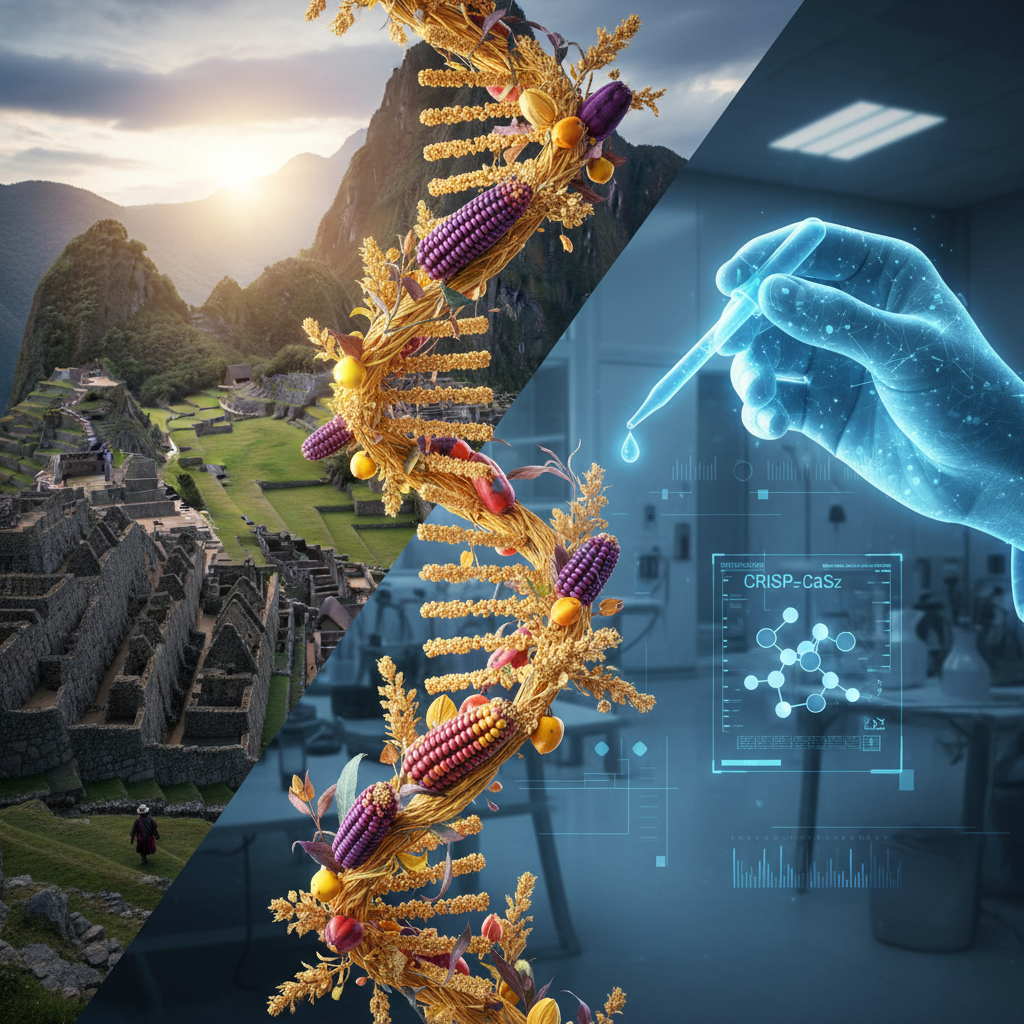
The air in the Sacred Valley, high in the Andes, always feels different. It carries the scent of rich earth, ancient stones, and the quiet resilience of people who have lived in harmony with nature for millennia. Here, farmers still practice techniques passed down through generations, carefully selecting seeds, understanding the subtle language of the soil, and ensuring the health of their crops. This deep, intuitive knowledge of genetics, long before the word existed, has sustained us. It is a story about ancient wisdom meeting modern AI, and it is unfolding right now in the most intimate of spaces: our own bodies.
What happened, or rather, what is happening, is a quiet revolution in medicine. For years, we have heard about Crispr, the revolutionary gene-editing tool that allows scientists to precisely cut and paste DNA sequences. It was a breakthrough, a Nobel Prize winner, and a beacon of hope for treating genetic diseases. But Crispr, for all its power, was still a bit like a skilled artisan working with a blunt tool. It needed more precision, more insight, and that is where artificial intelligence steps in. Machine learning algorithms are now being deployed to analyze vast genomic datasets, predict the off-target effects of Crispr edits, and design guide RNAs with unprecedented accuracy. This fusion, AI-powered gene editing, promises to transform precision medicine, making it truly precise.
Why are most people ignoring it? Perhaps it is the complexity of the science, the jargon of genomics and algorithms, or simply the overwhelming pace of technological change. We are often distracted by the latest social media trend or the newest smartphone, while fundamental shifts in our understanding of life itself are happening quietly in laboratories. The idea of 'editing' our genes can also feel unsettling, like something out of a futuristic novel, rather than a present-day reality. For many in Peru, daily life is about navigating economic realities, access to basic services, and preserving cultural heritage. The abstract concept of AI-driven genomics can seem distant, a concern for wealthier nations or a far-off future. Yet, its implications will touch us all.
How does this affect you, my dear reader, whether you are sipping a café con leche in Miraflores or tending alpacas in the highlands of Peru? Imagine a child born with a genetic predisposition to a debilitating illness, an illness that has plagued their family for generations. With AI-powered gene editing, the possibility arises to correct that genetic error before it manifests, offering a future free from suffering. This is not just about rare diseases; it could eventually extend to common conditions, even enhancing disease resistance or cognitive functions. But with this immense power comes a profound ethical dilemma. Who decides which genes are 'edited'? Who has access to these therapies? Will it create a new divide, a genetic elite, leaving behind those who cannot afford it? These are not hypothetical questions for a distant future; they are questions we must grapple with today.
The bigger picture reveals a tapestry of societal, economic, and political implications. Economically, the global market for gene editing technologies is projected to reach tens of billions of dollars in the coming years. Companies like Crispr Therapeutics, Editas Medicine, and Intellia Therapeutics, along with tech giants like Google's DeepMind and NVIDIA, are pouring resources into this field. The potential for new industries, jobs, and medical tourism is immense, but also the risk of exacerbating global inequalities. Politically, nations will need to establish robust regulatory frameworks, balancing innovation with ethical safeguards. For a country like Peru, with its rich biodiversity and unique genetic heritage, the stakes are particularly high. We must ensure that these powerful technologies are used for the benefit of all, not just a privileged few, and that our genetic resources are protected.
Experts are already weighing in on this complex landscape. Dr. Jennifer Doudna, a Nobel laureate for her work on Crispr, has repeatedly emphasized the need for careful ethical consideration. She told a recent summit, "The power of gene editing is undeniable, but with that power comes a responsibility to ensure it is used wisely and equitably." Closer to home, Dr. Patricia García, a renowned Peruvian public health expert and former Minister of Health, has highlighted the critical need for robust public discourse. "We must engage our communities, our policymakers, and our scientists in an open conversation about the future of these technologies," Dr. García stated. "For Peru, it is not just about adopting technology, but adapting it to our unique context and values." Meanwhile, Dr. Carlos Bustamante, a leading population geneticist at Stanford University, whose work often touches upon indigenous populations, cautions against a one-size-fits-all approach. He suggests, "Understanding the genetic diversity within populations, particularly indigenous groups, is paramount to developing safe and effective gene therapies that do not inadvertently erase valuable genetic traits or exacerbate existing health disparities." Finally, from the AI perspective, Dr. Demis Hassabis, CEO of Google DeepMind, has spoken about AI's role in accelerating scientific discovery. He noted, "AI is a powerful microscope, allowing us to see patterns and make predictions in biological systems that were previously unimaginable. This will unlock new frontiers in medicine." These diverse voices underscore the multifaceted nature of this scientific frontier.
What can you do about it? First, stay informed. Read beyond the headlines and seek out reliable sources. Engage in conversations with your friends and family. Ask your elected officials about their stance on genetic technologies and ethical oversight. Support research that prioritizes equity and access. Consider the implications for future generations and advocate for policies that protect human dignity and genetic diversity. This is not a topic we can afford to ignore. We must collectively shape its trajectory.
The bottom line is this: AI-powered gene editing is not just another technological advancement; it is a fundamental shift in our ability to interact with the very blueprint of life. In five years, we will likely see initial gene therapies for more common conditions, driven by AI's precision, moving beyond the rarest diseases. The ethical debates around 'designer babies' and equitable access will intensify, becoming central to public policy worldwide. For Peru, this means a critical juncture. Will we harness this power to address our unique health challenges, like those affecting communities in high-altitude regions, or will we be left navigating the consequences of decisions made elsewhere? The wisdom of our ancestors, who understood the delicate balance of nature and the importance of careful stewardship, offers a powerful guide. This is a story about ancient wisdom meeting modern AI, and its ending has yet to be written. We, the people, must hold the pen. You can learn more about the broader implications of AI in medicine by exploring resources like MIT Technology Review or keeping up with industry news on TechCrunch. For those interested in the ethical considerations, Wired often covers these topics in depth.