
¡Hola, mis amigos! Marisolò Garcíà here, bursting with excitement from the vibrant streets of Madrid, ready to dive into a topic that might sound a little academic at first, but trust me, it’s absolutely electrifying for our future. We’re talking about Anthropic’s Claude and its groundbreaking 'constitutional AI' approach to safety. Now, you might be thinking, 'Marisolò, what even is constitutional AI?' Bear with me, because this isn't just some technical jargon; it's the very bedrock upon which we can build a responsible, beneficial AI ecosystem, one that truly serves humanity, not just profits.
The Quiet Revolution: Anthropic's Bold Stand for Ethical AI
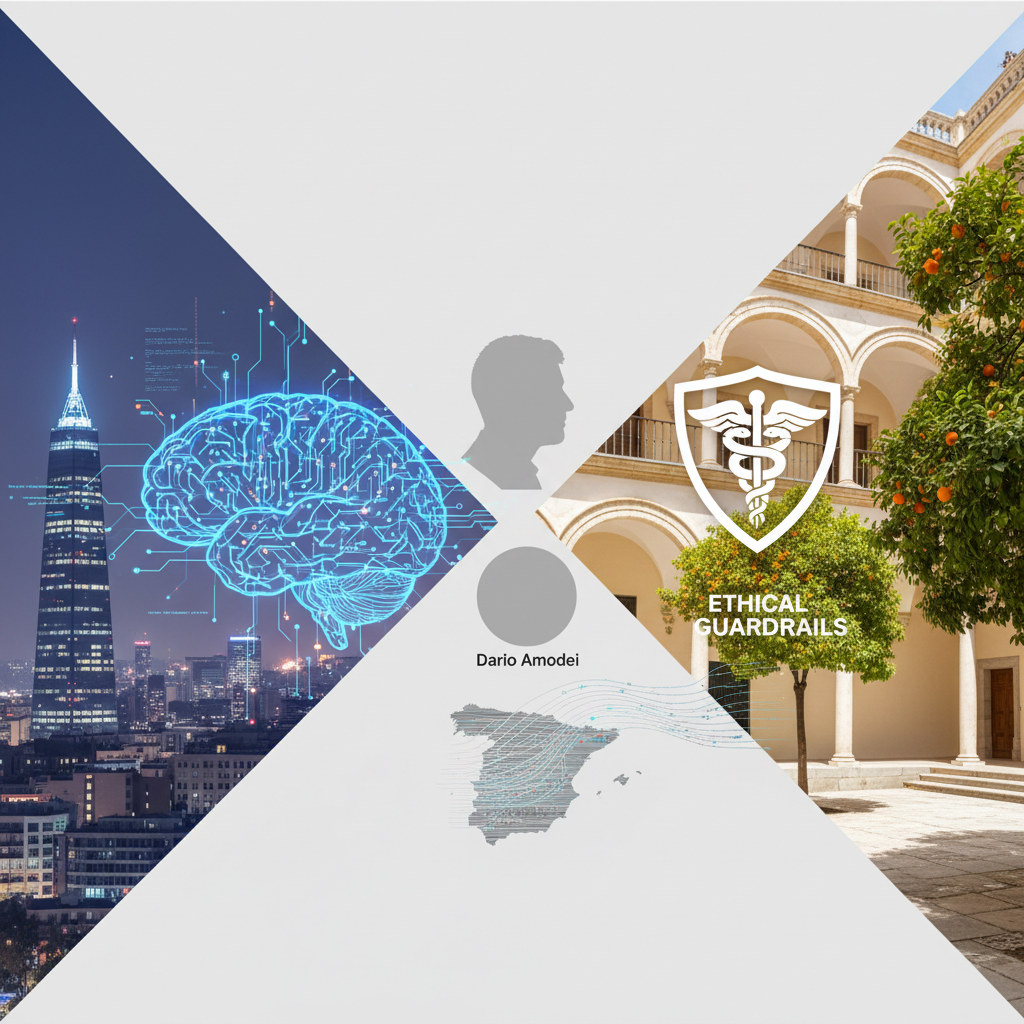
While the world has been captivated by the sheer power and dazzling capabilities of large language models from giants like OpenAI and Google, a quieter, yet profoundly significant, revolution has been brewing. Dario Amodei and his brilliant team at Anthropic have been meticulously crafting Claude, an AI assistant designed with an intrinsic ethical compass. They call it 'constitutional AI,' and it's a game-changer. Instead of relying solely on human feedback to align AI behavior, which can be inconsistent and prone to human biases, Anthropic is teaching Claude to self-correct based on a set of fundamental principles, a 'constitution' if you will. Think of it like instilling a strong moral code directly into the AI's core programming. This isn't just about preventing AI from saying bad words; it's about building systems that proactively avoid harmful outputs, resist manipulation, and genuinely strive to be helpful, harmless, and honest. It’s a vision for AI that resonates deeply with our European values of human-centric design and robust ethical frameworks.
Why Most People Are Missing the Point
Let’s be honest, in the whirlwind of AI news, with new models dropping every other week and headlines screaming about job displacement or incredible breakthroughs, it's easy to overlook the foundational work. The 'attention gap' is real. Most people are focused on the immediate, tangible outputs of AI: the stunning images generated by Midjourney, the eloquent essays written by GPT, or the complex code debugged by GitHub Copilot. They see the magic, the speed, the efficiency. But the underlying mechanisms that ensure these powerful tools are used for good, that they don't perpetuate biases, or worse, generate dangerous content, often go unnoticed. It's like admiring a beautifully constructed building without ever considering the strength of its foundations. Yet, without those strong, ethical foundations, the whole structure is at risk. We, in Spain and across Europe, understand the importance of robust legal and ethical frameworks, from our national constitutions to the European Union's ambitious AI Act. This 'constitutional AI' approach aligns perfectly with that spirit, and it's why we simply cannot afford to ignore it.
How This Affects YOU, From Your Health to Your Wallet
So, why should you, a person living your daily life, care about Anthropic's technical approach to AI safety? Because this directly impacts the AI tools you will interact with every single day, often without even realizing it. Imagine an AI assistant helping your doctor diagnose a rare illness. Would you want that AI to prioritize speed over accuracy, or to inadvertently perpetuate biases present in its training data? Of course not. You'd want it to adhere to principles of patient safety, data privacy, and scientific rigor. Constitutional AI aims to bake these values in from the start. Consider your finances: AI is increasingly used to assess loan applications, detect fraud, and manage investments. A 'constitutional' financial AI would be less likely to discriminate, more transparent in its decisions, and more resilient to exploitation. Even in tourism, a sector so vital to Spain, AI could help personalize experiences, translate languages, and manage logistics. But we need to ensure it respects cultural nuances and protects visitor privacy. This isn't abstract; it's about the fairness of your healthcare, the security of your finances, and the integrity of the information you consume. It’s about ensuring that the AI revolution benefits everyone, not just a select few.
The Bigger Picture: Spain's AI Moment and Global Leadership
Spain's AI moment has arrived, my friends! From the bustling tech hubs of Barcelona to the innovative startups in Valencia, our nation is rapidly embracing AI. The European Union, with its landmark AI Act, is leading the world in establishing comprehensive regulatory frameworks for artificial intelligence. This is not just about rules; it’s about setting a global standard for responsible innovation. Anthropic's constitutional AI approach offers a powerful, technical complement to these regulatory efforts. It provides a method for developers to build AI systems that are inherently safer and more aligned with human values, rather than just being externally constrained. This could position Europe, and Spain within it, as a beacon for ethical AI development. Imagine our universities and research centers collaborating with companies like Anthropic to refine these methods, creating a new generation of AI engineers who are not just coding experts, but also ethical architects. This is about ensuring that as AI permeates every aspect of society, it does so in a way that upholds our democratic values, protects fundamental rights, and fosters trust.
What the Experts Are Saying
I've been speaking with some brilliant minds who are deeply immersed in this space, and their insights are truly illuminating.
Dr. Elena Navarro, Professor of AI Ethics at the Polytechnic University of Valencia, shared her perspective: